What are the disadvantages of solid rockets?
The inherent simplicity of a solid rocket engine, which integrates the fuel and oxidizer into a single, pre-cast block, is often cited as its greatest advantage. However, this very design philosophy imposes a series of fixed limitations that make solid motors fundamentally less flexible than their liquid-fueled counterparts. When an aerospace engineer chooses a solid system, they are choosing certainty in exchange for control—a trade-off that defines nearly all of its disadvantages.
# Control Limits
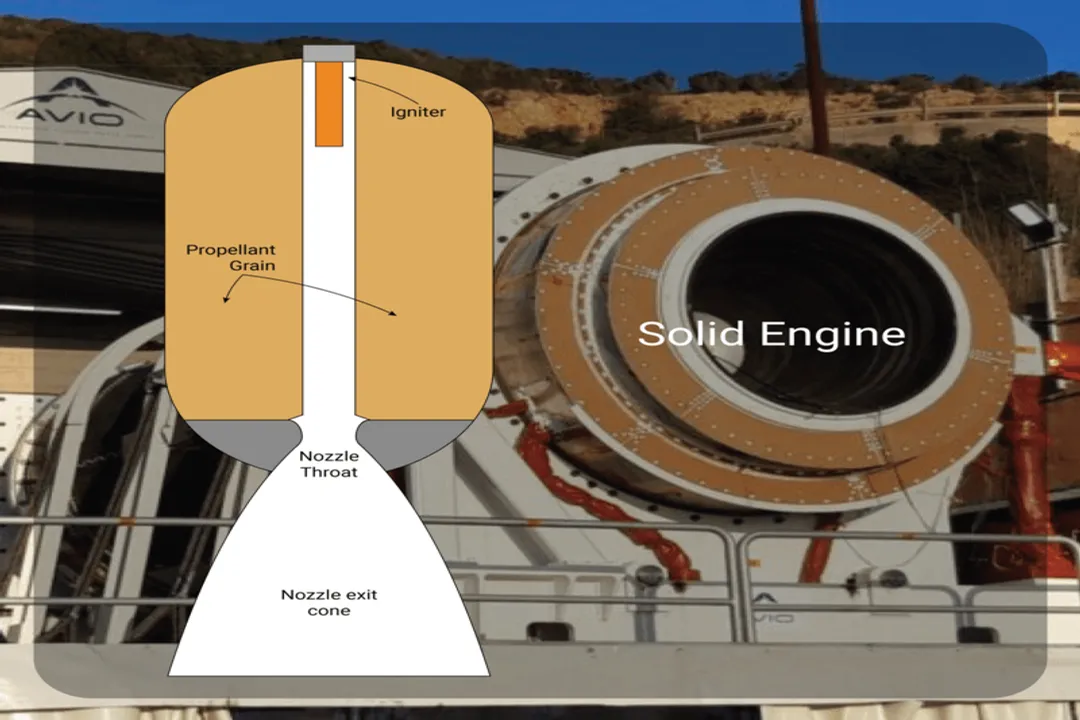
The most significant operational drawback of solid rockets is the inability to modulate the thrust once the ignition sequence has begun. The propellant grain, essentially a large, cast block of fuel and oxidizer, is designed to burn from its exposed internal surfaces outward. Once ignited, the combustion process continues relentlessly until all the material has been consumed. There is generally no built-in mechanism to shut the engine down, adjust the total burn time, or alter the thrust level mid-flight.
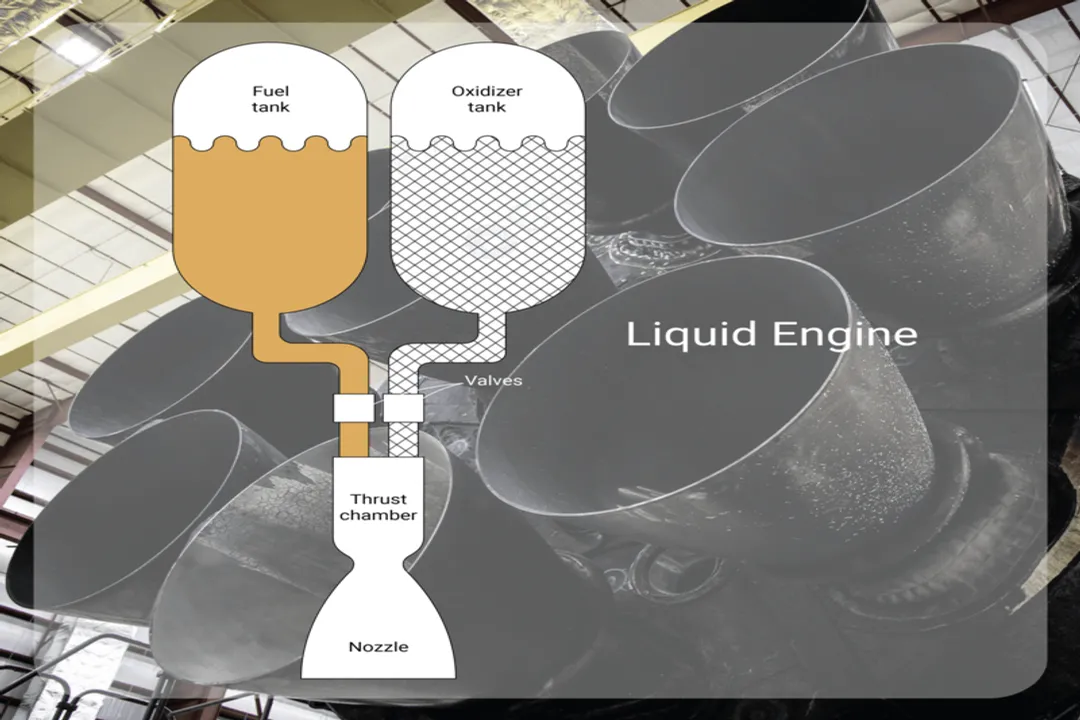
This "all-or-nothing" characteristic means that a vehicle powered by a solid motor follows a predetermined path dictated entirely by the initial grain geometry. If a mission profile requires a specific velocity or altitude correction during flight—perhaps to avoid debris, adjust orbital insertion, or compensate for unexpected atmospheric drag—the solid motor cannot respond. Liquid engines, by contrast, use valves and pumps to manage fuel flow, permitting restarts, throttling, and complete shutdown on command.
While engineering efforts have been made to mitigate this, such as developing developmental solids with movable pintles for random thrust changes, the practical experience with these complex additions remains limited compared to established liquid systems. The thrust-time history, which is the most critical performance metric, is fixed by the shape of the burning surface area within the grain. Designers tailor this shape—using patterns like star configurations or simple circular ports—to achieve a desired thrust profile (progressive, regressive, or neutral). Even so, this tailoring only defines the planned curve; deviations from that plan are impossible to correct in real time. This rigidity essentially turns the rocket into a specialized ballistic projectile rather than a dynamically steerable vehicle, especially once it leaves the atmosphere where aerodynamic surfaces cease to be effective.
# Performance Tradeoffs
While solid rockets excel at providing a massive initial push—which is why they are frequently used as strap-on boosters—they generally lag behind high-performance liquid propellants in terms of efficiency, measured by specific impulse (). Specific impulse quantifies the effectiveness of the propellant combination, essentially defining how much thrust is generated per unit of propellant mass consumed per unit of time. For example, one modern composite solid propellant might offer a sea-level in the range of 220 to 250 seconds, whereas superior liquid-propellant combinations, such as liquid oxygen and liquid hydrogen, can exceed 350 seconds.
This lower efficiency means that for a given mission requiring a high change in velocity (), the solid rocket must carry a greater total mass of propellant to achieve the same result as a liquid engine.
Paradoxically, solid rockets also struggle with the inert mass of the engine structure. Although they lack the complex pumps and feed plumbing of liquid systems, the casing, nozzle, and insulation must be robust enough to contain the extremely high chamber pressures, which often range between 400 and 1000 psi in modern designs. While it is true that the propellant grain itself can provide structural support, reducing the inert weight penalty inherent in other systems, the need for heavy-duty construction and thermal protection still impacts the overall mass fraction (). The necessity of robust pressure containment forces designers to accept a certain baseline weight penalty, even when using advanced materials like filament-wound fiber-glass composite cases.
This leads to an interesting tension in design philosophy: liquid rockets have higher engine efficiency () but heavier plumbing/tanks, while solids have lower but simpler inert structure that often yields a higher overall mass fraction (propellant to total system weight) in certain applications, provided the specific mission doesn't require aggressive throttling. However, that lower remains a fundamental chemical limitation.

# Reliability and Testing
The solid rocket motor presents a unique challenge regarding pre-flight verification. Unlike liquid engines, which can be partially checked by running flow tests on their systems or firing them briefly to verify performance before loading them onto the launch vehicle, a solid motor generally cannot be tested prior to its operational flight. Once the manufacturing and curing processes are complete, the motor is essentially an armed, unverified system waiting for the countdown clock to hit zero.
This lack of testing capability places immense importance on the quality control during the manufacturing phase, especially regarding the propellant grain integrity. The grain can develop cumulative damage over time due to factors like temperature cycling or rough handling during transport and storage. This damage manifests as cracks or unbonded areas between the propellant and the insulation or case liner. Such flaws are exceptionally difficult to determine definitively in the field. If a crack forms, it creates an unauthorized increase in the exposed burning surface area (). This unexpected increase leads directly to higher chamber pressure and thrust than designed for, potentially causing catastrophic over-pressurization or an unexpected thrust profile mid-mission.
Furthermore, the solid motor requires a dedicated ignition system, which itself introduces a complex failure point. This system often involves a primary initiator, such as a hot-wire resistor or an exploding bridgewire, followed by an igniter booster charge of fast-burning propellant. The history of solid rocket mishaps shows that premature firing—often caused by stray currents, static discharge, or impact shock affecting the sensitive igniter pellets—is a major source of accidents, necessitating extensive safety protocols like shunting circuits and specialized footwear for ground crews.
# Handling Hazards
Due to the nature of the propellant—a mixture of fuel and oxidizer already combined inside the chamber—the potential for fire and explosion is significantly larger than with storable liquid propellants, where the components are kept separate until injection. Failure in a solid motor tends to be more catastrophic because there is no way to abort the burn.
The hazard level depends heavily on the propellant chemistry. Double-base propellants, common in smaller missile motors, are inherently explosive, sometimes possessing an explosive yield higher than an equal mass of TNT. These materials are highly sensitive to shock, meaning they can be detonated by being dropped or struck by a bullet. For this reason, large boosters rely on composite propellants, which are generally classified as fire hazards rather than high explosives, though they can still ignite prematurely under extreme heat.
Processing these materials, particularly the mixing of fuel and oxidizer components, requires remote control and heavy isolation because fires and explosions during the mixing phase have historically been severe events. Even after assembly, the motors require special handling and storage away from populated areas, often within blast walls or earthen bunkers.

# Thermal and Environmental Factors
Because the solid propellant grain itself lines the pressure vessel, the motor case must be protected from the sustained, high-temperature exhaust gases generated during firing. Unlike liquid engines, which often employ regenerative cooling—circulating cryogenic fuel through channels within the chamber walls before injection—a solid motor cannot use this technique. Instead, the internal surfaces are lined with thick thermal insulation, usually an asbestos-filled rubber compound. This insulation adds to the inert weight and must protect the case until the very last moment of firing. If the insulation fails or burns through prematurely, the case will weaken and burst, or the hot gases will burn through the structure, leading to a failure.
Another operational constraint relates to the ambient environment. The burn rate of the propellant is directly influenced by the initial temperature of the grain just as the burning zone approaches it. This means that the flight path, altitude achieved, and overall range of a solid-fueled vehicle can vary based on whether the motor launches on a cold winter morning or a hot summer afternoon, even if the planned thrust profile was optimized for a nominal temperature. Liquid engines, while requiring pre-launch chill-down or heating, do not suffer from this same broad sensitivity to initial ambient temperature variations once they reach stable operating conditions because they control the mixture ratio actively.
Finally, the exhaust products themselves create disadvantages, particularly for certain composite propellants containing ammonium perchlorate. The resulting exhaust gases are frequently toxic. Furthermore, if the propellant includes metallic additives like aluminum or carbon—often added to increase energy and smooth the burn—the exhaust plume becomes notably smoky and generates intense thermal radiation. This dense, hot plume has the secondary effect of causing greater radio frequency attenuation compared to the cleaner exhaust from many liquid systems, which can interfere with tracking and communication signals.
Related Questions
#Citations
Disadvantages Of Solid Propellant Rockets - Propulsion 2
Liquid vs Solid Rockets: What is the Price and Range difference?
Solid and Liquid Engine - Technical Capsule - impulso.space
[PDF] exploring in aerospace rocketry 6. solid-propellant rocket systems
Why is solid propellant not used in launching a rocket