disadvantage articles
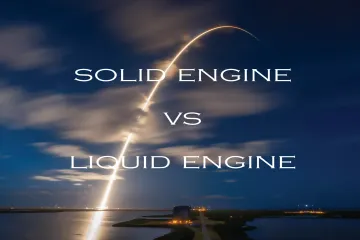
What primary trade-off defines the fundamental limitations of a solid rocket motor choice?
What is the most significant operational drawback of solid rockets once the ignition sequence has started?
What physical feature primarily dictates the fixed thrust-time history of a solid rocket motor?
How does the specific impulse ($ ext{I}_{sp}$) of a typical modern composite solid propellant compare to superior liquid propellants like LOX/LH2?
Unlike liquid engines, how is the motor case of a solid rocket protected from sustained high-temperature exhaust gases?
What is a major reliability challenge posed by the inability to test solid motors pre-flight?
If a crack forms in the propellant grain of an assembled solid motor, what immediate performance result can occur?
What characteristic makes *double-base* propellants, often used in smaller missile motors, particularly hazardous to handle?
How does the initial ambient temperature affect the performance of a solid-fueled vehicle?
What secondary disadvantage is associated with composite propellants containing metallic additives like aluminum?
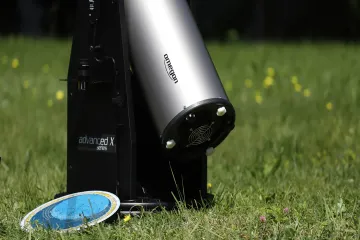
What accessory required for tracking celestial objects can often cost as much as, or exceed, the price of the telescope tube itself?
Which optical flaw specifically plagues cheaper or older achromatic refracting telescopes, resulting in a colored halo around bright objects?
What maintenance procedure, involving the precise alignment of mirrors, must be checked and adjusted before nearly every use on a reflecting telescope?
What optical defect, particularly associated with faster telescope designs, causes stars near the edge of the viewing field to look stretched or like tiny comets?
What astronomical term describes the effect of atmospheric turbulence that causes stars to twinkle aggressively and blurs fine planetary detail?
For an urban astronomer, what type of overlooked expense must be factored into the real-world cost of observing sessions?
What is the primary visual limitation that prevents deep-sky objects like nebulae from appearing in vibrant color through an eyepiece, even with large apertures?
What trade-off means a high-quality, smaller refractor that is ready quickly might offer better value than a large scope that sits unused?
What specific physical characteristic of reflecting telescopes introduces a measurable reduction in image contrast compared to a pure refractor design?
What unique, often insurmountable drawback do space-based telescopes face compared to ground-based equipment?
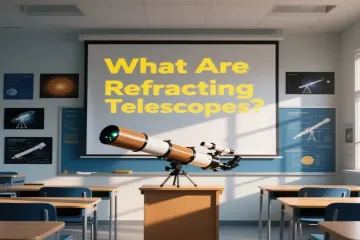
What fundamental optical flaw haunted early refracting telescopes for over a century?
What physical mechanism causes chromatic aberration in a simple convex lens?
What visible result did chromatic aberration produce when observing bright objects like Jupiter?
How did early telescope designers attempt to mitigate the effect of chromatic aberration?
What major engineering problem resulted from the necessity of long focal lengths to control chromatic aberration?
Why are reflector telescopes inherently free of chromatic aberration?
What critical observational limitation did the colored fringing impose on astronomers using early refractors?
What innovation solved the problem of chromatic aberration by the mid-18th century?
Who is credited with developing and popularizing the achromatic doublet solution?