What landform pattern results from differential erosion acting on flat-lying sedimentary sequences?
Answer
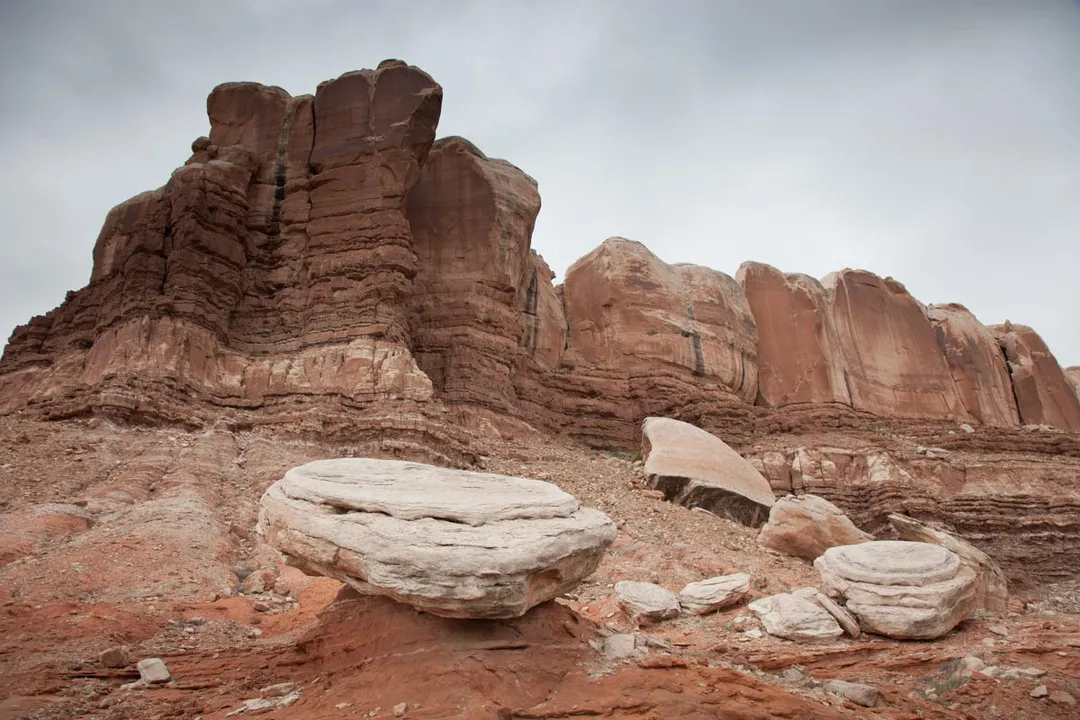
Resistant layers form prominent cliffs while easily eroded layers form gentler slopes beneath them.
When flat-lying layers are subjected to differential erosion, hard layers form steep cliffs, and the softer layers erode back to form slopes underneath, often leading to the eventual collapse of the cliff base.
Related Questions
What is the fundamental difference between weathering and erosion?Which process is an example of physical weathering?What is the primary role of chemical weathering in landscape evolution?Which force is identified as the most significant influence driving mass wasting events like rock falls and avalanches?Where does deposition occur on a meandering river curve across flat land?How do glaciers primarily contribute to weathering and erosion?What principle explains why some rock types form topographic highs while easily eroded ones form lows?How does coarser grain size generally affect a rock's resistance to weathering?What landform pattern results from differential erosion acting on flat-lying sedimentary sequences?How do vertical fractures influence the formation of slot canyons and fins in rock masses?