What is the Venus effect?
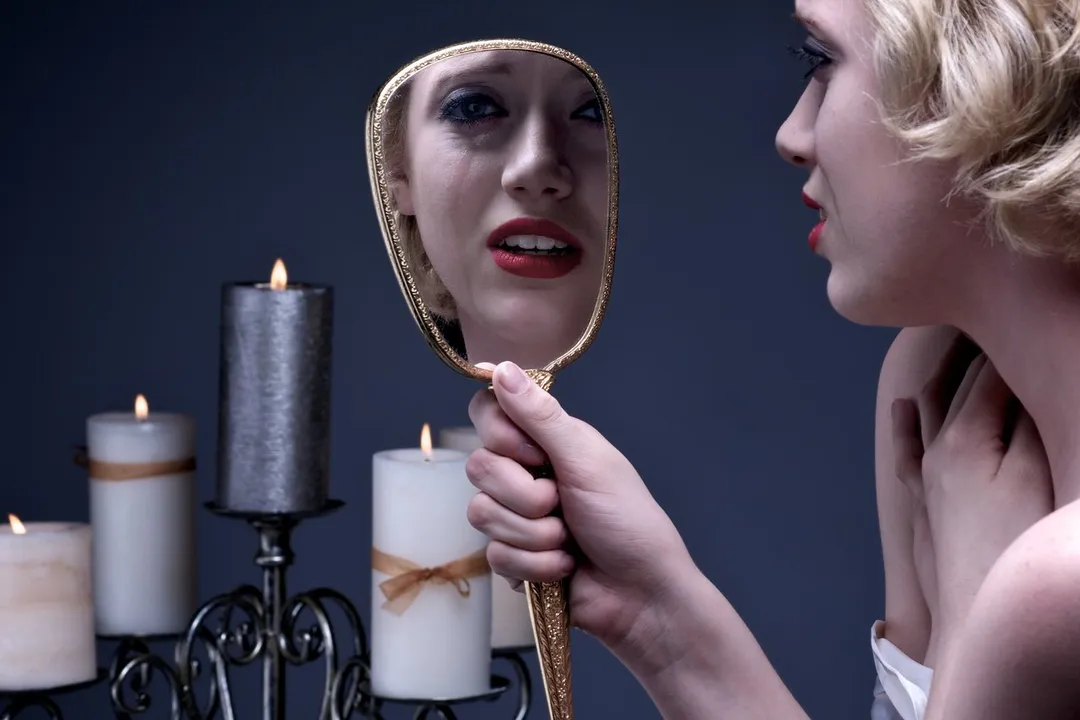
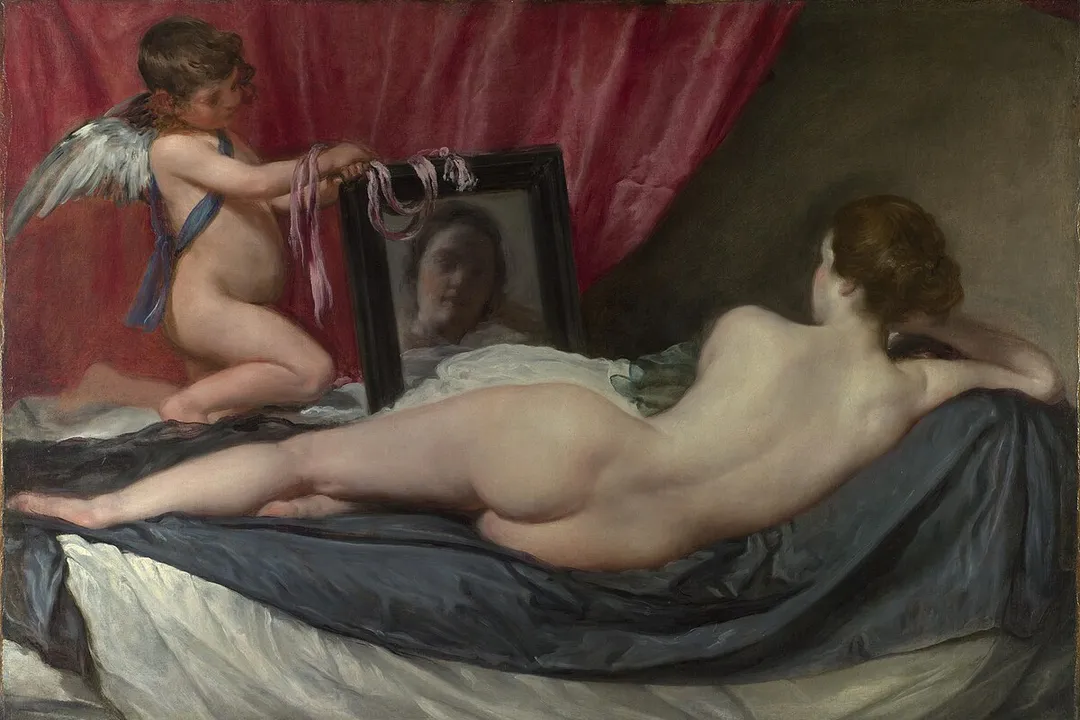
The optical phenomenon known as the Venus effect describes a common perceptual mistake made when interpreting images involving mirrors. It gets its name from numerous classical paintings—such as those depicting Venus gazing into a looking glass—where viewers instinctively assume the subject is admiring their own reflection, even when the physical setup makes that impossible. [4][5] This effect was first formally documented in 2003 by Marco Bertamini and his colleagues, initially in the context of art perception, specifically analyzing works like Diego Velázquez’s Rokeby Venus or Titian’s Venus with a Mirror. [3][4]
# Optical Illusion

When observing a scene where a subject and a mirror are present, and the observer can clearly see the subject’s face in the reflection, there is a powerful tendency to conclude that the subject is looking at themselves. [3][7] However, in these typical compositions, the observer (or the camera lens) is positioned such that the subject’s line of sight in the mirror is actually directed toward the observer, or perhaps toward the painter who created the scene. [4][5] For the subject to see exactly what the observer sees, both parties would need to share an identical line of sight relative to the mirror surface, which geometry usually prevents in these artistic arrangements. [5][7] The error is so prevalent that it occurs even when viewing photographs or watching modern film and television, where directors exploit this perceptual shortcut to frame an actor’s face toward the camera while suggesting an act of private self-contemplation. [1][5][7]
# Cognitive Bias

The Venus effect is more than just an artistic quirk; it shines a light on fundamental limitations in human spatial reasoning, often categorized under the research area of naive physics. [7] People generally possess an intuitive understanding of how solid objects work, but this intuition breaks down when dealing with viewpoint-dependent information like reflections. [7] The inclination to believe Venus is seeing herself reflects an egocentric bias: the observer projects their own perceptual framework onto the subject in the picture. [3][7] Instead of calculating the necessary reflected angles, the visual system falls back on a simpler, though incorrect, intuition: the mirror shows a large section of space in front of it, and if the observer sees a face there, the subject must also see that face. [7] This is a structural problem in visual processing; the system evolved to prioritize stable information about objects rather than accounting for the accidental variances introduced by a changing perspective. [7] Even when this error is pointed out, the initial, instantaneous interpretation usually defaults to the illusion, although conscious reasoning can correct it. [7]
# Viewpoint Error
This difficulty in reasoning about what is visible to others based on their location is a common theme in cognitive science, tracing back to studies on children's perspective-taking ability. [7] While younger children struggle significantly with understanding different viewpoints (egocentrism), adults also demonstrate these biases, making the Venus effect a prime example of adult perceptual overreliance on intuition. [7] Furthermore, this same cognitive struggle appears when estimating the size of images projected onto reflective surfaces. For instance, if you clear a small patch on a fogged mirror to see your face, you will be surprised to find the reflection is only half the height of your actual face. Most people find it hard to accept this fact, even when performing the test in front of their eyes, showing a deep-seated resistance to interpreting a mirror as a 2D projection surface regardless of distance. [7]
This challenge with viewpoint is not limited to mirrors. Consider how often an amateur photographer positions a subject slightly off-center in a group photo, aiming to capture everyone’s face clearly. Because the camera is capturing a single viewpoint, a person standing near the edge of the frame will have their reflection in a nearby window or polished surface appear angled away from them, yet the viewer, conditioned by the Venus effect and general aesthetic balance, rarely questions this discrepancy. The viewer tends to merge the direct view and the reflected view into one cohesive, albeit geometrically inaccurate, representation of self-regard or engagement. [5]
# Artistic Application
The implication of the Venus effect for artists is the freedom it grants in composition. Since the viewer assumes self-admiration, the painter or director is not strictly bound by optical accuracy. [7] This has been true for centuries, seen not only in Venus paintings but also in medieval works like La dame à la licorne tapestries. [5][7] In contemporary art, this phenomenon serves as a powerful metaphor. For instance, artist Jesse Mockrin has used the concept of the Venus effect to recontextualize historical paintings of women with mirrors. Mockrin suggests that in many Old Master works created by men, the implied reflection connecting to the viewer/painter highlights whose narcissism is truly on display—not the vanity of the female subject, but the gaze of the male artist who framed her as an object of desire. The mirror, therefore, transitions from a simple reflective surface into a critical tool for examining agency and perspective in historical representation.

# Local Context
It is helpful to distinguish the Venus effect, which is about misinterpreting spatial optics, from a related concept known as the "Village Venus effect," popularized by Edward De Bono. [2] The Village Venus effect addresses the limitation imposed by local context. If you live in an isolated village and know the most attractive person there, you might conclude no one is more beautiful, unaware of the greater variety that exists beyond your immediate, familiar sphere. [2] Both concepts caution against being too satisfied with the immediate options presented to us, whether those options are visual cues in a painting or potential candidates during a hiring process. [2] The mirror illusion relies on immediate visual evidence being misinterpreted; the village illusion relies on limited exposure being mistaken for the global optimum.
When staging any visual scenario—whether for a professional headshot or a family video call—understanding the Venus effect offers an actionable tip. If you want your subject to appear engaged with something off-camera (like a note or a prop held by a friend), placing a reflective surface where the viewer can see the subject’s face in it will naturally reinforce the narrative that the subject is looking at that object, even if the actual angle is slightly wrong. Conversely, if the goal is to break the fourth wall subtly, positioning the subject so their reflection is clearly angled toward the camera/viewer (though this requires a larger mirror or a different physical layout than the classic illusion) can create a moment of intense, unnerving connection, as the illusion of self-regard is replaced by the sense of being directly addressed by the subject’s reflected gaze. [5] Our brains work hard to find patterns, and the Venus effect shows that sometimes, the pattern we prefer to see—self-contemplation—overrides the geometry we are actually viewing.
Related Questions
#Citations
Venus effect - Wikipedia
The Venus effect: people's understanding of mirror reflections in ...
The Venus effect - Bertamini Lab
What is the Venus Effect? - Simplicable Guide
[PDF] The Venus Effect - ResearchGate
The Village Venus Effect - Sketchplanations
Jesse Mockrin - The Venus Effect - Exhibitions - James Cohan Gallery