What is the stellar magnitude scale?

The brightness of stars, a concept humans have pondered since we first looked up, is quantified using a specific system known as the stellar magnitude scale. This system provides a standardized way for astronomers to rank celestial objects based on how bright they appear to an observer. [4][6] It is not a direct measurement of the star's intrinsic energy output, but rather a measure of observed brightness, which has a fascinating and somewhat counter-intuitive mathematical underpinning. [3][5] Understanding this scale is fundamental for anyone moving past casual stargazing into more serious astronomical study, helping to catalogue and compare everything from faint galaxies to dazzling planets. [8]
# Scale Inversion
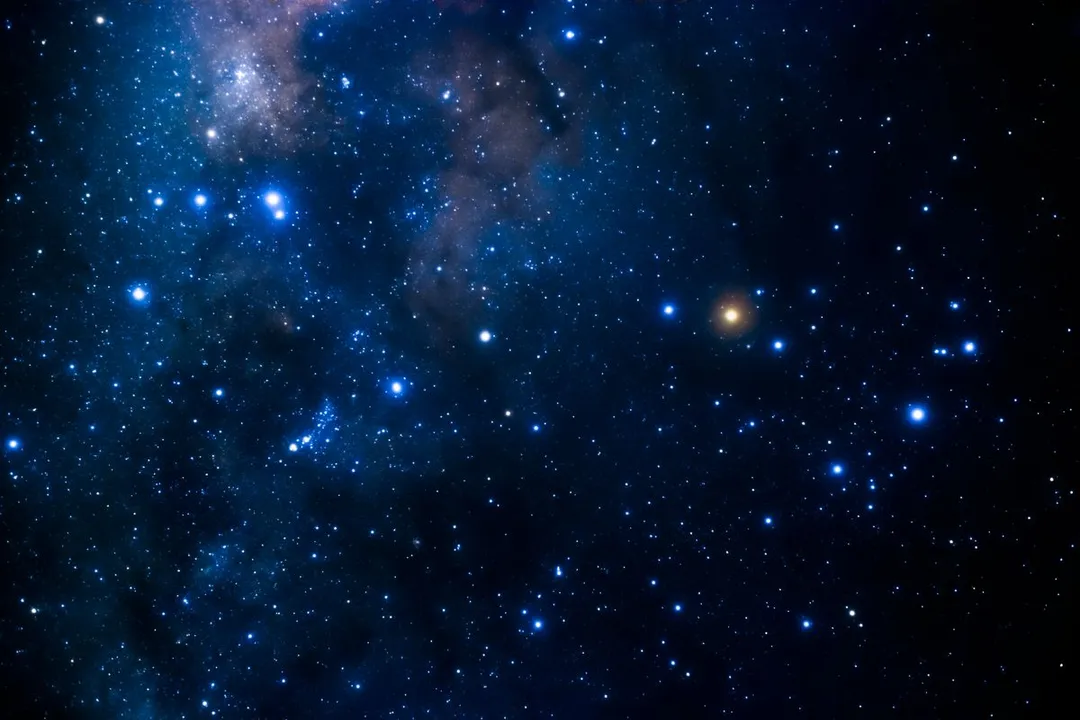
Perhaps the most immediate hurdle for newcomers to this topic is the scale's direction: smaller numbers indicate brighter objects. [2][4] A star with a magnitude of +1.0 appears brighter than one with a magnitude of +2.0, and a star of magnitude 0 is brighter still. [6] This historical convention means that extremely bright objects, like the Sun or the Full Moon, have been assigned negative magnitude values because they outshine anything designated as magnitude +1 or greater. [2][4][6] The faint limit of naked-eye visibility under good, dark skies is typically around magnitude +6.0 or +6.5. [3][8] To illustrate this inversion: Sirius, the brightest star in our night sky, shines at roughly magnitude -1.46, while the Sun clocks in around -26.7. [2][6] This is an ancient system, established by Hipparchus, which classified stars into six visual classes; modern astronomy has simply refined and extended that initial framework. [5]
# Brightness Ratio
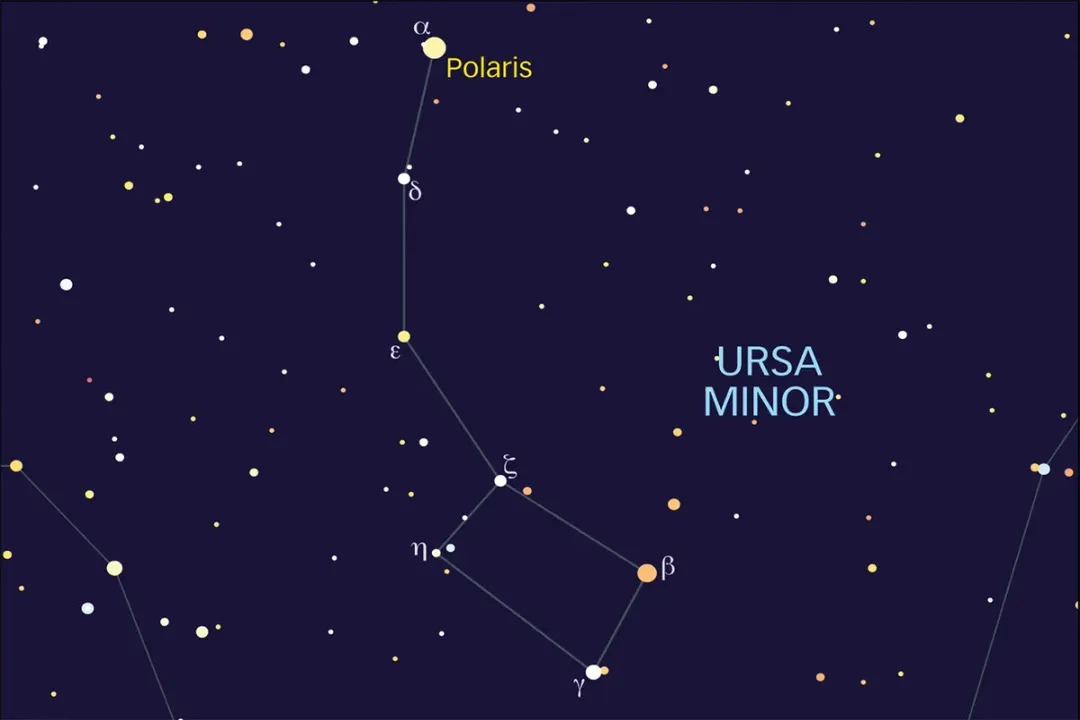
The scale's power lies in its logarithmic nature, a feature that accurately reflects how the human eye perceives light. [2][5] Our eyes do not perceive light intensity in a perfectly linear fashion; rather, we perceive successive doublings of light as smaller increases in perceived brightness. [5] The magnitude system formalizes this relationship. [7]
The critical conversion factor in this system is that a difference of exactly five magnitudes corresponds to a brightness ratio of exactly 100 to 1. [2][5][6][7] From this primary relationship, all other ratios can be derived. Since $5$ magnitudes equals a factor of $100$, a difference of just one magnitude corresponds to a brightness ratio of the fifth root of 100, which is approximately $2.512$. [2][5][7]
Consider this simple comparison:
| Magnitude Difference | Brightness Ratio |
|---|---|
| 1 | times brighter |
| 2 | times brighter |
| 5 | 100 times brighter |
| 10 | 10,000 times brighter |
This consistent mathematical progression allows astronomers to precisely calculate how much brighter or dimmer one object is relative to another simply by comparing their magnitude numbers. [7] For instance, a star of magnitude +7.0 is $2.512$ times dimmer than one of magnitude +6.0, and $6.3$ times dimmer than one of magnitude +5.0. [6] If you are trying to locate a faint object near a bright star in your telescope, knowing that a difference of 10 magnitudes means the bright star is ten thousand times overpowering the faint one helps explain why light pollution or glare is such a challenge. [2][7]

# Apparent Distance
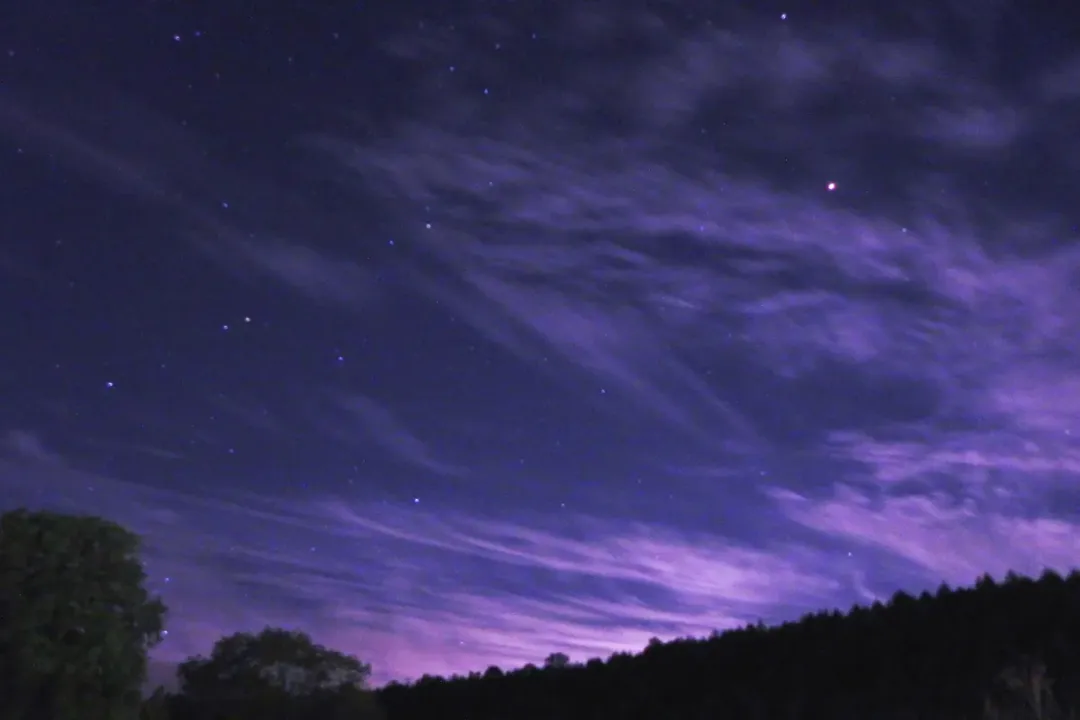
When we observe a star's apparent magnitude (), we are seeing the combination of its true light output and its current distance from Earth. [3][5] Two stars emitting the exact same amount of light will have different apparent magnitudes if one is close and the other is far away. [2][8] This is what makes the scale immediately accessible for naked-eye observation but scientifically incomplete on its own. [3]
For example, the dazzling planet Jupiter can sometimes reach an apparent magnitude around $-2.9$, easily outshining Sirius (). [2] Jupiter is comparatively close, while Sirius is a nearby star, but both are vastly closer than the next brightest star in the sky. The apparent magnitude only tells us what we see from our vantage point, not how powerful the star truly is. [2][8] This dependency on distance is what necessitates the second, more standardized concept in brightness measurement: absolute magnitude. [3]
# Standard Distance

To compare the inherent luminosity of stars—their actual power output—astronomers must eliminate the variable of distance. They achieve this by defining absolute magnitude (). [2][8] Absolute magnitude is defined as the apparent magnitude a star would have if it were placed at a standard, fixed distance of exactly 10 parsecs from Earth. [3][5][6][8] A parsec is an astronomical distance unit equivalent to about $3.26$ light-years. [5]
By calculating a star's absolute magnitude, an astronomer can directly compare the true energy output of a nearby dwarf star to a distant giant star, removing the bias introduced by proximity. [2][3] If a star has a lower (more negative) absolute magnitude than another, it is intrinsically a more luminous star, regardless of its current location in the galaxy. [8] The relationship between apparent magnitude (), absolute magnitude (), and distance ( in parsecs) is formalized by the distance modulus equation, though the core concept is simply correcting the observed brightness for how far away the light has traveled. [5]
# Modern Adjustments
While the historical foundation of the magnitude scale remains, modern astronomy requires more precision than the original visual classes allowed. Early magnitude estimates were purely based on what the eye could perceive across the whole visible spectrum. [4][5] Today, measurements are often taken using sophisticated photometric equipment that isolates specific bands of light, leading to the concept of filter magnitudes. [5][6]
For instance, a measurement taken through a blue filter might be designated as magnitude, and one through a visual (greenish-yellow) filter as magnitude. [5] The magnitude often closely approximates what the human eye perceives. [5] These specific band measurements are essential for determining a star’s color index—the difference between two different filter magnitudes (e.g., )—which provides vital clues about a star's surface temperature and evolutionary state. [5] A hot, blue star will have a smaller magnitude than its magnitude (a negative value), while a cool, red star will show the opposite trend. [5]
For amateur observers using digital cameras or CCDs, understanding magnitude is key to exposure planning. If your equipment can record down to magnitude +14.0 under perfect conditions, you know that any star listed with a magnitude of +13.5 or brighter should be easily visible, assuming no local obstructions. [8] If you are aiming for deep-sky targets, remember that faint nebulae and galaxies often require integrating light over a long period, whereas a star's brightness is relatively constant, allowing for easier direct measurement or comparison when planning your long exposures. [8] Being able to correlate your telescope's light-gathering power (aperture) with the limiting magnitude helps set realistic expectations for what you can observe from your backyard. [8]
# Navigating Limits
The scale can seem abstract, so it helps to ground it with familiar celestial benchmarks. The brightest stars are often in the negative range, but the faintness of the scale is what truly defines the boundaries of our observation capabilities. [6]
Here is a comparative look at some familiar benchmarks:
| Celestial Object | Approximate Apparent Magnitude () | Notes |
|---|---|---|
| Sun | $-26.7$ | Extremely bright; negative value |
| Full Moon | $-12.7$ | Varies slightly with phase |
| Venus (at brightest) | Often mistaken for a star | |
| Sirius (Brightest Star) | The benchmark for bright stars | |
| Naked Eye Limit (Dark Sky) | $+6.5$ | The faintest visible point |
| Hubble Deep Field Limit | Visible only with the most powerful telescopes |
If you happen to be observing from a suburban location with moderate light pollution, your practical naked-eye limit might shrink significantly, perhaps down to magnitude +4.0 or +5.0, demonstrating how the local environment immediately affects the apparent observation. [3] This is an important distinction for any working astronomer: the magnitude printed in a catalogue is an ideal value, not necessarily the value you will record on any given night without compensation for atmospheric extinction or light pollution. [3][5] When an amateur astronomer pushes their equipment to its maximum potential, they are essentially trying to push the magnitude number as high as possible, often by gathering light over minutes or hours, whereas the catalogue number refers to a measure taken instantaneously under perfect conditions. [8] The scale itself remains constant, but our ability to reach the higher numbers is what changes with technology and environment.
Related Questions
#Citations
[PDF] The Stellar Magnitude Scale - Space Math @ NASA
Apparent magnitude - Wikipedia
The Stellar Magnitude System - Sky & Telescope
Stellar magnitude, the scale to measure the brightness of stars
5: The Magnitude Scale - Physics LibreTexts
The astronomical magnitude scale - International Comet Quarterly
What is stellar magnitude? How can understanding ... - Celestron