What distinguishes reflexes from voluntary actions?
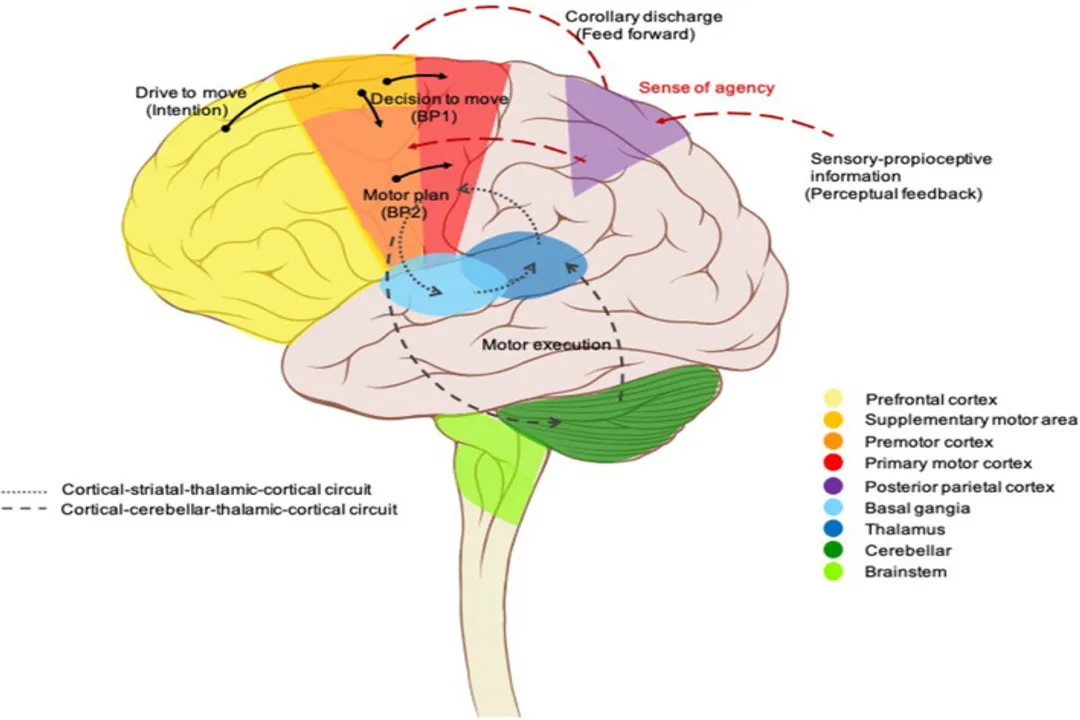
The distinction between a reflex and a voluntary action centers entirely on the element of conscious control and the neural pathways utilized for execution. [1][7] While both involve the nervous system coordinating a response to a stimulus, one is an immediate, automatic safety mechanism, and the other is a deliberate product of thought and decision-making. [2] Understanding this difference provides insight into how our bodies manage both immediate survival and complex interaction with the environment. [5]
# Automatic Responses
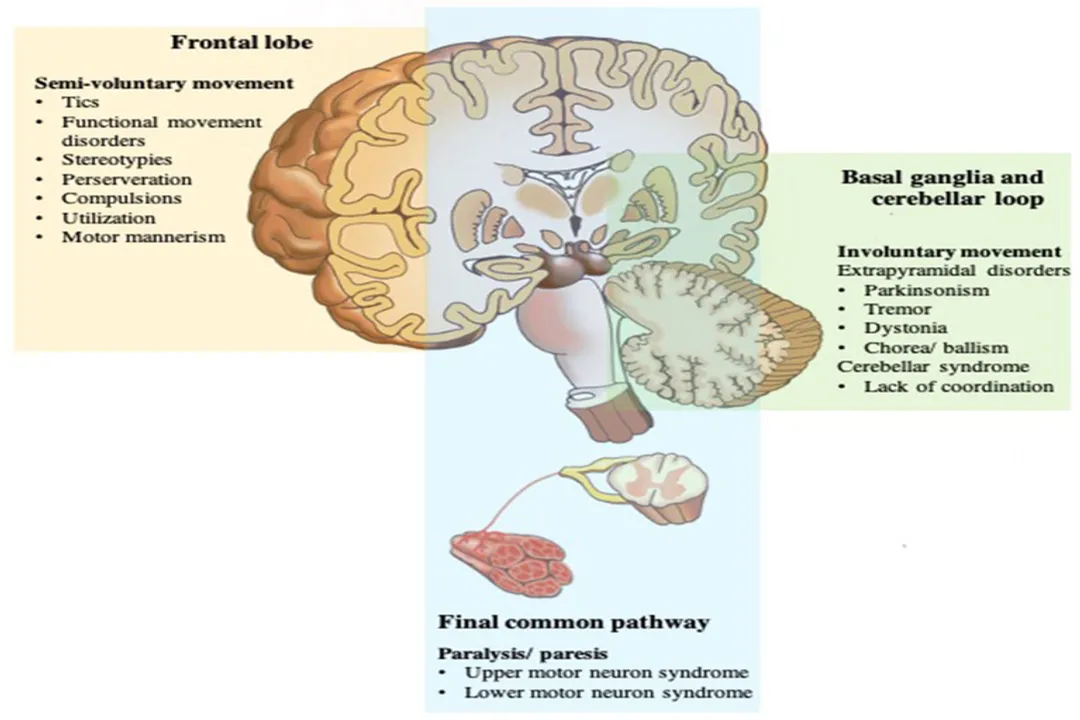
A reflex is defined by its involuntary nature; it occurs without any conscious thought or decision from the brain. [1][8] These actions are typically rapid and serve a crucial protective function, shielding the body from potential harm. [2] The classic example is pulling your hand away from a hot surface, which happens too quickly for you to consciously register the pain before the movement occurs. [1] The stimulus—like intense heat or a sudden tap below the knee—triggers the response immediately. [2][6]
Reflexes are inherent survival mechanisms that operate through specific, hardwired circuits in the nervous system. [5] They do not require the higher centers of the brain, such as the cerebral cortex, to deliberate over the appropriate action. [7] Instead, the signal pathway is designed for maximum speed. [2]
# Conscious Command
In stark contrast, a voluntary action is initiated by a conscious decision originating in the brain. [1][7] When you decide to pick up a book, type a sentence, or decide which route to take while driving, you are engaging voluntary control. [8] This process involves several steps: perception of the need or desire to act, planning the sequence of muscle movements required, and then sending the command signal down the appropriate motor pathways. [5]
Because the signal must travel up to the brain for processing, interpretation, and the formulation of a response, voluntary actions are inherently slower than reflexes. [7] This deliberation allows for nuance, complexity, and the ability to override an initial impulse—something an unconditioned reflex cannot do. [5] For instance, if you feel a slight sting on your arm, you might choose to ignore it and continue a task, whereas a sharp, dangerous stimulus would bypass that consideration entirely. [2]
# Neural Routes Compared
The primary difference between these two types of movement lies in the neural infrastructure involved—the reflex arc versus the voluntary motor pathway. [7]
The reflex arc is a relatively short neural loop. It typically involves a sensory neuron detecting the stimulus, which then relays the signal directly or via a single interneuron (relay neuron) in the central nervous system, often within the spinal cord or brainstem, to a motor neuron. [6][9] This minimal relay station ensures the signal path is as short as possible. [7]
A typical reflex pathway looks like this:
- Receptor: Detects the stimulus (e.g., pain receptors in the skin). [6]
- Sensory Neuron: Transmits the impulse toward the Central Nervous System (CNS). [6]
- Integration Center: In the case of a spinal reflex, this involves an interneuron in the spinal cord that immediately relays the signal. [6][9]
- Motor Neuron: Carries the response signal away from the CNS. [6]
- Effector: The muscle or gland that carries out the response (e.g., the bicep muscle contracting). [6]
For a voluntary action, the signal follows a much longer, multi-stage route. The sensory input may still reach the spinal cord, but for a planned action, it must ascend to the brain for processing, involving areas like the cerebrum, cerebellum, and basal ganglia for planning and coordination. [5][7] The command then descends back through the motor cortex and down the spinal cord to initiate the movement. [7] This necessary upstream traffic jam contrasts sharply with the local shortcut that characterizes the reflex. [9]
If we look at the difference in terms of components, a voluntary action involves a command that originates from the cerebral cortex, whereas a spinal reflex is integrated at the spinal cord level. [1]
| Feature | Reflex Action | Voluntary Action |
|---|---|---|
| Control Level | Involuntary (Unconscious) [1][2] | Voluntary (Conscious) [1][7] |
| Speed | Very rapid [2] | Slower, requires processing time [7] |
| Pathway | Simple Reflex Arc (Spinal Cord/Brainstem) [6][9] | Complex Pathway involving Cerebral Cortex [7] |
| Purpose | Protection and immediate homeostatic balance [2] | Goal-directed behavior and learned tasks [5] |
| Consciousness | Response occurs before awareness [2] | Awareness precedes and directs the response [1] |
# Speed and Efficiency
The functional consequence of the pathway difference is speed, which is a defining metric when comparing the two systems. [7] A reflex is designed to be near-instantaneous, often taking milliseconds. This quickness is not merely convenient; it is essential for tissue preservation. [2]
Consider the difference in processing hierarchy. Evolutionarily, the hardware for reflexes developed to ensure survival irrespective of whether the conscious mind is distracted or even active (as in sleep). [5] If the visual input of a snake moving rapidly toward your foot required a conscious decision from the frontal lobe—assessing the snake’s species, judging the safest direction to move, and then executing the move—the delay could prove fatal. [2] The nervous system bypasses this bureaucratic delay for immediate threat response. The ability of the spinal cord to initiate a motor command without consulting the brain demonstrates an inherent, pre-programmed efficiency that conscious processing simply cannot match. [7]
One interesting way this manifests in real-world scenarios involves reaction time measurements. In formal testing, the time taken for a subject to press a button after a visual cue represents voluntary reaction time, which averages in the hundreds of milliseconds. A simple blink reflex, however, is orders of magnitude faster. This measurable gap underscores that the physical distance the signal must travel up to the cortex and back down is the main time sink in our directed movements. [5]

# Modifiable Actions
While reflexes are generally considered fixed, and voluntary actions completely flexible, the two systems sometimes interact in ways that blur the lines, which is an important consideration when looking at motor control. [5] Some innate reflexes can be conditioned or modified by experience, making them look more controlled over time, though the underlying pathway remains reflexive. [2]
Furthermore, a situation may begin as a reflex but be overtaken by voluntary action. Imagine touching a stove element—the initial withdrawal is a pure withdrawal reflex. However, in the split second after the hand moves, your brain registers the source of the pain, and you might voluntarily choose to drop the object you were holding, which was not part of the initial reflex arc. [2] This shows the voluntary system acting as an override or supervisor to the automatic pathways. [5]
For example, a martial artist training for years might develop highly refined responses to an opponent’s feint. While the initial flinch might start as an involuntary startle reflex, the refined defensive posture they adopt seconds later is a learned, voluntary sequence that has been drilled so much it feels automatic, but it still requires cortical input to initiate. [5] This training process essentially reprograms the timing and execution of complex sequences, blurring the line between purely automatic and purely deliberate motion. [7]
# Functional Separation
The existence of both systems provides flexibility. Voluntary control allows for adaptation to novel situations, learning new skills, and engaging in complex social behaviors that require planning and foresight. [5] We need the capacity to choose not to react to minor stimuli, preserving energy and focusing attention where it matters most. [1]
Reflexes, conversely, manage the essential, non-negotiable tasks of survival and basic body regulation, freeing up the brain's limited processing power for higher-level cognition. [5] If every subtle shift in posture, every slight change in light, or every near-miss required conscious processing, our capacity for sustained thought or intricate work would vanish under the weight of constant micro-decisions. [1] The differentiation, therefore, is a fundamental design feature of the nervous system, ensuring that critical, rapid responses are guaranteed protection, while complex interactions are handled with thoughtful precision. [2][7]
#Videos
The Difference Between Voluntary, Involuntary and Reflex Actions
Related Questions
#Citations
Differentiate between voluntary action and reflex action. - Vedantu
Reactions and Reflexes | Carolina Biological Supply
The Difference Between Voluntary, Involuntary and Reflex Actions
What is the difference between reflex and voluntary actions?
We Move or Are We Moved? Unpicking the Origins of Voluntary ...
Reflexes - Physiopedia
What is the difference between a reflex arc and a voluntary response?
What distinguishes reflex actions from voluntary movements, and ...
Reflex - an overview | ScienceDirect Topics