action articles
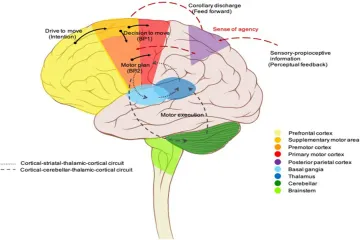
What is the fundamental element distinguishing a reflex from a voluntary action?
Which component of the nervous system handles the integration center for a typical spinal reflex?
Why are voluntary actions inherently slower than reflexes?
Where does the command signal originate for a voluntary action?
What is the primary function served by rapid, involuntary reflexes?
Which structure is typically NOT required to deliberate over the action in a reflex pathway?
What is the term for the short neural loop characteristic of a reflex pathway?
How can touching a hot stove element illustrate the interaction between reflex and voluntary systems?
What physical distance accounts for the primary time sink in directed voluntary movements compared to reflexes?
What functional benefit does the existence of reflexes provide to the brain?
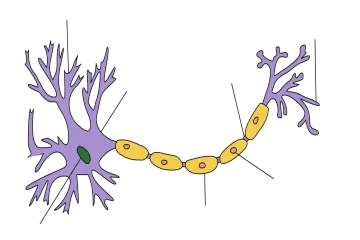
What are the fast electrical signals that relay information through the nervous system called?
What is the typical value for a neuron's resting membrane potential?
What molecular machine is primarily responsible for establishing the steep concentration gradients for $ ext{Na}^+$ and $ ext{K}^+$?
What is the critical voltage level that must be reached to cause an action potential to fire?
Where do the initial graded potentials summate to determine if the threshold is met?
Which channels are the first to respond and open rapidly upon reaching the threshold voltage?
What process is responsible for the rapid, positive spike in membrane potential during the rising phase of the action potential?
What event causes the membrane potential to drive back down toward the resting level during repolarization?
What characteristic of sodium channels ensures the action potential moves only forward down an axon?