What distinguishes deterministic from probabilistic algorithms?
The fundamental difference between deterministic and probabilistic algorithms lies in their relationship with repeatability and certainty. [7] When you give a deterministic algorithm a specific set of inputs, it is guaranteed, every single time, to produce the exact same output. [2][5] Conversely, a probabilistic algorithm incorporates an element of chance or randomness into its process, meaning that the same inputs might yield different results upon subsequent executions. [2] Understanding this separation is crucial whether you are designing software, analyzing data integrity, or building artificial intelligence models. [1][9]
# Certainty Versus Chance
A core tenet of computing often relies on absolute predictability. In a deterministic context, the path the algorithm takes is entirely fixed by the initial state and the input data. [4] There is no ambiguity; the output is the only possible result given the initial conditions. [7] Think of it like a perfect recipe: if you follow every instruction exactly, the cake will always turn out the same way. [5] This characteristic makes deterministic methods ideal for tasks where correctness must be proven or verified without question, such as in traditional mathematical calculations or fundamental sorting operations. [4]
Probabilistic algorithms, on the other hand, embrace uncertainty as part of their operation. [2] They are designed not to give the answer, but to give an answer that is correct with a high probability. [7] This approach is often necessary when a problem is too complex, too large, or computationally infeasible to solve using only guaranteed steps. [4] Instead of taking one perfect, exhaustive path, these algorithms might take many random, quick paths and choose the best result found, or they might produce a range of likely outcomes rather than a single definite one. [9]
# Operational Differences
To put it plainly, if you run an algorithm twice with identical inputs:
- Deterministic: Output A will always equal Output A. [4]
- Probabilistic: Output A might equal Output A one time, and Output B the next, though the probability of getting A might be 99%. [7]
This distinction isn't just theoretical; it dictates where each type of algorithm is applicable. If you are writing code to calculate payroll taxes, you must use a deterministic approach because the result must be exact and legally verifiable. If you are predicting the next word in a sentence or clustering customer segments, where slight variations in prediction or grouping can still be highly useful, probabilistic models thrive. [1][2]
# Application in Data Linking
One of the most common arenas where this distinction becomes a practical business decision is in data management, specifically in processes known as identity resolution or record matching. [1][6] Organizations often possess multiple records for the same person, created from different sources, and need to merge them into a single, unified customer view. [3][8]
# Deterministic Linking
Deterministic matching relies on finding exact, unique identifiers to link records. [3][6] This involves looking for a perfect match across fields that are assumed to be static and error-free, such as a Social Security Number, a verified account ID, or perhaps a combination of a perfectly formatted mailing address and phone number. [8]
The upside of deterministic matching is its precision. [1] When it declares a match, you can be extremely confident it is correct, making it the preferred method when accuracy is non-negotiable. [3] However, its drawback is its fragility. If a customer’s address has a single transposition error—say, "Main Street" entered as "Mian Street"—the deterministic algorithm sees two entirely different entities and fails to connect the records. [3] This can lead to a significant loss of potential connections, known as low recall. [1]
# Probabilistic Linking
Probabilistic matching addresses the messy reality of real-world data entry. [3] Instead of demanding perfection, it employs statistical scoring. The algorithm assigns weights to various fields—a matching first name might score 10 points, a slightly misspelled last name might score 25 points, and a matching date of birth might score 40 points. [8] By comparing two records, the system calculates a total confidence score. [3] If that score exceeds a predefined threshold (e.g., 85 out of 100), the system declares a match. [6]
This method significantly improves recall because it can link records that only mostly agree. [1] It successfully finds the customer with "Mian Street" if enough other data points align. The trade-off, as is common in probabilistic systems, is the risk to precision. [3] If the confidence threshold is set too low, the system might incorrectly link two different people who happen to share a common first name and last name—a false positive. [6] Finding the right balance here is key; too strict, and you miss true connections; too lenient, and you pollute your unified profiles with incorrect associations. [1]
# Algorithms in Artificial Intelligence
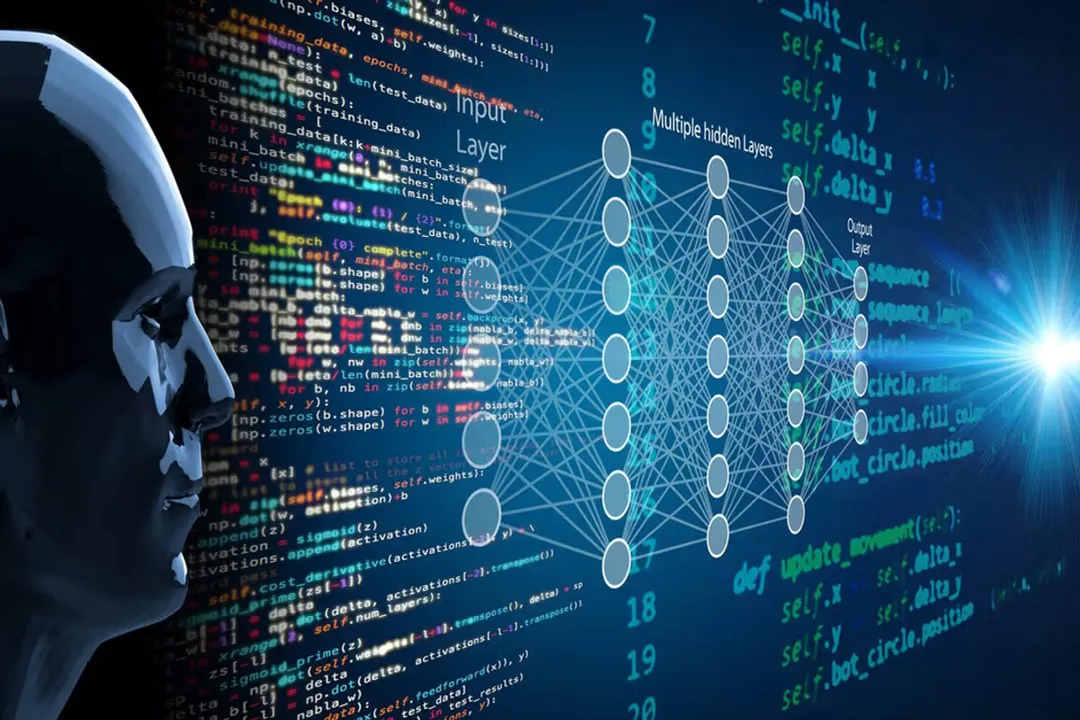
The concepts of deterministic and probabilistic outputs are also highly relevant when discussing modern AI and machine learning systems. [2][9]
# The Role of Predictability in Models
In the context of AI inference (when the model is making a prediction on new data), some models are inherently more deterministic than others. [2] A decision tree, for instance, operates by following a fixed path of "if/then" rules based on input features. Given the exact same input data, it will always follow the exact same sequence of splits to arrive at the leaf node, thus producing a deterministic result based on its structure. [4]
However, many advanced AI systems, particularly neural networks, inherently lean toward the probabilistic side, even during inference. [9] When a neural network classifies an image as "cat," it rarely just outputs the word "cat." Instead, it outputs a probability distribution across all possible classes: Cat: 92%, Dog: 6%, Fox: 2%. [2][9] The system is not stating it is a cat with certainty; it is stating that, based on its training, the probability that the image belongs to the "cat" category is 92%. [7] This provides the user with a measure of the model's confidence in its own assessment.
Furthermore, the training phase of many complex models introduces foundational randomness. [2] Techniques like weight initialization in neural networks often start with random values. If you train the exact same model architecture on the exact same dataset twice without controlling the randomness, you will likely end up with two slightly different final models, because the starting point of the random process was different each time. [2]
# Nuance in Computation and Testing
It is important to recognize that the line between these two concepts can sometimes blur, especially when examining the internal mechanics of an algorithm or considering testing scenarios. [4]
A common point of confusion arises because an algorithm designed to be probabilistic can be made to behave deterministically under controlled conditions. [4] Many probabilistic algorithms, such as those employing Monte Carlo simulations, rely on generating sequences of pseudo-random numbers. These sequences are generated algorithmically, not truly randomly. If you provide the algorithm with the same starting value, known as a seed, the sequence of "random" numbers it produces will be identical every time. [4]
When a tester or developer uses a fixed seed, they are effectively turning a probabilistic algorithm into a deterministic one for that specific run. This is incredibly valuable for debugging. If a system that relies on randomness produces a bug, locking the seed allows engineers to replay the exact sequence of random events that caused the failure, isolate the problem, and fix it, even though the production environment might allow the randomness to vary. [4]
If we look at this from the perspective of events themselves, a deterministic event has one and only one possible outcome, while a probabilistic event has multiple potential outcomes governed by chance. [7] An algorithm is simply a formal process designed to model or manage these events.
| Feature | Deterministic Algorithm | Probabilistic Algorithm |
|---|---|---|
| Output | Always the same for the same input | May vary for the same input |
| Basis | Fixed rules and logic | Rules plus randomness or statistics |
| Certainty | Absolute | Expressed as a probability or confidence score |
| Best For | Calculations, guaranteed correctness (e.g., payroll, sorting) | Approximation, modeling uncertainty (e.g., machine learning predictions) |
| Data Matching | Requires exact matches | Handles fuzzy, error-prone matches |
When building complex data pipelines, the design choice often comes down to which type of error is more tolerable for a given step. If a system requires maximum precision, you build deterministically, accepting that you will sacrifice some completeness (recall). If the goal is maximum coverage, you use probabilistic methods, accepting that some of the results will require manual verification later. [1]
In practice, many real-world systems do not use one or the other exclusively. Instead, they create layered architectures. A pipeline might first attempt deterministic matching using primary keys, achieving high-precision matches instantly. Then, for any records that remain unmatched, the system passes the remaining pool to a probabilistic engine to find the lower-confidence links that the strict, exact-match engine missed. [6] This hybrid approach is often the most efficient way to manage large, imperfect datasets, combining the speed and certainty of deterministic methods with the flexibility of probabilistic analysis. This layered strategy effectively manages the trade-off curve mentioned earlier, optimizing for both precision and recall in different stages of the overall solution.
The choice, therefore, is rarely about which algorithm is superior; it is about correctly framing the problem. If the requirement is to map out a single, known territory, you need a deterministic map. If the requirement is to estimate the most likely location of undiscovered land, a probabilistic survey is necessary. [7]
Related Questions
#Citations
Deterministic vs. probabilistic models: Guide for data teams
The Basics of Probabilistic vs. Deterministic AI: What You Need to ...
Deterministic vs probabilistic matching - Melissa Data
Are probabilisitc algorithms deterministic?
What is the difference between probabilistic and deterministic models?
CDP Deep Dive: Deterministic vs. Probabilistic Matching
What is the difference between a probability and a deterministic event?
Deterministic vs probabilistic matching | GrowthLoop University
Probabilistic and Deterministic Results in AI Systems - Gaine