How does matter curve spacetime?
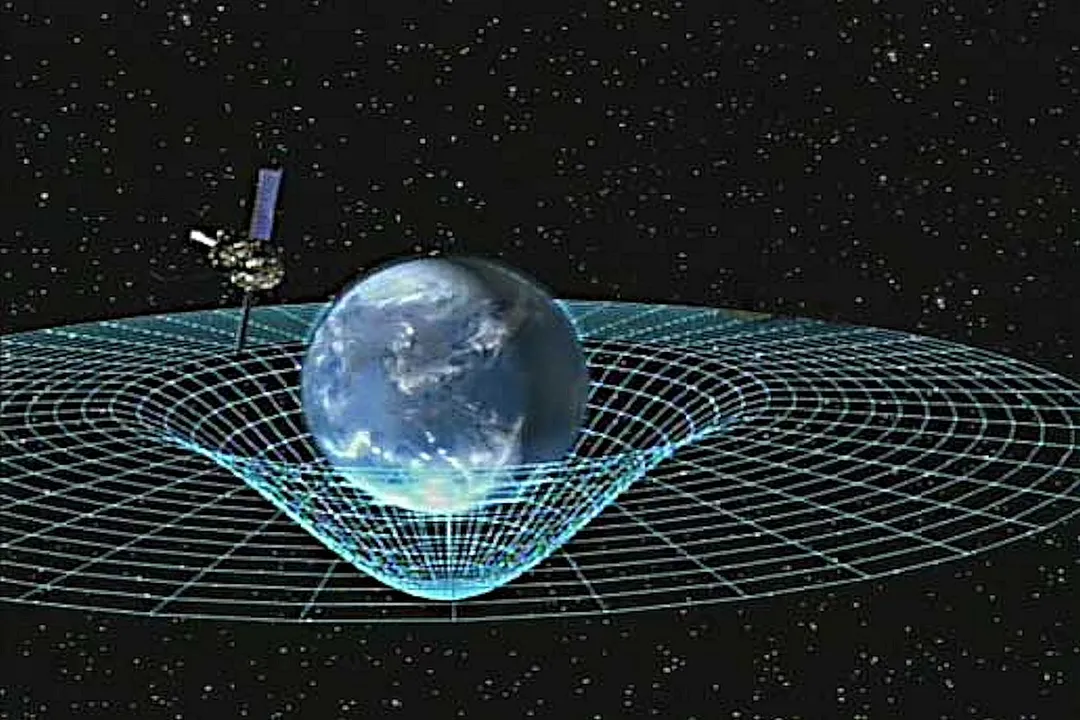
The concept of how matter warps the very structure of reality—spacetime—is one of the most profound ideas in modern physics, moving us far beyond the simpler gravitational picture of Sir Isaac Newton. [4][7] Instead of thinking of gravity as an invisible force pulling objects toward each other across empty space, Einstein’s theory of General Relativity paints a far more intricate geometric scene. [6][7] The fundamental principle is that matter and energy dictate the shape of spacetime, and that shape, in turn, dictates how matter moves. [2][6]
# Geometric foundation
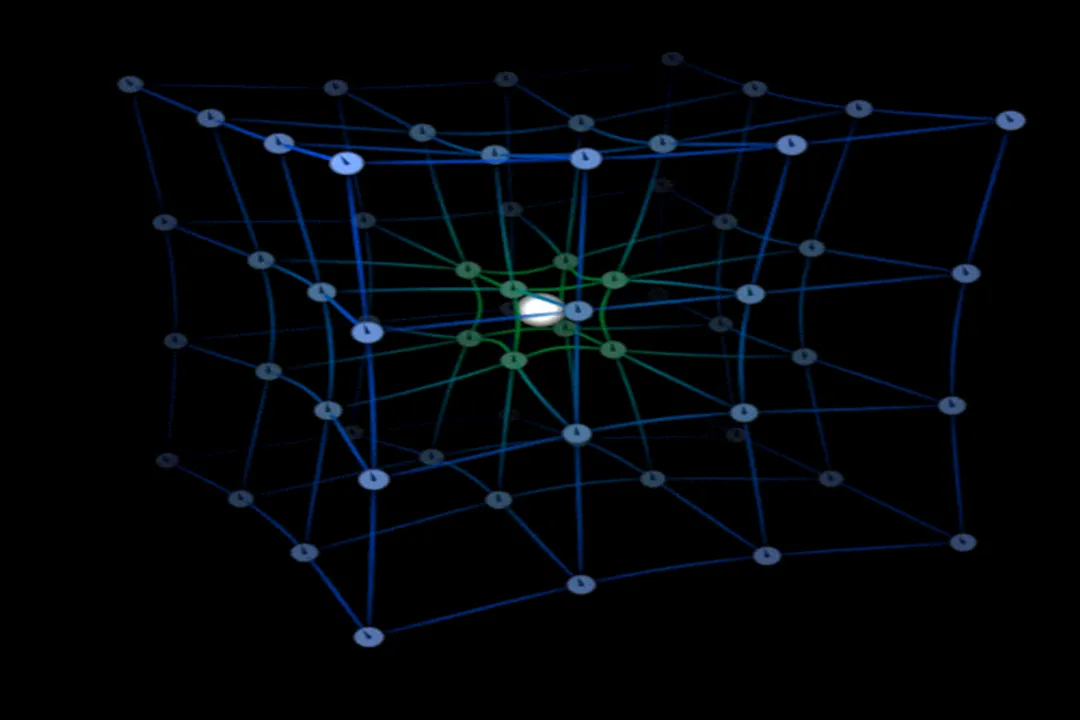
Spacetime itself is not merely a fixed, static background where events happen; it is a dynamic, four-dimensional entity woven from three dimensions of space and one dimension of time. [2] In this four-dimensional manifold, the presence of mass and energy causes distortions, much like a heavy bowling ball placed on a stretched rubber sheet. [6] This stretching and warping is what we experience as gravity. [4]
When we discuss how mass curves spacetime, we are describing the consequences of the Einstein Field Equations. [3] These equations are the mathematical heart of General Relativity, linking the geometry of spacetime on one side to the distribution of matter and energy on the other. [2][3] The core relationship can be summarized simply: mass tells spacetime how to curve, and curved spacetime tells mass how to move. [2][7]
# Stress energy
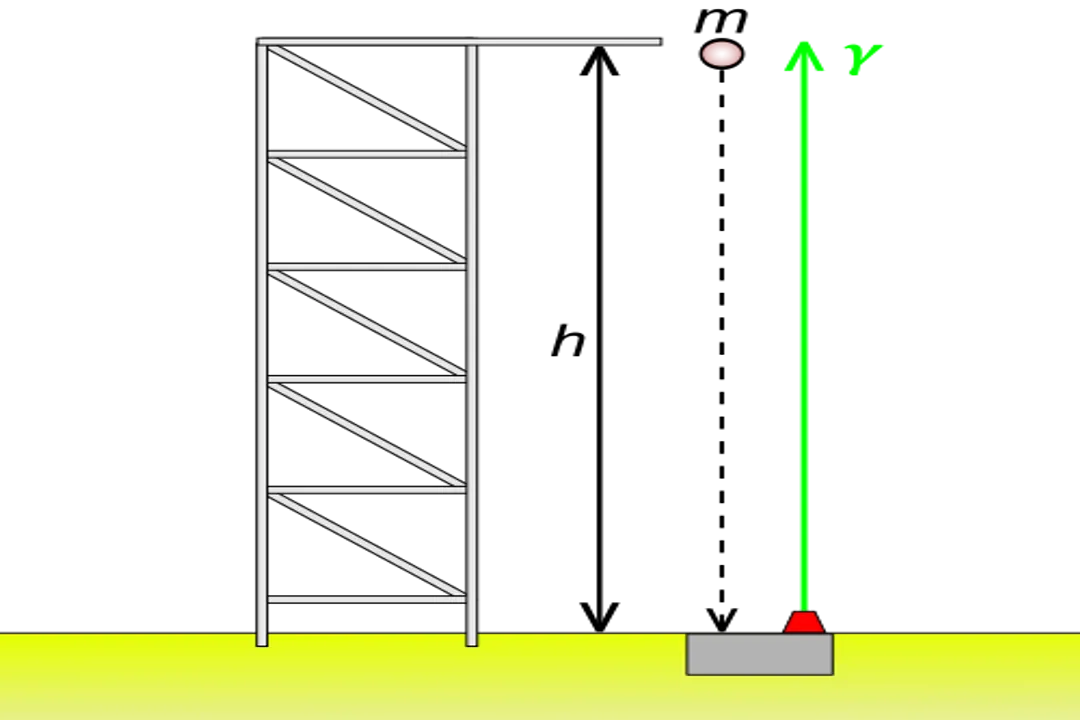
What exactly causes this curvature? While we often hear that mass causes the curve, the reality described by the field equations is more complete and nuanced. [3] The true source of spacetime curvature is the stress-energy tensor. [3][5] This tensor is a mathematical object that encapsulates all forms of energy and momentum present in a region of space, including:
- Mass-energy density (which is what we usually associate with objects). [3][5]
- Momentum density. [3]
- Pressure. [3]
- Stress. [3]
In the everyday, relatively slow-moving world of planets and people, the mass-energy density term dominates by far, which is why we can often simplify the explanation by just saying "mass". [3] However, for rapidly moving particles, intense gravitational fields, or systems involving high pressure—like the interior of a star or a neutron star merger—the contributions from momentum and pressure become significant in shaping the geometry. [3][5] This distinction is a key area where General Relativity supersedes classical Newtonian mechanics, which only accounts for mass. [7]

# Following paths

If mass curves spacetime, how does that translate into a planet orbiting a star instead of flying off in a straight line? The answer lies in geodesics. [2][6]
A geodesic is defined as the straightest possible path between two points in a curved space. [2] Think of an airplane flying between two distant cities on Earth; it follows a curve on a flat map, but that curve is actually the shortest, "straightest" route across the curved surface of the planet. [6] Similarly, in the curved spacetime around a star, a planet is not being pulled by a mysterious force; it is simply traveling along its natural, straightest trajectory—its geodesic—through the distorted geometry. [6][7]
If spacetime were flat (i.e., if there were no matter present), the geodesic would be a straight line, which aligns perfectly with our intuition about motion in the absence of forces. [2] However, the presence of the star curves the paths available, forcing the planet's path to appear as an orbit from our perspective in the flatter, less-curved region of space. [6]
# Rubber sheet analogy critique
The most common visualization for this concept involves a stretched rubber sheet where a heavy object creates a depression, and smaller marbles roll toward it. [4][6] This analogy is incredibly helpful for conveying the effect—that geometry influences motion—but it quickly breaks down when examining the mechanism itself. [6]
The primary issue is that the rubber sheet analogy incorrectly separates space and time. [4] In this visual aid, the mass depresses the two-dimensional space surface, and gravity is described as the motion down the slope into a third spatial dimension. [6] However, General Relativity demands that spacetime is four-dimensional, and the curvature happens in time as well as space. [2] In reality, the curvature of time dictates orbital motion more fundamentally than the spatial curvature, though both are intrinsically linked in the geometry. [6] A better, though less visual, way to think about it is that the presence of mass slows down time in that region relative to flat spacetime, and objects follow the paths of least resistance through that altered time flow. [6]
If one insists on using the sheet analogy, it’s helpful to remember that the slope represents the passage of time rather than just spatial depth. A region where time flows slower (near the mass) causes objects moving through it to appear to "fall" toward the source, as they are trying to keep their temporal path as straight as possible relative to a distant observer. [6]
# Uncurving Dynamics
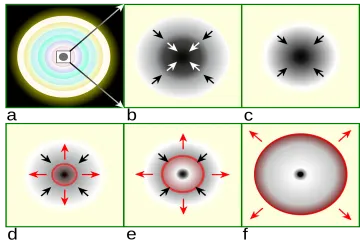
A natural follow-up question emerges when considering a dynamic system: If mass causes the curve, what happens when the mass moves or is removed? Does the spacetime "heal" itself?. [9]
When a massive object, like a star, changes its configuration—for instance, when two black holes orbit and merge—the distribution of stress-energy changes abruptly. [9] Because the information about this change cannot travel faster than the speed of light, spacetime does not instantly reflect the new configuration everywhere. [9] Instead, the geometric distortion propagates outwards like ripples on a pond, which we call gravitational waves. [9]
This propagation means that the spacetime fabric surrounding the source adjusts dynamically. If a massive body were instantly removed, the curvature it generated would not vanish immediately at its former location; instead, the 'dip' in spacetime would flatten out and travel away from that point at light speed, carrying energy away with it. [9] This mechanism demonstrates that the curvature is a physical property of the field itself, not just a static deformation tied permanently to the location of the mass that caused it. [9]
# Local perception versus geometric reality
For anyone living on Earth, gravity feels like a constant, downward pull. [1] We feel the ground pushing up against us, counteracting the gravitational influence. In the language of General Relativity, this feeling of being pushed is the key indicator that spacetime is not flat around us. [7]
Consider the difference between an observer near a massive object and one far away. An astronaut floating freely in deep space, far from any large bodies, would experience what is known as freefall—they are following a geodesic path. [1] To them, no force is acting; they are experiencing weightlessness. [1] In contrast, an observer standing on Earth is not following a geodesic path; the ground is exerting a physical, non-gravitational force (the normal force) to prevent them from following their natural curve through spacetime. [1][7] This push is what we interpret as weight. [1] Therefore, the very sensation of not being in freefall is evidence of spacetime curvature acting upon us. [7]
It is fascinating to compare the local experience with the large-scale description. If we consider the Earth orbiting the Sun, the orbital period is determined by the strength of the Sun’s gravitational field, which is a function of its mass () and the distance (). [7] The Newtonian calculation uses . In GR, while we don't use this force equation, the result for the orbit is incredibly close to the Newtonian prediction in weak fields. [7] The profound difference appears when calculating extreme scenarios, like Mercury's anomalous precession or the bending of light around the Sun, phenomena that the simple Newtonian force law cannot fully account for, but which are direct consequences of the geometry described by the field equations. [7] The geometry is the force.
# Curvature and Motion in Action
The effect of curvature is most dramatically seen in how it alters the path of light. Since light always travels along the shortest path, if spacetime is curved by a large mass, light must follow that curve. [4] This leads to the phenomenon of gravitational lensing, where the light from a distant galaxy is bent as it passes near a massive intervening galaxy or cluster. [4] This bending confirms that the geometry is altered even in regions where there is no matter except for the light itself, highlighting that the geometry is a property of the vacuum permeated by the field established by the large mass. [4]
To summarize the process of how matter curves spacetime: first, the presence of mass and energy (as quantified by the stress-energy tensor) generates a disturbance in the surrounding four-dimensional manifold. [3][5] Second, this disturbance manifests as a geometric warping, where the metrics defining distances and time intervals change from the flat values of special relativity. [2] Third, any object moving through this region follows the "straightest" available path—the geodesic—which appears to us as acceleration or gravitational influence. [6]
This geometric explanation provides a unified description of gravity that is consistent across all scales, from the orbit of the Moon to the structure of the cosmos. [2][7] The mechanism is not one of interaction through space, but a direct modification of space and time itself by the presence of physical stuff. [6]
#Videos
I finally understood why matter curves spacetime! (My mind is blown)
How does the curvature of spacetime create gravity? - YouTube
Related Questions
#Citations
"What" is causing spacetime to curve ? : r/Physics - Reddit
Curved spacetime - Wikipedia
Why does matter curve space time? - Physics Stack Exchange
I finally understood why matter curves spacetime! (My mind is blown)
Why exactly does matter curve spacetime? - Relativity IS Easy - Quora
GP-B — Einstein's Spacetime - Gravity Probe B
B. A New Understanding: Curved Spacetime
Mechanism by which mass curves space - Physics Forums
Ask Ethan: If Mass Curves Spacetime, How Does It Un-Curve Again?