Where did the spiral come from?
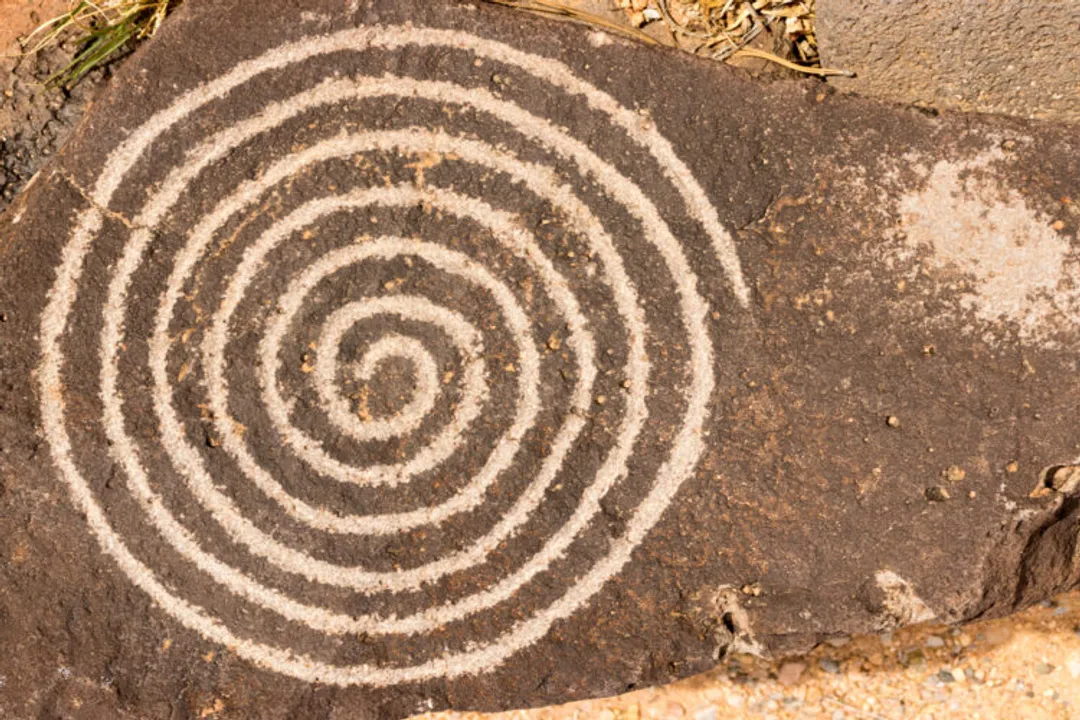
The spiral shape is perhaps one of humanity’s oldest and most persistent visual motifs, appearing across cultures and millennia, which naturally prompts curiosity about its true origin. It is not tied to a single geographical starting point or a singular moment of invention but appears to be a pattern observed, abstracted, and recorded independently across the globe. This ubiquitous symbol is deeply embedded in both the fundamental mathematics governing the universe and the earliest forms of human artistic expression.
# Natural Form
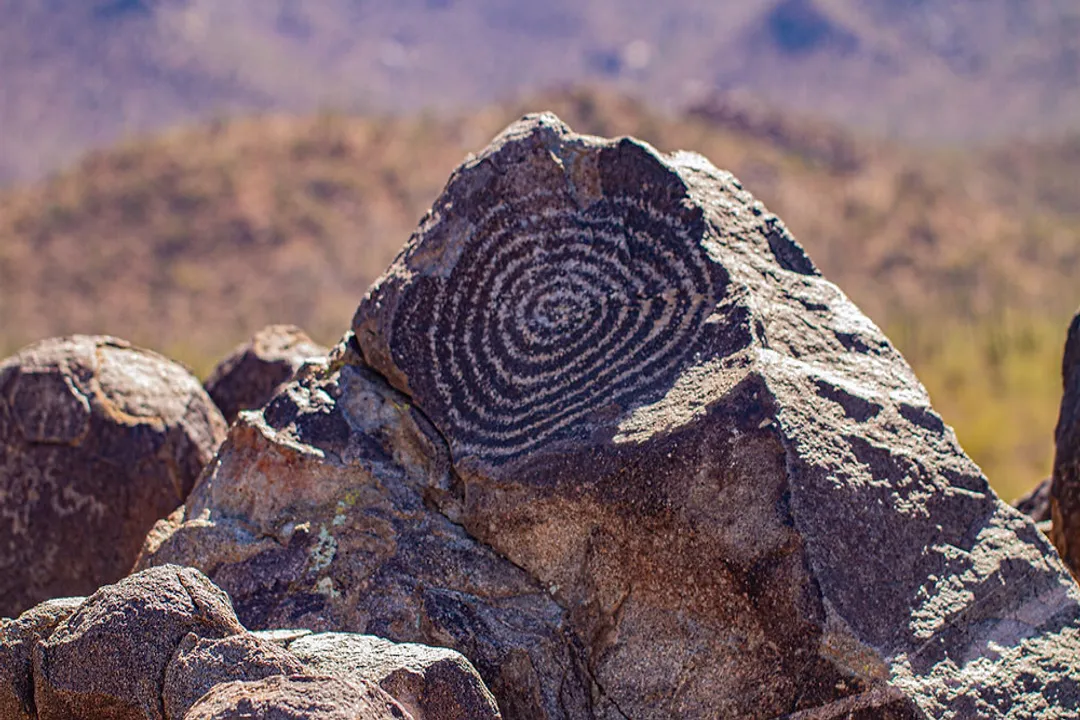
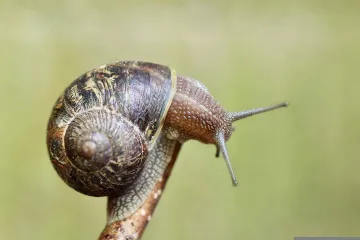
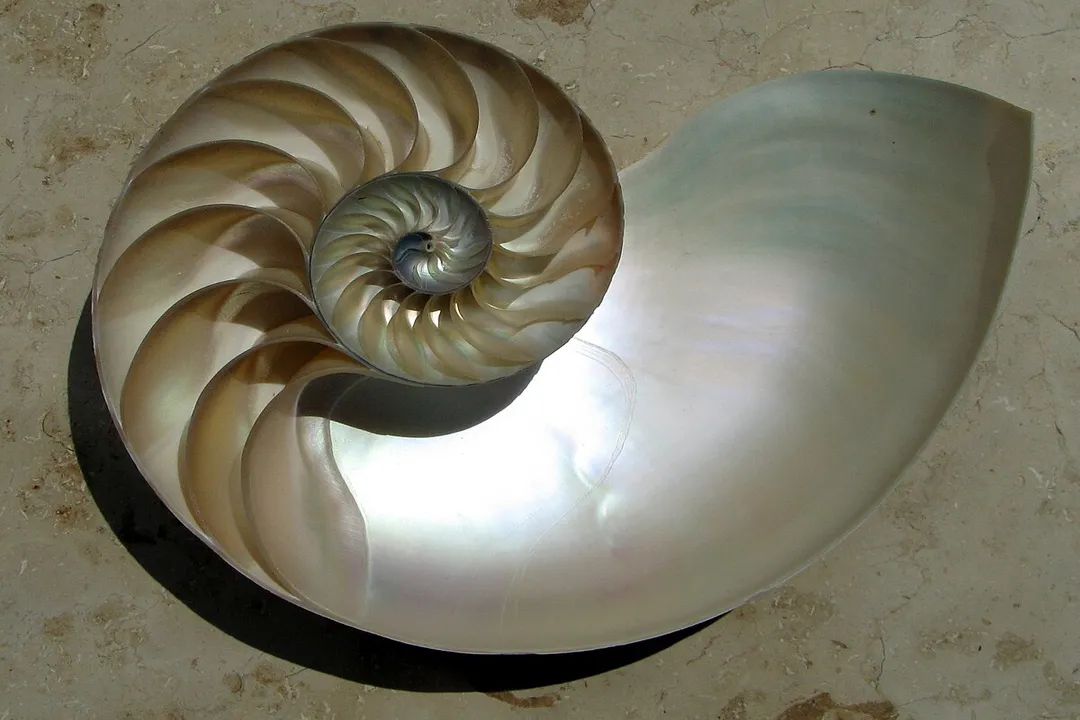
Mathematically, a spiral is defined as a curve that winds around a central point, never meeting it, while continuously moving farther away from or closer to that center. This description immediately connects the symbol to the physical world, as the logarithmic spiral—where the distance between successive turns increases by a constant factor—is a dominant feature in nature. Think of the arrangement of seeds in a sunflower head, the unfurling of a fern frond, or the chambered structure of a nautilus shell; these are all real-world expressions of the spiral principle. The cognitive process required to recognize and replicate this specific pattern of growth suggests that early humans were simply recording what they observed in their immediate environment. The remarkable consistency of the simple spiral form, appearing equally in Siberian petroglyphs and Irish passage tombs, hints that the cognitive process for abstracting this fundamental growth pattern might be universal, perhaps predating complex language. We see this pattern in seed heads, whirlpools, and even the shape of our own inner ear's cochlea, making it less an artistic choice and more a fundamental observation of physics encoded visually.
# Ancient Marks
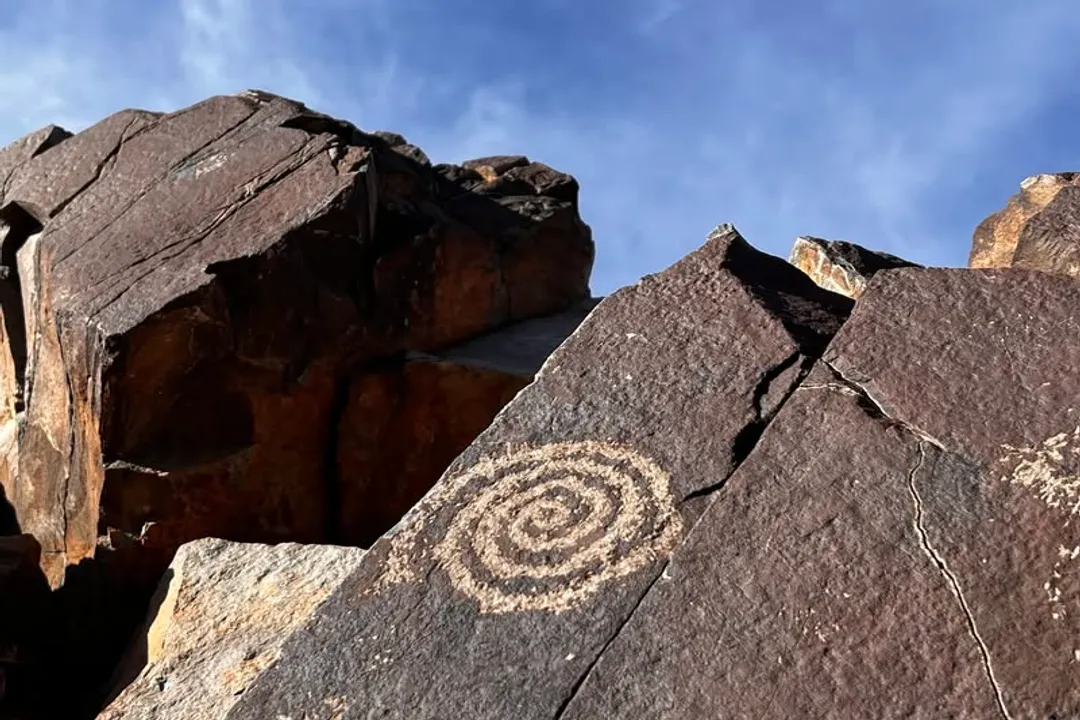
The archaeological record confirms the shape’s deep antiquity, pushing its documented use far back into prehistory, often predating written language or complex civilizations. Evidence shows the spiral inscribed on artifacts and monuments dating back to the Neolithic and Bronze Ages. These early marks are not random scribbles; they frequently appear intentionally placed within significant architectural features or on ritual objects. In some instances, such as discussions surrounding ruins in the American Southwest, similar markings appear independently, suggesting that across vast distances, different peoples arrived at the same conclusion regarding this form’s visual importance. The act of carving or painting the spiral transforms a natural observation into a deliberate cultural statement, marking it as something meaningful to the group.
# Diverse Symbolism
As the spiral moved from being a natural observation to a deliberate symbol within established societies, its meaning diversified considerably, reflecting local mythologies and spiritual beliefs. One of the most recognized examples of complex interpretation comes from Celtic imagery, where the spiral often appears in its triple form. For the Celts, this triple spiral could symbolize the cycle of life, death, and rebirth, or perhaps represent the three aspects of the divine feminine: the Maiden, Mother, and Crone. Contrast this with other views where the spiral simply denotes movement—an outward path of creation and expansion, or an inward path toward meditation and the core of being. The context of the discovery heavily influences the assigned meaning, shifting it from a representation of the cosmos to a personal symbol of spiritual alignment.
It is interesting to note how this symbol’s interpretation often mirrors the structure of the spiral itself. While a circle represents totality or an eternal, unchanging state, the spiral inherently communicates process—movement through time or space. Considering the dual nature—a curve that can be traced infinitely inward (introspection, death) or infinitely outward (creation, expansion)—the spiral inherently captures the essence of becoming. Unlike a simple circle, which represents completion or eternity, the spiral denotes process. This dual potential explains its enduring utility: whether one is charting an expanding universe or meditating on personal spiritual growth, the shape provides a single, elegant visual language for dynamic change.
# Word Roots
The profound connection between the shape and human belief is not limited to visual art; it appears to extend into language itself. In English, there is an intriguing etymological relationship suggested between the words associated with the spiral and those relating to spirituality. If these terms share common roots, it suggests that from the earliest stages of language formation, the physical manifestation of the curve was intrinsically associated with intangible concepts like breath, life force, or the movement of the soul. This linguistic echo provides a subtle confirmation that the shape was immediately understood not merely as decoration, but as a carrier of essential, dynamic meaning.
# Modern Power
Even as technology and science provide new understandings of the cosmos, the spiral remains an "ancient enigma that still resonates today". Its power has not diminished; rather, it continues to serve as a useful model for contemporary understanding of cyclical systems and growth. Modern artists and thinkers continue to turn to the shape because of its inherent qualities: it suggests movement, connection, and infinity simultaneously. Its ability to capture the sense of continuous, winding motion—whether in the structure of a galaxy or the patterns explored in literature—ensures its continued relevance. The origin of the spiral is therefore not a single discovery in a specific ancient cave, but a continuous, near-instinctual human reaction to the fundamental mechanics of growth found everywhere we look.
#Citations
The Spiral: An Ancient Model Useful for Contemporary Times
The Symbolism of the Spiral in Celtic Imagery | Ancient & Oriental
The ancient enigma that still resonates today - BBC
Do the English words for spirituality and spiral have common roots?
One simple beautiful spiral. From what I have read the spiral may be ...
The Spiral | Uzumaki Wiki - Fandom
Understanding the spiral - The Stone Spirit
Spiral Symbol - History & Meaning| CultureTaste - Blog
Spiral - Wikipedia
Spiral symbolism - Mythical Realms - LiveJournal