What is the origin of the spiral?
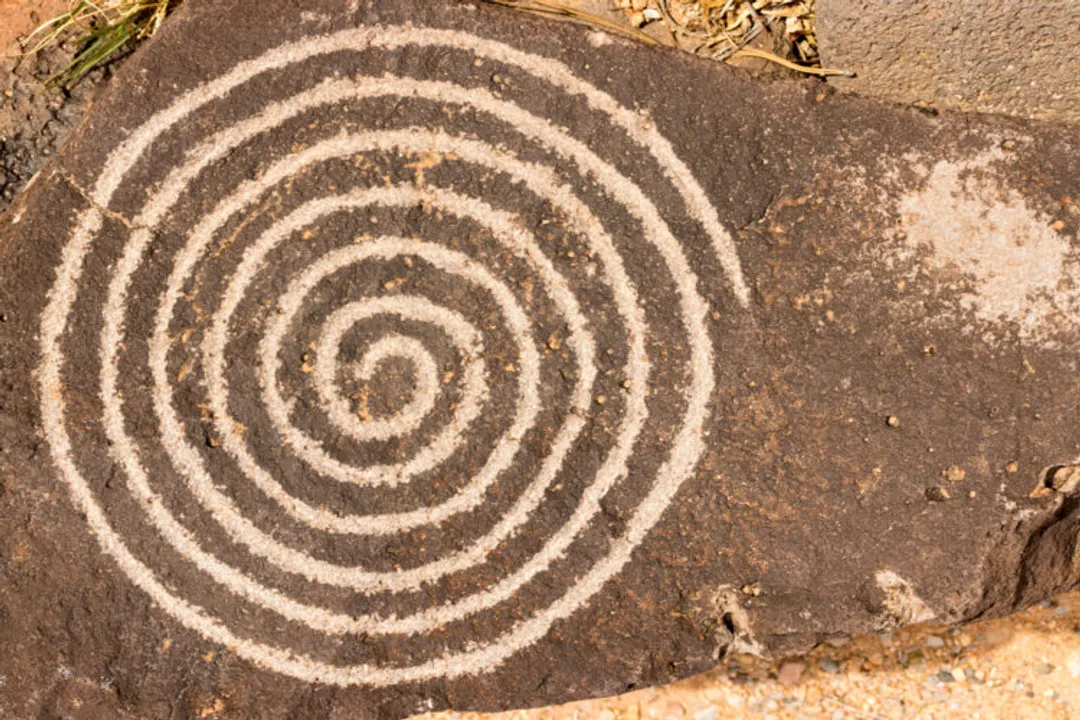
The spiral form presents itself across the spectrum of existence, from the microscopic arrangements within a seashell to the majestic sweep of a galaxy. It is perhaps one of humanity’s oldest and most enduring motifs, a shape that seems less invented by us and more discovered in the world around us. To ask about the origin of the spiral is not just to ask about the first piece of art decorated with the curve, but to question the genesis of a fundamental organizational principle in nature and mathematics. This shape embodies movement, expansion, and cyclical return all at once, making its true "origin" a complex weave of geometry, biology, and belief systems that span millennia.
# Natural Geometry
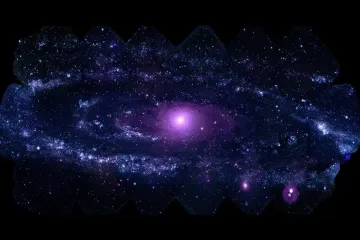
At its most basic, a spiral is a curve that winds around a central point while continually moving farther away from that center. This is a mathematical definition, yet it perfectly describes countless natural phenomena. The curve is not rigid; it can be generated in various ways, leading to different types of spirals. For instance, the Archimedean spiral is created when a line segment rotates at a constant angular velocity while its endpoint moves outward at a constant speed, resulting in equally spaced turns. Contrast this with the logarithmic or equiangular spiral, where the distance between successive turns increases as the spiral moves away from the center—a geometry that nature favors in structures like nautilus shells.
This inherent presence in the physical world suggests a primary origin long predating human artistry. We see it in the arrangement of seeds in a sunflower head, the branching patterns of horns, and the double helix structure of DNA. The fact that the geometry underpinning these biological necessities so closely mirrors the curves drawn by ancient peoples suggests that these early artists were likely observing and recording patterns already established in their environment. The spiral, therefore, originates not from a single human hand but from the inherent mathematical laws governing growth and energy dispersal in the universe.
# Earliest Traces
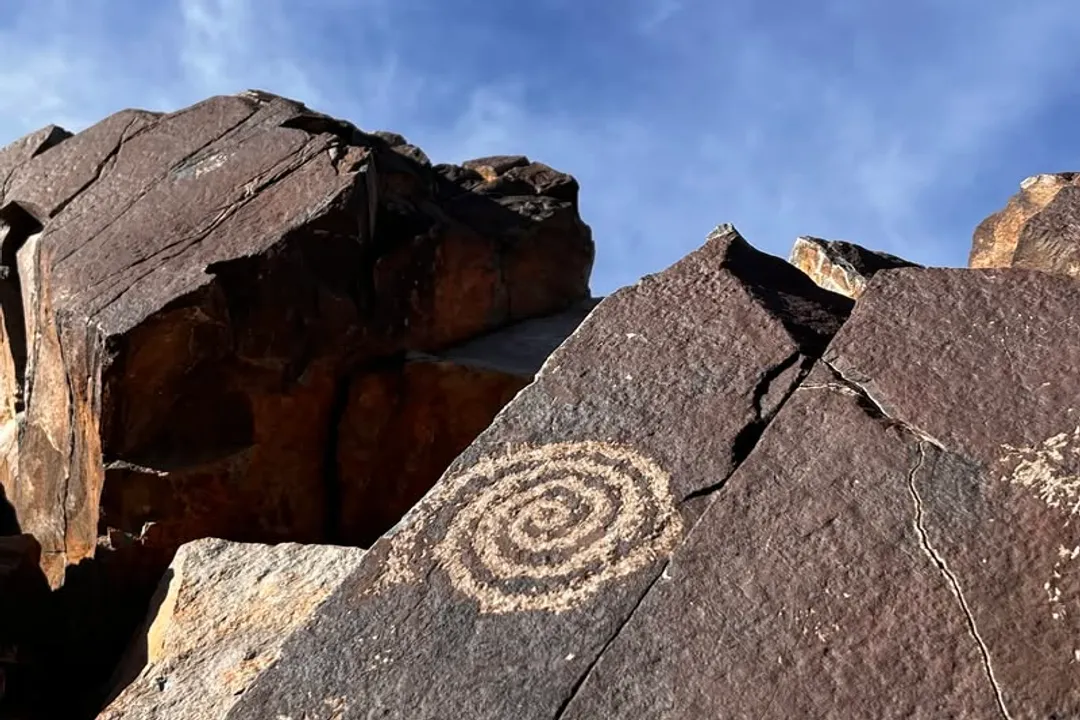
Pinpointing the very first instance of a spiral symbol is challenging, as its appearances are scattered across widely separated prehistoric cultures. Evidence suggests the symbol appeared independently and repeatedly in different places and times, pointing again to its natural prevalence. In art, the spiral form shows up on ancient pottery and in architectural details worldwide. In some contexts, like the markings found on ancient Native American ruins, these simple curves suggest a long, deep history of symbolic communication among disparate groups.
The spiral motif features prominently in the Neolithic period and throughout the Bronze Age across Europe. It is not just a decorative filler; it often represents a profound concept. For the Celts, the double or triple spiral (triskele or triple spiral) was a powerful emblem. These shapes are frequently interpreted as representing cycles of existence—birth, life, death, and rebirth—or the unfolding of spiritual knowledge. Imagine standing before a megalithic site thousands of years ago; the repetitive, mesmerizing curve etched into the stone would have communicated complex ideas about time and transition far more effectively than a simple line or dot.
When we compare early symbolic uses, there's an interesting divergence. While some cultures used the spiral to denote expansion outward (like the growth of a community or the reach of a god), others emphasized the inward focus it demands, suggesting introspection or a journey to the center of being. This duality seems to be inherent in the shape itself, not imposed by the culture.
# Decoding Shared Meanings
As the spiral moved from natural observation into deliberate cultural iconography, its meaning became richer, often centering on concepts of dynamic process and infinite connection.
# Cycles and Divinity
Across various traditions, the spiral is deeply tied to cycles. In the context of ancient goddess worship, the inward and outward flowing curve often symbolizes the divine feminine principle. It illustrates the continuous flow of life, fertility, and the cyclical nature of the body and the seasons—the constant rhythm of creation and withdrawal. This resonates strongly with the cyclical nature of the moon and the tides, forces often associated with feminine deities.
In Celtic imagery, the spiral is fundamentally linked to movement and transformation. A single spiral might denote the path of the soul or the journey toward spiritual enlightenment, a continuous progression without a true end point. The sheer persistence of this symbol across continents and millennia suggests it taps into fundamental human experiences: birth, growth, change, and the unknown future.
# Unity and Path
The shape’s visual quality suggests a kind of unified field. It is both singular—winding around one point—and plural—composed of infinite turns. This makes it an excellent metaphor for seeking unity or understanding the connection between the microcosm (the self) and the macrocosm (the universe). In certain mystical or philosophical frameworks, this is taken to an extreme; for example, in some fictionalized universal models, a concept like the "Swirl of the Root" might be invoked to represent the very origin point of reality, the source from which all possibility springs forth. While rooted in fiction, this idea mirrors the human drive to find a single, originating principle for everything we observe.
If you are designing any system or narrative today—whether a product workflow or a personal development plan—the spiral offers a powerful structural analogy. It suggests that progress is rarely linear; you revisit old themes or challenges, but from a slightly different, more evolved perspective, which is far more accurate to real-world experience than a straight line from A to B. An insightful designer might deliberately use a spiral path in wayfinding signage, not just because it’s aesthetically pleasing, but because it subconsciously suggests an unfolding, continuous experience rather than a sudden destination.
# Comparative Symbolism
Examining how different cultures treated the spiral reveals fascinating nuances in their perception of movement. Consider a comparison between the outward-moving, expanding spiral often found in Neolithic art symbolizing growth and the tight, sometimes labyrinthine, inward spiral seen in later monastic art symbolizing contemplation or penance. The structure is the same—a path around a center—but the direction of focus changes the perceived intent. The outward spiral emphasizes action and manifestation in the physical world, while the inward spiral emphasizes reflection and the journey toward an inner truth.
This directional quality is something we can observe in modern contexts too. For example, an investor tracking stock market cycles might see the repetitive peaks and troughs as an outward spiral of economic expansion and contraction over decades, while a therapist might view a patient’s process of addressing past trauma as an inward spiral, repeatedly approaching a difficult core memory from various angles until integration is achieved. The spiral form, in its simplicity, accommodates both the grand scale of history and the intimate scale of the individual psyche.
One interesting divergence in interpretation often appears when comparing symbols related to boundaries. While a tightly wound spiral can represent a protective boundary, much like the coils of a snake protecting its young, a looser, more open spiral suggests invitation and flow. If we imagine these symbols etched onto ancient entryways, the tightness of the spiral might have served as a cultural marker: this space is sacred and requires slow, mindful entry, versus this space is open to community exchange.
# Artistic Fidelity and Mathematical Rule
The beauty of the spiral in art lies in its ability to evoke motion without actual movement, a visual paradox that captivates the eye. Artists and architects have long played with its proportions to achieve specific effects. The fidelity to the mathematical rule dictates the perceived quality of the spiral. A near-perfect logarithmic spiral, where the turns expand geometrically, often feels organic and inevitable—the shape of a living thing. An Archimedean spiral, with its uniform spacing, often feels more deliberate, perhaps the path of a carved tool or a planned dance.
It is worth noting that achieving a perfect mathematical spiral in a handcrafted medium, like carving stone or throwing clay, is incredibly difficult without modern aids. Therefore, many ancient spirals are approximations. The slight imperfections—the slight wobble or change in spacing—might actually be what lends them their vital, human quality. A perfect, machine-generated spiral can feel sterile, whereas the hand-drawn spiral carries the experience of the creator's focus and effort within its curves. This human element is a critical part of its origin in art, even if its origin in nature is purely mathematical. The translation from natural law to human artifact introduces the element of personal engagement.
If we were to analyze a collection of artifacts from a single archaeological site, a small, unacknowledged analytical tip emerges: by measuring the ratio between the width of consecutive turns, one could hypothesize about the craftsman’s primary influence. If the ratios cluster tightly, they likely had access to or knowledge of precise measuring methods (perhaps using twine or water flow). If the ratios vary wildly, the artist was likely relying purely on visual estimation based on patterns observed in shells or vines, prioritizing aesthetic flow over strict mathematical adherence.
# The Unfolding Path
The origin of the spiral, then, is not a single point in time or space. It is a recurring phenomenon that spans the physical, the symbolic, and the conceptual. It originated in the physics of growth, was adopted by early humans as a shorthand for life’s great cycles, and continues to serve as a metaphor for progress that acknowledges return. It represents movement that is both endless and contained, a perfect visual paradox that continues to draw us toward its center and push us toward its edge.
It is this inherent dual nature—the tension between drawing inward toward a source and projecting outward into creation—that ensures the spiral’s enduring relevance. It stands as a testament to the profound connections between the unseen laws that structure the cosmos and the conscious symbols we use to make sense of our brief time within it.
Related Questions
#Citations
Spiral - Wikipedia
The Spiral: An Ancient Model Useful for Contemporary Times
The Spiral : r/AlternativeHistory - Reddit
Swirl of the Root | TYPE-MOON Wiki - Fandom
Spiral - Buffalo Architecture and History
Spiral in art: a universal symbol - Ceramica Geometrie
The Symbolism of the Spiral in Celtic Imagery | Ancient & Oriental
One simple beautiful spiral. From what I have read the spiral may be ...
Spiral as the symbol of the Goddess - Womenbodiment