What can be a substrate?
The term substrate appears frequently across scientific and technical disciplines, often confusing those new to a field because its meaning shifts slightly depending on the context, yet it always refers to a foundational element upon which some action or process occurs. Fundamentally, a substrate is the substance or material that undergoes a reaction, serves as the base for growth, or acts as the underlying surface for a component. Understanding what constitutes a substrate requires looking beyond a single definition and appreciating its role as the recipient or foundation in a specific interaction.
# Chemical Reactants
In the world of chemistry, especially when discussing reactions catalyzed by enzymes, the substrate is defined as the molecule upon which an enzyme acts. It is the reactant in an enzyme-catalyzed reaction. The enzyme facilitates the conversion of this substrate into a product. For instance, in the reaction involving the enzyme sucrase, the substrate is sucrose, which is broken down into glucose and fructose.
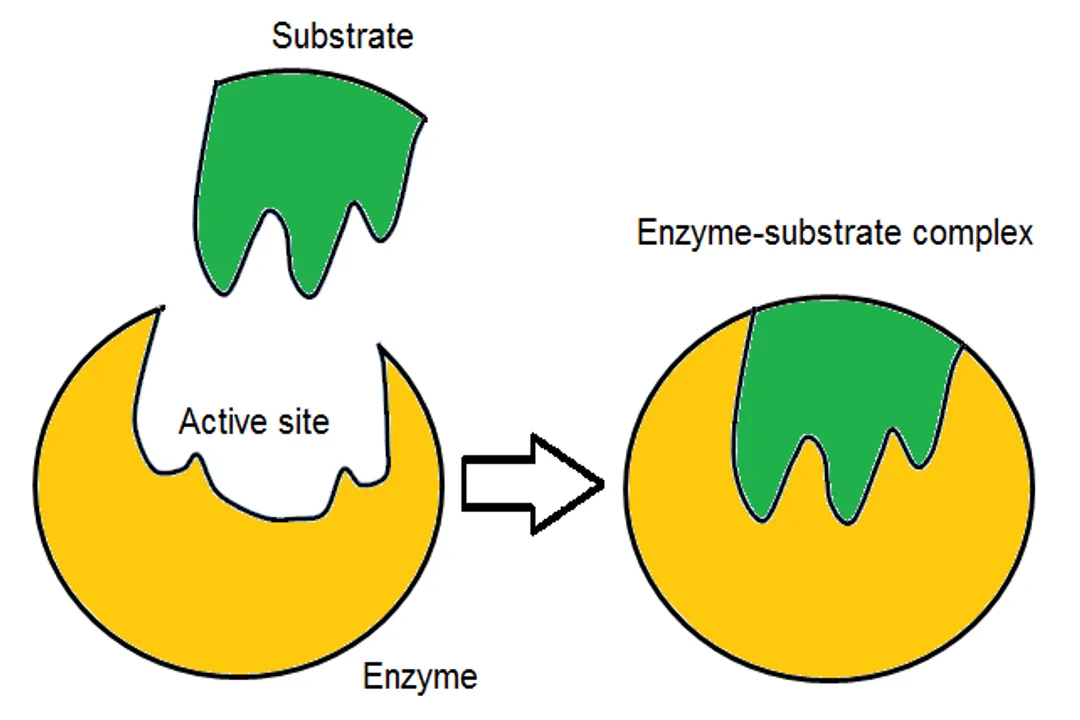
A substrate is not just any reactant; it is the specific molecule that fits into the active site of the enzyme. This specificity is paramount; an enzyme typically catalyzes only one specific reaction or acts on a very limited range of related substrates. When the enzyme binds to the substrate, an enzyme-substrate complex is temporarily formed before the product is released, allowing the enzyme to participate in another cycle.
The concentration of the substrate plays a direct role in the rate of this reaction. If the substrate concentration is low, increasing it will generally increase the reaction rate because more enzyme active sites are being occupied. However, once the substrate concentration becomes very high, the enzyme becomes saturated, meaning all active sites are occupied, and the reaction rate reaches its maximum velocity (), at which point further increases in substrate concentration do not increase the speed of the reaction. This concept is central to understanding enzyme kinetics.
Beyond enzyme action, the term substrate can also refer more generally to the initial substance that is transformed during a chemical reaction, though the enzyme context is the most common specialized use. In non-enzymatic reactions, the substrate is often simply the starting material.
# Enzyme Specificity
The relationship between the enzyme and its substrate is frequently compared to a lock and key mechanism. The active site of the enzyme is shaped precisely to accommodate only its specific substrate molecule. If the molecule does not fit correctly, the enzyme cannot catalyze the reaction. This binding affinity is key to biological regulation.
Consider the distinction between a substrate and an inhibitor. While a substrate is consumed and converted to a product, an inhibitor is a molecule that binds to the enzyme, often at the active site, preventing the actual substrate from binding and thus slowing or stopping the reaction entirely. Another related term is the cofactor, which is a non-protein chemical compound that assists the enzyme in catalysis but is not the reactant itself. This highlights that the substrate is strictly the material being acted upon, distinct from the agents doing the acting or assisting the action.
It is worth noting that in certain biological systems, a product of one reaction can sometimes serve as the substrate for the next enzyme in a metabolic pathway, creating a continuous chain of transformations.
# Materials Base
Moving away from molecular interactions, the definition of substrate broadens considerably when discussing materials science, engineering, and even printing. In this context, the substrate is the physical material that supports, anchors, or forms the base layer for another material or device.
For example, in microelectronics and semiconductor manufacturing, the substrate is the wafer—often made of silicon—upon which the integrated circuits are built. The choice of substrate material here is critical because it dictates electrical properties, thermal dissipation, and mechanical stability for the entire device. Similarly, in the creation of optical coatings, the substrate is the piece of glass or plastic onto which the thin films are deposited.
In engineering fields, the substrate serves as the surface onto which a process is performed or a coating is applied. This application is seen in fields like chemical engineering where processes might occur on the surface of a solid material.
In the realm of art and graphics, the meaning aligns with the base material. A painter's canvas, a photographer's paper, or even a wall can function as a substrate for paint, ink, or other media. The substrate must possess certain properties, like absorbency or strength, suitable for the medium being applied.
To illustrate the diversity, one can look at how the physical requirements contrast with the chemical ones. When an enzyme acts, the substrate only needs to fit the active site; its bulk physical properties are largely irrelevant. Conversely, a microchip substrate must have precise electrical characteristics and flatness, irrespective of the chemical reaction it might facilitate on its surface.
| Field | Substrate Role | Key Property | Example Material |
|---|---|---|---|
| Biochemistry | Reactant acted upon by an enzyme | Molecular fit/shape | Sucrose, Lactose |
| Electronics | Base layer for circuit fabrication | Electrical conductivity/insulation, flatness | Silicon wafer |
| Coatings/Printing | Physical foundation for applied media | Adhesion, surface energy, mechanical strength | Glass, polymer film |
| General Chemistry | Starting material in a transformation | Chemical composition | Organic molecule undergoing synthesis |
An interesting analysis arises when considering substrate selection in manufacturing. In advanced materials deposition, like chemical vapor deposition (CVD), the substrate material directly influences the resulting film's microstructure. For example, depositing a specialized metal film onto a slightly rough polymer substrate versus a highly polished single-crystal sapphire substrate will yield vastly different material properties like grain size and adhesion strength, even if the CVD process itself remains chemically identical. This shows that the substrate dictates the scale and quality of the final product just as much as the deposition chemistry does.
# Surface Interaction
The concept of a substrate also extends into areas where biological cells are grown or analyzed. In cell culture, the substrate is the physical surface that the cells attach to and grow upon. Here, properties such as surface energy, roughness, and chemical composition must be carefully managed because they profoundly affect cell adhesion, differentiation, and overall viability. A poorly chosen substrate can prevent cell attachment entirely, effectively halting the experiment or growth process before any biological process begins.
In computational chemistry, or when modeling reactions, the concept of a "surface" or "bulk" substrate can be used to define the environment surrounding the reactants, impacting reaction thermodynamics even if it is not directly consumed. A related idea in pharmacology involves the receptor being the substrate for a drug's action, where the drug binds to the receptor site, similar to how an enzyme binds its substrate, thereby modulating a biological signal.
One practical consideration across all fields is the method of preparation. For instance, preparing a semiconductor substrate involves rigorous cleaning and etching processes to ensure the surface is atomically clean and free of contaminants that could act as unintended binding sites or defects in the final device architecture. A comparable step in biochemistry is ensuring the enzyme preparation is pure so that only the intended substrate interacts with the active site. In both cases, purity of the interface is non-negotiable for reproducible results.
# Examples Simple
To solidify the idea, examples help clarify the role across contexts. If you are digesting starch with amylase, the starch is the substrate. If you are growing bacterial colonies on an agar plate, the agar itself acts as the nutrient-rich substrate supporting the growth. If you are vapor-depositing gold onto a piece of treated glass to make a mirror, the glass is the substrate.
When discussing substrates generally, it's helpful to remember that they are often the passive component in the initial setup—the thing being acted upon or supporting the action—as opposed to the active agent, like the enzyme or the deposition source. An interesting observation is how material science terms occasionally bleed into biology; for example, in immunology, certain types of molecules used to detect antibodies might be called "solid-phase substrates" when they are affixed to a plastic well plate, blurring the line between the physical base and the chemical reactant.
Another helpful distinction involves how "substrate" differs from "medium." A growth medium provides the general nutritional broth for an organism or reaction, but the substrate is the specific molecule being metabolized or the physical surface upon which an action is localized. For instance, in hydroponics, the nutrient solution is the medium, but the plant roots are the biological substrates interacting with that medium. This means that what is classified as the substrate depends entirely on the specific process being monitored or engineered.
When approaching a new experiment or manufacturing step, a valuable mental check is to ask: "What component is physically supporting the process, or what molecule is chemically intended to be transformed by the primary agent (enzyme, catalyst, coating head)?" The answer to that will almost certainly define the substrate for that specific scenario.
Related Questions
#Citations
What is a Substrate | Beyond Chemistry - Stahl
Substrate (chemistry) - Wikipedia
Chemical Substrate Definition - BYJU'S
Substrate Definition & Example - Lesson - Study.com
What are substrates? What are some examples? - Quora
Substrate - Definition and Examples - Biology Online Dictionary
substrate | Photonics Dictionary
What is a Substrate? | A guide to art terminology - Avant Arte
What does substrate mean? - Biology Stack Exchange
Substrate – Knowledge and References - Taylor & Francis