What are examples of substrates?
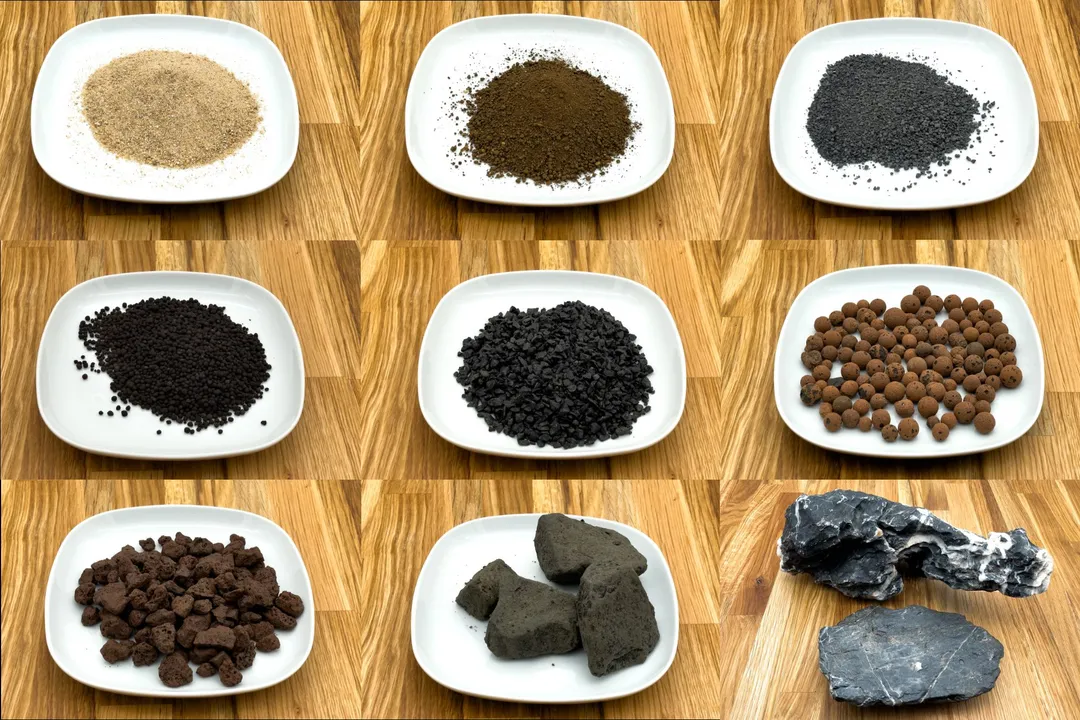
The term substrate appears across many scientific and technical disciplines, frequently causing confusion because its meaning shifts significantly depending on the context—whether you are discussing living cells, chemical reactions, or the manufacturing of electronics. Fundamentally, a substrate is a base material, a surface, or a molecule upon which something else acts, rests, or is built. [1][7] It serves as the foundation or the starting material for a process or reaction, making it an essential, though sometimes overlooked, component in numerous fields. [8]
# Surface Base
In the broadest physical sense, a substrate is the underlying material or surface upon which a coating, film, or structure is applied or deposited. [10] Think of it as the foundation material. [7] This definition is particularly prevalent in materials science and engineering, where the physical properties of the base layer are critical to the performance of the final product. [10] For example, in microelectronics, the substrate might be a wafer of silicon or glass onto which complex circuitry is grown layer by layer. [10] The quality, flatness, and thermal characteristics of this base layer directly influence the integrity and function of the integrated circuits built upon it. [10]
This concept extends to manufacturing processes involving adhesion or coating. A substrate could be any solid material onto which a layer of paint, metal, or adhesive is applied. [1] The substrate must possess specific characteristics—such as roughness, chemical inertness, or heat resistance—to ensure the applied layer adheres properly and performs as intended throughout its lifespan. [1][7] The nature of the substrate dictates the preparation required before the secondary material can be successfully added. [1]
# Biological Matters
Within biology and biochemistry, the definition centers on molecular interaction, specifically concerning enzymes. [2][3] Here, a substrate is the specific molecule upon which an enzyme acts, facilitating a chemical change. [3] This interaction is the core mechanism driving metabolism and biological regulation within living organisms. [2]
# Enzyme Interaction
Enzymes are biological catalysts that speed up chemical reactions without being consumed themselves. [3] The molecule that binds to the enzyme's active site—the specific region where the catalytic action occurs—is the substrate. [3] A common way to visualize this is the "lock-and-key" model, where the substrate (the key) fits precisely into the enzyme (the lock). [3] Once bound, the enzyme facilitates the conversion of the substrate into one or more products. [3]
The concentration of the substrate plays a vital role in determining the rate of an enzyme-catalyzed reaction. [4] Generally, as the substrate concentration increases, the reaction rate also increases until all the available enzyme active sites are occupied—a point known as saturation. [4] Beyond saturation, adding more substrate will not increase the reaction speed because the enzyme itself becomes the limiting factor. [4] Researchers often study this relationship to understand enzyme kinetics and the efficiency of a biological process. [4]
It is important to note that while a primary substrate is the molecule being transformed, some reactions involve an auxiliary molecule that also binds to the enzyme to assist in the transformation; these might be referred to as co-substrates or secondary substrates, depending on the specific biochemical pathway. [2] The biological definition is highly specific, tied entirely to the catalytic mechanism occurring at the molecular level. [2]
# Media Growth
In microbiology and cell culture, the term substrate takes on a more structural meaning, similar to the materials science definition but applied to biological growth environments. [2] A substrate can refer to the solid surface upon which microorganisms, such as bacteria or fungi, grow, or the solid medium that supports the growth of cultured cells. [2] For instance, when growing cells in a laboratory dish, the treated plastic surface acts as the substrate. [2]

# Chemical Reactions
In organic and general chemistry, the substrate often refers to the starting material that undergoes a chemical transformation, often being acted upon by a reagent or catalyst. [9] While in many general contexts, the terms "substrate" and "reactant" are used interchangeably for the starting material, "substrate" often carries the implication of being the target of a reaction or the surface upon which a reaction occurs. [9]
# Reaction Target
When discussing reactions involving surfaces, such as heterogeneous catalysis, the substrate is the material placed on the catalyst surface where the reaction takes place. [9] Consider reactions occurring on a metal surface; the substance that binds to that surface to be chemically modified is the substrate. [9]
In synthetic chemistry, especially when dealing with functional group transformations, the substrate is the molecule that possesses the functional group being modified. [9] For example, if a chemist is performing an esterification reaction, the alcohol or carboxylic acid component acts as the substrate for the introduction of the new functional group via the other reactant (the reagent). [9] This usage emphasizes the role of the molecule being altered. [9]
# Solvents and Medium
In some specialized chemical contexts, particularly those involving surface science or specific reaction mechanisms, the substrate can refer to the inert medium or solvent that allows the reaction to proceed or provides the physical environment for observation. [8] This usage highlights the substrate's role as the constant base against which change is measured. [8]
# Examples Summary Table
The diverse applications of the term substrate make a direct comparison helpful for understanding its context-dependent nature.
| Field | Substrate Example | Primary Role | Contextual Comparison |
|---|---|---|---|
| Biochemistry | Glucose | The molecule chemically altered by an enzyme (e.g., hexokinase) [3] | Acts as a reactant, specifically bound to a catalyst. [4] |
| Cell Culture | Treated Petri Dish Plastic | The physical surface supporting cell attachment and growth [2] | Acts as an inert physical base, analogous to a building foundation. [7] |
| Semiconductors | Silicon Wafer | The base material onto which integrated circuits are fabricated [10] | Must possess high purity and specific crystal structure for thin-film deposition. [10] |
| Organic Synthesis | An aromatic ring in a bromination reaction | The molecule bearing the functional group that undergoes substitution [9] | Acts as the principal reactant targeted by a reagent. [9] |
| Coating/Finishing | An automobile metal panel | The surface receiving a layer of paint or protective coating [1] | Acts as the anchor or foundation layer for adhesion. [7] |

# Material Science Examples
Beyond biological systems, the concept of a substrate is central to optics, electronics, and protective coatings, where material integrity is paramount. [1][10]
# Optics and Photonics
In optics, a substrate is the base material, often glass or another transparent material, upon which optical components like mirrors, lenses, or filters are fabricated. [10] Thin films of various materials are deposited onto this substrate to achieve the desired refractive or reflective properties. [10] The material chosen for the optical substrate must be stable, durable, and possess low optical absorption in the operational wavelength range. [10] For instance, a lens substrate must maintain its flatness and transparency under varying temperatures and stresses to ensure image quality. [10]
# Electronics Manufacturing
The most familiar example of a substrate in modern technology is the silicon wafer used in the semiconductor industry. [10] This highly purified, single-crystal material serves as the foundation upon which microchips are built. [10] Complex photolithography and deposition techniques create transistors and interconnects layer by layer on this base. [10] Alternative substrates are also used, such as sapphire or gallium arsenide, depending on the required electronic performance characteristics for the intended device. [10] The consistency of the substrate is perhaps most rigorously tested here; even minute defects can render an entire batch of integrated circuits useless. [10]
# Surface Preparation
A practical example that bridges materials and everyday life relates to surface preparation before applying a finish. Before painting a deck or installing a laminate floor, the existing wood or subfloor acts as the substrate. [7] If this base is not clean, dry, and sound, the new coating or flooring will fail prematurely, peeling or bubbling. [7] Surface treatment—sanding, priming, or chemical etching—is entirely dictated by the properties of that foundational substrate. [1][7]
# Analyzing Contextual Purity
It is fascinating to observe how the required purity of a substrate varies across fields, even when the term is used to describe a foundational layer. In biochemistry, the substrate (like a sugar molecule) needs to be chemically pure enough not to inhibit the target enzyme; contamination by other molecules that might mimic the substrate or bind to the active site is a major concern for kinetic studies. [4] However, in semiconductor fabrication, the silicon substrate demands an astronomical level of purity, often measured in parts per trillion for metallic impurities, because a single misplaced atom can disrupt the flow of electrons across the wafer's transistors. [10] This comparison underscores a key difference: biological substrates relate to specificity of reaction, whereas electronic substrates relate to physical uniformity and conductivity. When evaluating a substrate for a high-tech application, one must first determine if the primary failure mode is chemical interference or structural imperfection.

# Design Applications
Even fields like graphic design utilize the term, though often borrowed from other contexts to describe a base layer or background. [5] In design, a substrate might refer to the material a graphic is printed on, such as paper stock or canvas, which directly influences the final appearance and texture of the printed work. [5] Similarly, in some digital contexts, it can refer to the foundational layer in a digital file or the base image upon which effects or further elements are built. [5]
# Understanding Substrate Ambiguity
The sheer breadth of its application—from a simple sugar molecule to a complex silicon wafer—means that anyone working across scientific disciplines must immediately establish the context to avoid significant miscommunication. While "reactant" is a solid substitute in general chemistry, and "surface" or "base layer" works for engineering, the term "substrate" remains sticky because it inherently implies foundation and interaction. It suggests that the material is not just passive support but an active participant in defining the conditions or outcomes of the overlying process. [8]
A point to consider when selecting any substrate for a new process, whether it is a chemical reaction vessel lining or a microchip foundation, is its potential for leaching or outgassing. In sensitive applications, the substrate itself might slowly release volatile organic compounds (VOCs) or metal ions over time, contaminating the process environment or the overlying layer. [1] For instance, a polymer substrate used for biosensors must be rigorously tested to ensure it does not release plasticizers that could denature the delicate enzyme placed on top of it. Conversely, in an adhesive process, a substrate might be intentionally roughened or chemically treated to promote interaction, which is the opposite goal of the passive support role seen in optics. This inherent tension between passivation and activation is what gives the substrate its diverse character.
To summarize the core concepts, the substrate is defined by its function relative to what acts upon it:
- In Biology: It is the molecule that binds to an enzyme's active site for transformation. [2][3][4]
- In Chemistry: It is the starting material undergoing modification by a reagent or catalyst. [9]
- In Materials Science: It is the stable base layer upon which films, coatings, or devices are built. [1][10]
Whether it is the molecular stage for life's chemical reactions or the structural base for the next generation of computers, the substrate is the critical, often invisible, platform enabling the visible action. [8] Its properties dictate the limits of what can be achieved on or with it. [7]
#Videos
What is a substrate and how do you use it in art? - YouTube
Related Questions
#Citations
What is a Substrate | Beyond Chemistry - Stahl
Substrate (biology) - Wikipedia
Chemical Substrate Definition - BYJU'S
Substrate Definition & Example - Lesson - Study.com
Graphic Design A Unit Three Flashcards | Quizlet
What is a substrate and how do you use it in art? - YouTube
Getting to Know Substrates | Wensco Sign Supply
Everything You Need to Know About Substrates in the Electronics ...
What is a substrate? - HyMax Anti-hydrolysis Additive
substrate | Photonics Dictionary