What typically causes an ionic crystal to cleave or break relatively easily when scratched?
Answer
Electrostatic repulsion between similarly charged ions placed adjacent to each other
When a sharp object drags across an ionic crystal, shifting planes can place ions of the same charge next to each other, causing electrostatic repulsion that results in cleavage or breakage.
Related Questions
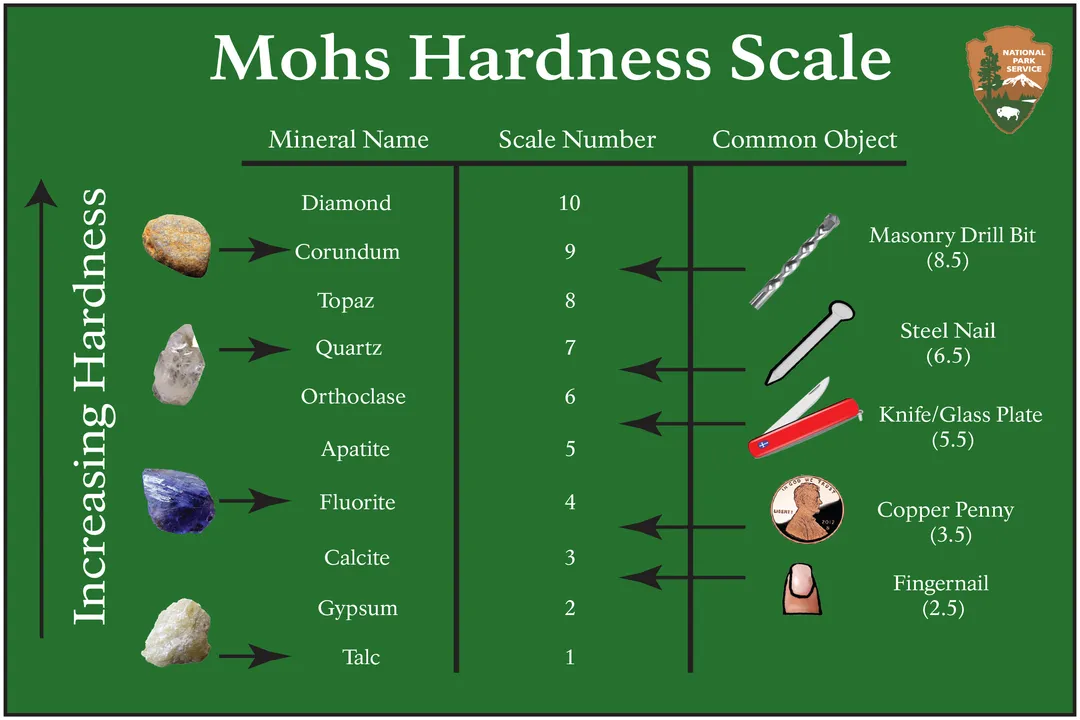
What property describes a mineral's resistance to scratching or permanent deformation?What is the most significant factor determining a mineral's hardness?Which bond type results in exceptionally tough and hard structures like Diamond?What typically causes an ionic crystal to cleave or break relatively easily when scratched?Who developed the relative hardness scale commonly used by geologists today?How is the Mohs scale accurately described regarding measurement type?How does Graphite differ structurally from Diamond, resulting in a large difference in hardness?What term describes hardness varying based on the direction the scratch test is applied?What common object approximates a hardness of about 5.5 in field testing according to the provided chart?Which mechanical property, independent of hardness, describes a mineral's resistance to breaking or crushing?