Where does accretion most commonly occur?
The concept of accretion describes an accumulation process, a gradual build-up of material onto a central mass or object. While the term sounds abstract, its most common manifestations occur across the entire spectrum of existence, from the vast, energetic processes governing the birth of stars to the slow, incremental shifts of continental crust and even the subtle changes along a riverbank. Understanding where accretion happens requires distinguishing between its cosmic meaning—driven primarily by gravity—and its terrestrial forms, driven by fluid dynamics or plate tectonics.
# Cosmic Growth
In astrophysics, accretion is fundamental to how many of the universe's most powerful objects form and evolve. The sheer scale of these gravitational interactions makes them incredibly significant locations for this process.
# Stellar Birth
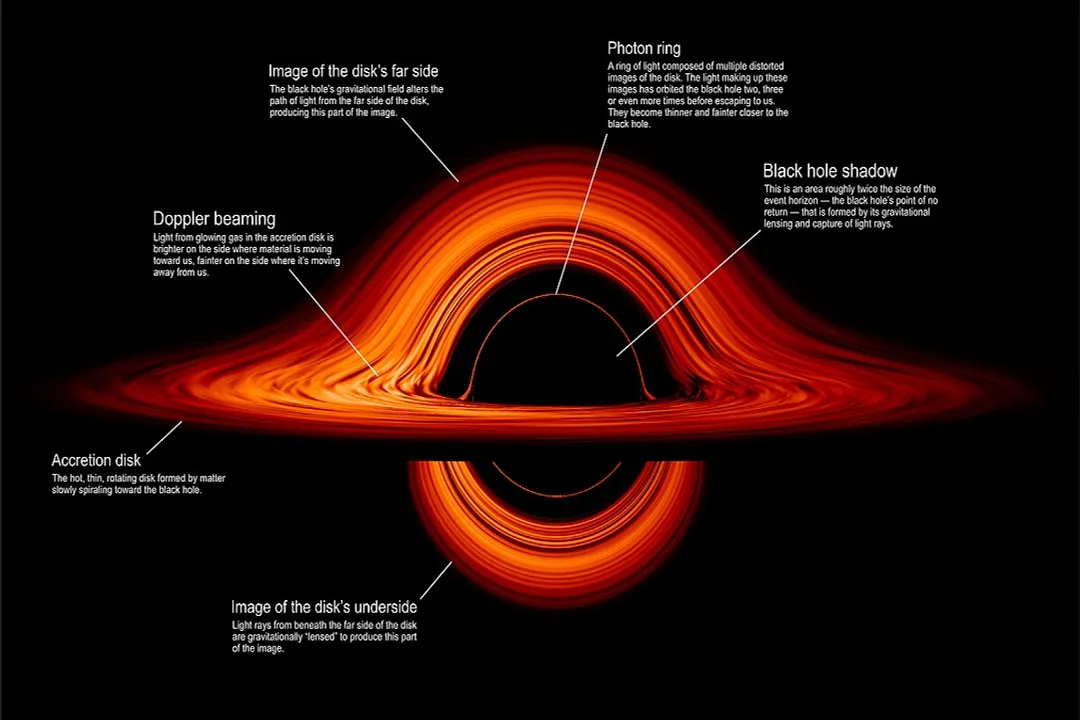
One of the most frequently observed settings for accretion is the very beginning of a star's life. A protostar, the nascent stage of a star, forms from the gravitational collapse of a dense core within a molecular cloud. As this cloud material falls inward toward the center, it doesn't fall directly; instead, conservation of angular momentum causes it to flatten into a rotating structure known as an accretion disk.
The protostar grows by drawing matter from this surrounding disk across the innermost edge. This process is relentless and dictates the final mass of the star. If the initial cloud is massive enough, the process continues until nuclear fusion ignites in the core, signaling the true birth of the star, though accretion onto the surface of the young star can continue for some time. The rate at which this material falls onto the central body is a key parameter studied by astronomers, as it determines the luminosity and evolution of the young star. The existence of a surrounding disk is practically a prerequisite for star formation from initial collapse.
# Central Engines
Beyond newborn stars, the most dramatic and energetic accretion sites involve compact, super-dense objects: neutron stars and black holes.
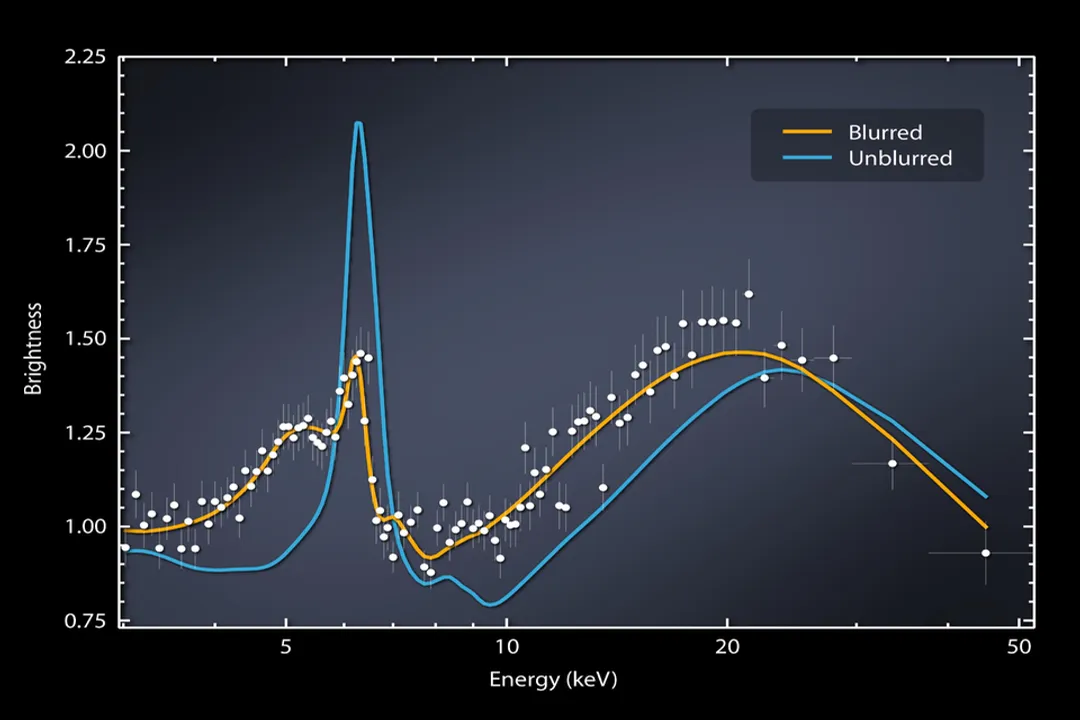
When a black hole or a neutron star exists in a binary system with a companion star, it can gravitationally strip material from that star. This pulled-off gas, rich in hydrogen and helium, spirals inward, forming a temporary but incredibly hot and luminous accretion disk around the compact object. These disks are far hotter than those around young stars because the immense gravitational pull near the event horizon or the surface of the neutron star releases vast amounts of energy as the gas rubs against itself and accelerates. X-ray binaries, which blaze brightly across the electromagnetic spectrum, are prime examples of this intense gravitational accretion in action.
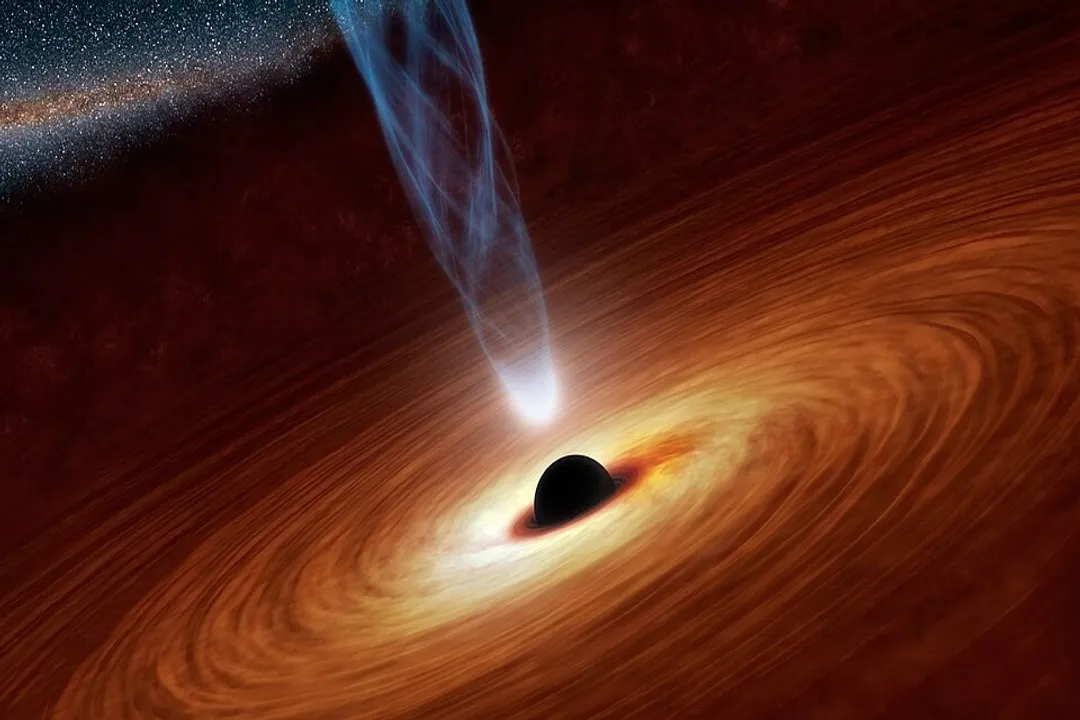
For supermassive black holes, the location is the center of nearly every large galaxy, including our own Milky Way. As vast amounts of gas, dust, and even whole stars wander too close, they are pulled in, feeding the black hole and generating immense energy through the accretion disk structure. The presence of an Active Galactic Nucleus (AGN) is often the direct observational signature of such vigorous accretion onto a central supermassive black hole.
# The Disk Structure
The accretion disk itself is perhaps the most common structure associated with astrophysical accretion. These disks are not just passive structures; they are complex hydrodynamic systems where magnetic fields and viscous forces transfer angular momentum outward, allowing matter to move inward toward the central object. The friction generated within this spiraling flow heats the gas to extreme temperatures, causing it to radiate energy across the spectrum, from radio waves to X-rays and gamma rays.
Consider the physics involved: a piece of gas starting far from a stellar-mass black hole might have negligible orbital energy compared to the energy released when it finally plunges across the last stable orbit. This enormous energy differential is what makes accretion onto compact objects so efficient compared to nuclear fusion.
If we were to create a quick comparison of the primary astrophysical locations based on the energy output resulting from accretion, we might see something like this:
| Location | Primary Driver | Characteristic Radiation | Relative Energy Output |
|---|---|---|---|
| Protostar | Cloud Collapse | Infrared/Radio | Low to Moderate |
| X-ray Binary (Neutron Star/Black Hole) | Stellar Mass Stripping | X-rays | Very High |
| Active Galactic Nucleus (Supermassive BH) | Galactic Gas Infall | Multi-Wavelength (Often dominated by UV/X-ray) | Potentially Highest |
A unique aspect of accretion in space is that it is often episodic or variable. A protostar might experience intense bursts of accretion, dramatically increasing its brightness over a short period before settling down, only to flare up again. Similarly, the feeding of a supermassive black hole depends on the current density of available gas in its immediate vicinity—a feast-or-famine cycle driven by the erratic nature of gravitational capture.
# Terrestrial Accumulation
Moving away from the cosmos, accretion also describes natural processes on Earth, though the governing forces shift from pure gravity to hydraulics and plate mechanics. In a legal or general sense, accretion can refer to the gradual accumulation of land by natural causes, such as the deposit of soil or sediment.
# Riverine Deposits
A very common, everyday example of accretion occurs along rivers, streams, and coastlines. When water flows, it carries sediment—sand, silt, and mud. When the flow slows down, perhaps on the inside bend of a meander or along a sheltered bank, these carried materials are deposited. Over time, this gradual addition of material builds up the landmass along the water's edge, effectively increasing the size of a property or island. This process is slow, subtle, and ongoing; you might not notice it day-to-day, but over decades, the shape of a river channel is fundamentally altered by this continuous accumulation.
It is fascinating to contrast this with erosion. While erosion removes material, accretion adds it, often in a direct reciprocal relationship: the sediment that erodes from one bank due to faster water flow is often deposited on a slower-moving bank downstream or on the opposite side of the channel. This constant balancing act between loss and gain shapes floodplains and deltas universally where flowing water is present.
# Continental Edges
On a far grander geological scale, accretion is a central concept in plate tectonics, particularly at convergent boundaries where oceanic crust slides beneath continental crust, a process called subduction. While the primary action is subduction, the scraping off of sediment, rock fragments, and even entire crustal blocks from the subducting plate onto the overriding plate creates an accretionary wedge or prism.
This wedge is literally an accumulation of scraped-off material piled up at the margin of a continent. Locations like the North Cascades in Washington State owe their current structure and composition, in part, to the accretion of island arcs and terranes scraped off the Pacific plate onto the North American plate over millions of years. These terranes are fragments of crust—sometimes bearing the fossil records or rock types of entirely different ancient ocean basins—that have been plastered onto the edge of a larger landmass. These accretionary zones are thus common locations where continental crust grows thicker and more complex over geological time. The structure and composition of many mountain belts along active margins are directly attributable to this mechanical accretion process.

# Drivers and Contrast

The locations of accretion are numerous, but the primary driver separates the cosmic from the terrestrial. In space, the engine is gravity—an inverse-square law force that dominates over vast distances, pulling diffuse gas clouds into disks around concentrated mass points. The energy released is proportional to the mass of the central object and the distance the material falls, leading to extreme heat and radiation.
On Earth, the immediate drivers are fluid mechanics (water flow for land buildup) or the shearing and stacking forces generated by lithospheric plate movement. The material involved is typically already solid or liquid sediment, not diffuse gas, and the energy involved, while massive in terms of tectonic forces, is distributed over much longer timescales than the instantaneous energy release from matter hitting a black hole's edge.
An interesting point of comparison, which highlights the different scales of operation, is the concept of "stickiness." In astrophysics, the stickiness comes from viscosity and magnetic fields within the disk that allow angular momentum transfer. In geology, the "stickiness" between tectonic plates or the binding power of wet sediment in a river bend relies on frictional forces, cohesion, and compressive stress. Despite the different underlying physics, the result is structurally similar: material that should move in a straight line toward a lower energy state is forced into a curved path or stacked atop existing material due to momentum or pressure constraints.
To bring this back to a general, practical observation: if you are looking for the most common place accretion is actively happening right now, you have two answers depending on scale. On the micro-to-meso scale, it’s happening in every sediment-carrying river and stream on Earth. On the macro, high-energy scale, it is happening around every compact stellar remnant and in the centers of most galaxies. You can think of it this way: the universe requires accretion to make big things (stars, planets, black holes), and the Earth experiences accretion constantly as its surface is perpetually reshaped by water and tectonic forces.
# Synthesis and Implications
The commonality of accretion sites suggests that any scenario involving a large, relatively stationary mass interacting with a surrounding field of diffuse or flowing material is a potential site for this process.
When considering accretion in the context of planet formation, the process is inherently complex because it involves gas accretion (forming the initial core/envelope) followed by solid-body accretion (the collision and sticking of planetesimals). This dual nature means that the region around a young star is actually a busy nexus of different accretion mechanisms occurring simultaneously on different size scales. Gas falls onto the disk, the disk feeds the central object, and dust/rock sticks together within the disk to form planets—a nested hierarchy of accumulation.
For the general reader observing their environment, the terrestrial examples offer a tangible sense of the process. If you own property near a lake or river in a humid, tectonically stable region, you are an observer of legal and geological accretion in real-time, albeit on a slow timescale measured in decades or centuries. If you are observing the night sky, every quasar, every X-ray binary, and every T Tauri star is a massive engine powered by accretion, transforming gravitational potential energy into visible light and heat.
Ultimately, the most common type of location is defined by the gravitational potential well that is deep enough to trap incoming material. Whether that well is a black hole curving spacetime or a river bend slowing water flow, the presence of a trap that captures momentum or energy is the universal prerequisite for accretion to occur. The universe seems predisposed to build things up, and accretion is the fundamental mechanism for that construction, happening everywhere from the bottom of a muddy creek bed to the supermassive centers of distant galaxies.
Related Questions
#Citations
Accretion (astrophysics) - Wikipedia
The physics of accretion: How the universe pulled itself together
Accretion Definition, Theory & Process - Lesson - Study.com
accretion | Wex | US Law | LII / Legal Information Institute
Accretion - Legal Glossary Definition 101
Subduction and accretion - WA100
[PDF] Where is the Accretion Occurring
Accretion Disks | Research Starters - EBSCO