drug resistance articles
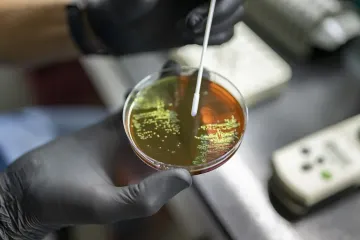
Besides bacteria, which other types of microbes can develop antimicrobial resistance?
What are the two primary genetic mechanisms by which pathogens develop drug resistance?
Which method of gene transfer involves bacteria physically connecting via a pilus to share DNA?
What biochemical strategy involves pathogens using specialized membrane proteins to actively expel antimicrobial agents?
What term describes the process where antimicrobial use creates an environment favoring the survival and dominance of resistant strains?
In human medicine, what common misuse accelerates resistance development?
What happens if a patient stops taking an antibiotic course prematurely?
In agriculture, what is a common, non-treatment related use of antimicrobials that drives resistance?
Which pathway contributes to resistance by creating a vast, low-level selection pressure in soil and water systems?
Why does pathogen evolution often outpace the discovery of new antibiotics?
What is a crucial first step in personal antimicrobial stewardship when visiting a healthcare provider?
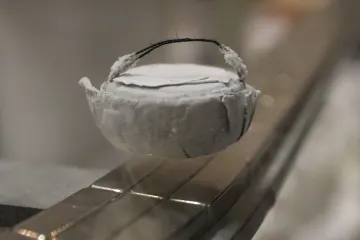
What are the two primary obstacles causing energy loss as heat in normal conductors?
Who first observed the sudden vanishing of electrical resistance and at what approximate temperature?
If a material in a superconducting state exceeds which three critical parameters, will it immediately revert to its normal, resistive state?
What mediates the attractive force that allows electrons to form Cooper pairs despite their natural repulsion?
How do Cooper pairs behave quantum mechanically compared to individual electrons below $T_c$?
Why does the collective condensation of Cooper pairs below $T_c$ result in exactly zero resistance?
How does a superconductor cooled in a magnetic field differ from a hypothetical, perfectly conducting material upon cooling?
The complete exclusion of magnetic flux characteristic of a superconductor cooled below $T_c$ is known as what property?
What happens to a Type I superconductor when the applied magnetic field strength exceeds its critical magnetic field ($H_c$)?
What state do Type II superconductors enter when the magnetic field is between $H_{c1}$ and $H_{c2}$?

What biological phenomenon describes an organism successfully living through the effects of a stressor without significant impairment to overall function?
In antimicrobial therapy, where does resistance typically manifest compared to tolerance?
What does resistance primarily describe regarding an entity's general response to an agent that would typically cause harm?
What characteristic typically underlies a crop plant demonstrating tolerance to a label-recommended herbicide rate?
If a grower is dealing with a resistant weed population, what management approach is typically considered futile?
In the context of crop protection, how does tolerance differ from resistance when a pest or disease is present?
Which management strategy is appropriate when a cultivar is known to have tolerance to a common local pathogen?
What mechanism is frequently associated with resistance rather than tolerance?
In pharmacology, what defines a patient developing tolerance to a drug following repeated administration?