How do superconductors achieve zero resistance?
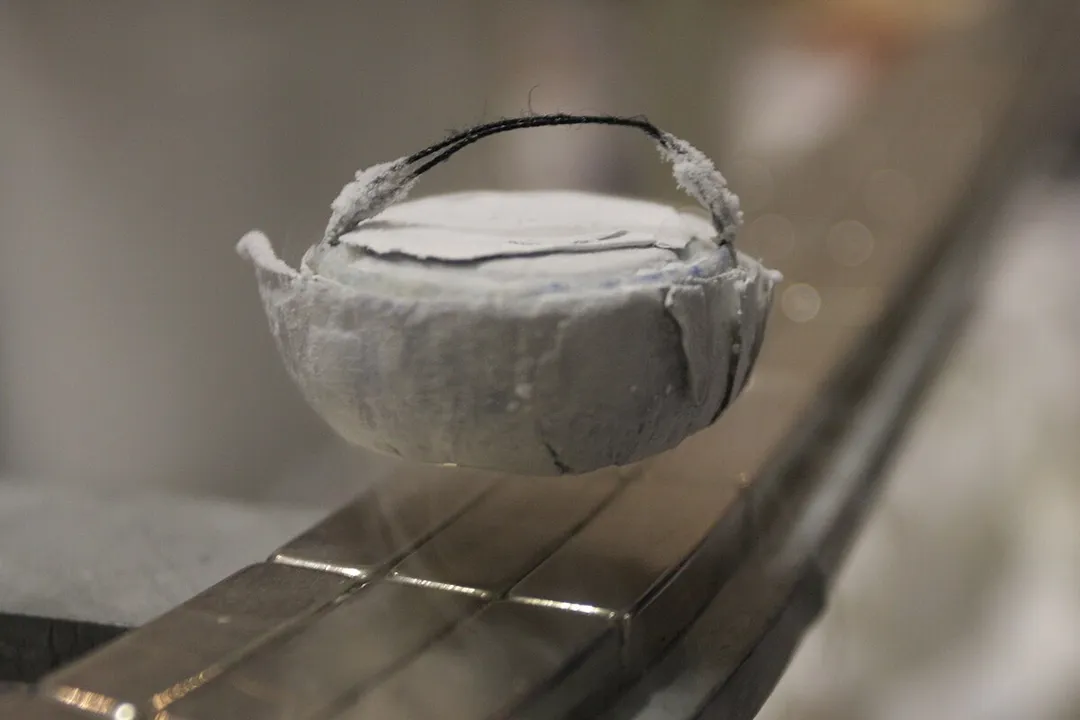
The phenomenon where certain materials conduct electricity with absolutely no loss of energy, meaning their electrical resistance drops to precisely zero, has captivated physicists for over a century. This state, known as superconductivity, represents a radical departure from the behavior of ordinary conductors like copper or silver, which always lose some energy as heat due to resistance. [2][7]
# Normal Conduction
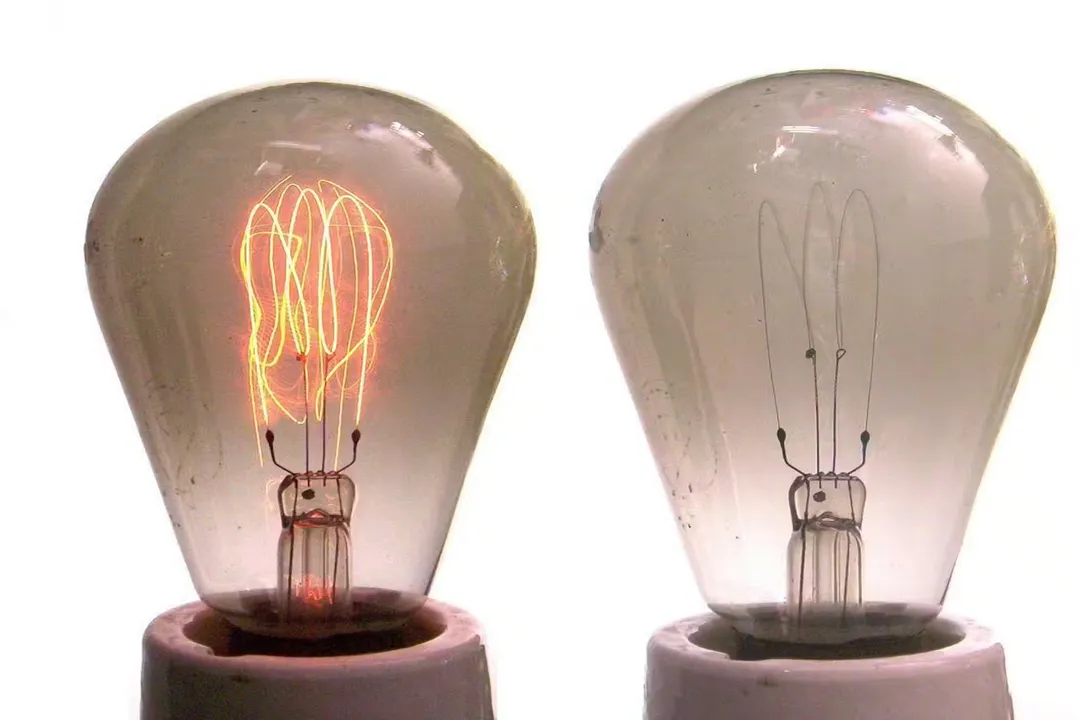
To grasp the magic of zero resistance, we must first understand what resistance is in a standard material. [3] When an electric current flows through a wire, electrons move through the atomic lattice of the metal. In a normal conductor, this movement is never smooth. The electrons constantly collide with two primary obstacles: imperfections in the crystal structure (like impurities or defects) and, more significantly, the vibrating thermal motion of the atoms themselves—the lattice vibrations, often referred to as phonons. [3][4] Every time an electron scatters off an atom or phonon, it transfers a tiny amount of kinetic energy to the lattice, which manifests as heat. This energy loss is what we measure as electrical resistance. [3] Even in highly conductive materials like silver, this scattering process guarantees some measurable resistance. [4]
# Critical States
Superconductivity only appears when a material is cooled below a specific temperature threshold, known as the critical temperature (). [2][7] The Dutch physicist Heike Kamerlingh Onnes first observed this in 1911 when cooling mercury down to (about ), noting that its resistance vanished entirely. [2] This discovery showed that the resistance didn't just gradually approach zero; it vanished abruptly at the . [4]
However, temperature isn't the only constraint. A superconductor can lose its zero-resistance state if the applied electric current density becomes too high, reaching a critical current density (), or if the external magnetic field strength exceeds a critical magnetic field (). [2][7] If any one of these three critical parameters—temperature, current, or magnetic field—is exceeded, the material snaps back to its normal, resistive state. [2]

# Quantum Pairing
The mechanism responsible for completely eliminating scattering is rooted deep in quantum mechanics and is explained, for conventional superconductors, by the BCS theory (named after Bardeen, Cooper, and Schrieffer). [2][4] This theory proposes that below , the electrons stop acting as independent particles. Instead, they form weak, bound pairs, now called Cooper pairs. [1][2][4]
# Electron Attraction
The formation of these pairs is counterintuitive because electrons naturally repel each other due to their identical negative charges. The key to overcoming this repulsion lies in their interaction with the crystal lattice. [3] As one electron moves through the metal, it attracts the positively charged atomic nuclei in its path, slightly deforming the lattice structure around it. [1][3] This momentary, localized region of increased positive charge then attracts a second electron. [1][3] This indirect, mediated interaction, facilitated by the lattice vibrations (phonons), creates a net attractive force between the two electrons, binding them into a Cooper pair. [1][2][4]
# Coherent Flow
A single electron is a fermion, which obeys the Pauli Exclusion Principle, meaning no two can occupy the exact same quantum state. Cooper pairs, however, behave collectively as bosons. [2][4] Bosons can all occupy the same lowest-energy quantum state. When the temperature drops below , a macroscopic fraction of these Cooper pairs "condenses" into this single, shared ground state. [1][2][4]
In this collective state, the pairs move as one coherent wave. If one Cooper pair were to scatter off a lattice vibration, the entire collection would have to scatter simultaneously, which is statistically impossible at low energies. [1] Because the energy required to break a Cooper pair is greater than the energy imparted by the normal scattering events, the pairs move unimpeded, resulting in zero measurable resistance. [2][4] It is not simply that resistance is very low; it is exactly zero, an experimentally verified property. [1]
# Perfect Diamagnetism
Superconductors exhibit another extraordinary property that further separates them from merely being "perfect conductors" (materials with extremely low, but non-zero, resistance): the Meissner effect. [2][6]
A hypothetical, perfectly conducting material cooled in a magnetic field would simply trap that magnetic flux inside as it cooled, since the trapped flux would generate currents preventing the external field from penetrating. [1] A true superconductor does something entirely different. When cooled below its in the presence of an external magnetic field, the superconductor actively expels all the internal magnetic field lines. [2][6] This expulsion means the magnetic field inside the bulk of the superconductor is zero (or nearly zero, depending on the material type). [1] This complete exclusion of magnetic flux demonstrates perfect diamagnetism. [2] This is what enables the famous magnetic levitation seen when a magnet is placed above a cooled superconductor—the superconductor creates an opposing magnetic field strong enough to push the magnet away. [6]

# Material Classification
Superconductors are broadly classified into two types based on how they respond to magnetic fields. [2][6]
# Type I
These are typically pure metals, such as lead, aluminum, and tin. [2] They exhibit a sharp transition from the superconducting state to the normal state when the critical magnetic field () is reached. Once the field exceeds , the entire material instantly becomes resistive, and the field penetrates completely. [2]
# Type II
These are usually alloys or ceramic compounds, often complex structures. [2] Unlike Type I, Type II superconductors have two critical magnetic fields ( and ). [6]
- Below , the material is a perfect Meissner state (full field expulsion). [6]
- Between and , the material enters a mixed state where magnetic flux partially penetrates the material in localized tubes called vortices, but the rest of the material remains superconducting. [2][6] This mixed state allows for much higher critical magnetic fields, making Type II materials essential for applications like high-field magnets in MRI machines or particle accelerators. [6]
# Contextualizing Cooling Requirements
The most significant hurdle for widespread technological adoption of superconductivity remains the extreme cold required. [7] While early superconductors required liquid helium (), the discovery of High-Temperature Superconductors (HTS), like the cuprates, allowed the critical temperature to rise above the boiling point of liquid nitrogen ( or ). [2][7] Liquid nitrogen is far cheaper and easier to handle than liquid helium, representing a major practical step forward. [7]
An interesting consideration arises when comparing the efficiency gains against the cooling infrastructure costs. In high-power applications, such as long-distance transmission lines or powerful electromagnets, the energy saved by eliminating resistive power loss () vastly outweighs the energy needed to maintain cryogenic temperatures. [7] However, for low-power electronics where power density is low, the cost and complexity of active cooling systems—including the cryocoolers, insulation, and plumbing—often make using a superconductor less practical than simply accepting the small, manageable heat loss in a room-temperature silicon chip. [3] The engineering challenge shifts from achieving zero resistance to engineering a cheap, compact, and energy-efficient cooling package for that zero resistance.

# The Quantum Leap in Transport
It is vital to recognize that zero resistance is not merely the extreme end of a conductivity scale; it signals a change in the fundamental nature of charge transport. [1] In normal conductors, we describe electron flow statistically, based on probabilities of scattering. In a superconductor, we are observing a macroscopic quantum phenomenon. [1] Think of it this way: instead of billions of individual electrons bumping around randomly, you have a unified quantum entity—the condensate of Cooper pairs—all moving in perfect lockstep, with a single, shared quantum phase. [4]
This coherence means that the entire current is governed by one wave function that cannot be dissipated by local imperfections in the lattice. [1] This is analogous, in a very simplified sense, to how a laser produces light: instead of random, uncorrelated photons, a laser produces photons that are perfectly aligned in phase and direction. [1] Similarly, superconductivity forces the charge carriers into a collective, phase-locked state where energy loss mechanisms, which depend on uncorrelated collisions, are effectively shut down. This transition from classical statistical mechanics to collective quantum behavior is the real secret to achieving .
# Practical Applications Driven by
The ability to transport current without any energy dissipation opens doors to technologies that are impossible with resistive wiring. [7]
- Powerful Magnets: As noted, high-field magnets built with superconducting wires are essential for scientific instruments, medical imaging (MRI), and magnetic levitation trains (Maglev). [6][7] The magnetic field strength achievable is directly proportional to how much current can be sustained without resistance. [7]
- Energy Storage: Superconducting Magnetic Energy Storage (SMES) systems store energy indefinitely in the magnetic field created by a persistent, loss-free current circulating in a superconducting coil. [7] This offers extremely fast charge and discharge rates compared to chemical batteries.
- Sensitive Detection: Devices like SQUIDs (Superconducting Quantum Interference Devices) rely on the quantum nature of the superconducting state to measure incredibly small magnetic fields, far smaller than what conventional sensors can detect. [2]
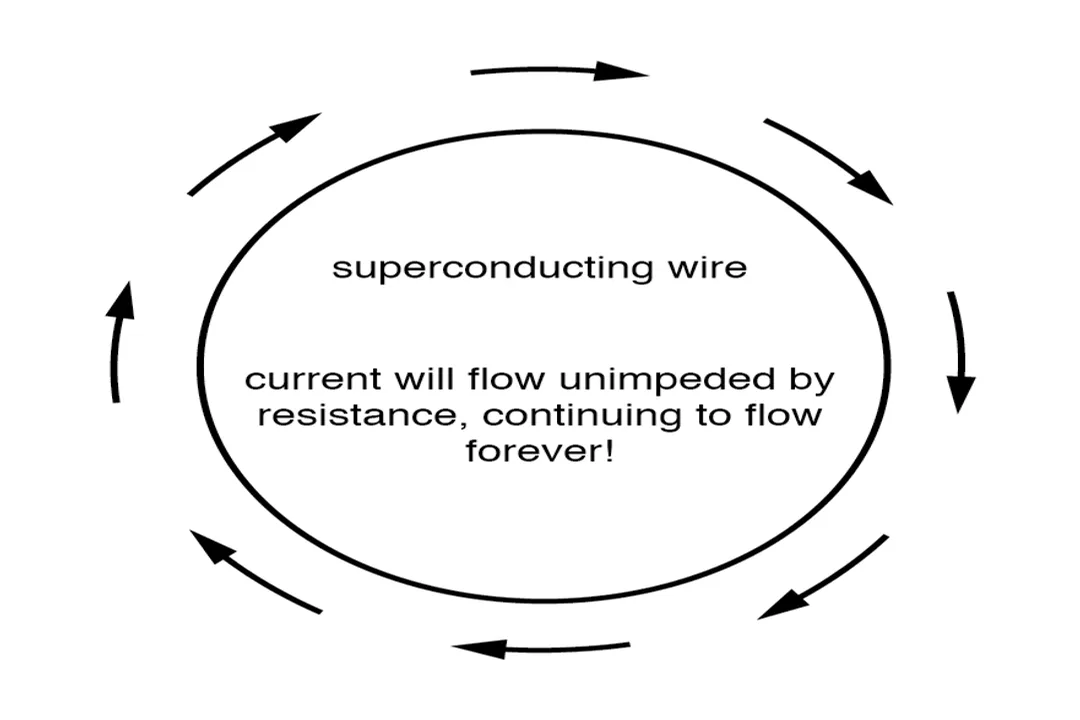
The complete absence of energy dissipation means that once a current is established in a superconducting loop, it will theoretically flow forever without an external power source, providing persistent magnetic fields or steady currents, provided the material stays cold enough. [1][4]
Related Questions
#Citations
Is the resistance in a superconductor actually 0?
Superconductivity
How do superconductors work? A physicist explains what it ...
Superconductivity | Physics Of Conductors And Insulators
Why don't superconductors, which have zero electrical ...
The Magic of Superconductors: Levitation and Zero ...
DOE Explains...Superconductivity
Chapter 8.7: Superconductors
How is zero resistance achieved in a superconductor?