Do you feel pain in zero gravity?

Astronauts in orbit are definitely not immune to physical discomfort, but the type of pain experienced in weightlessness, or microgravity, is quite different from what we feel under the constant pull of Earth's gravity. The immediate sensation isn't usually one of acute pain; rather, it is a profound sensory shift. When crossing the threshold into orbit, the body enters a state of continuous freefall, which is why the environment is technically referred to as weightlessness rather than true zero gravity. [5]
# Initial Sensation
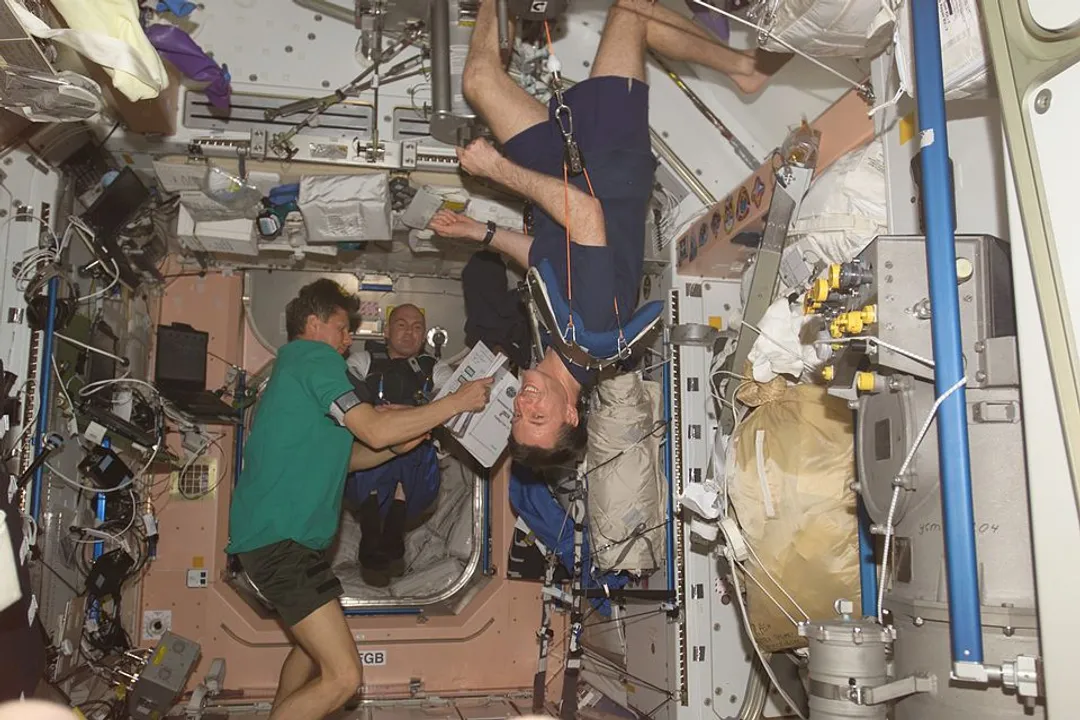
The most frequently described initial feeling upon reaching orbit is that of constantly falling, similar to the sensation experienced during the steep drop of a rollercoaster ride. [1] This feeling stems from the lack of normal physical feedback that the inner ear and proprioceptors use to confirm their position relative to a downward force. [5] However, this disorienting "falling" sensation is relatively short-lived. The brain is remarkably quick to adapt, usually suppressing that initial input within a few days as it learns to rely on visual cues instead of gravitational ones. [1][5]
This initial sensory conflict, where the body expects a downward pull that never arrives, requires significant cognitive redirection. On Earth, the vestibular system constantly processes this gravitational input; when that input vanishes, the body essentially has to recalibrate its internal navigational map, leading to the initial but temporary dizziness or nausea known as space adaptation syndrome, or space sickness. [5][8]
# Fluid Shifts
One of the first tangible physiological changes that can lead to discomfort involves the movement of fluids within the body. On Earth, gravity pulls bodily fluids downward, contributing to hydrostatic pressure, particularly in the lower extremities. [3][4] In the microgravity environment of space, this downward pull is gone, and the fluids redistribute toward the torso and head. [6]
This cephalad fluid shift results in several immediate, though not necessarily painful, symptoms. Astronauts often develop a characteristic puffy face and noticeably thinner legs. [4] More pertinently to physical discomfort, this fluid pooling in the sinuses leads to persistent nasal congestion, often described as feeling like having a head cold. [4] This congestion is frequently cited as a precursor or contributing factor to the onset of space headaches experienced by many crew members shortly after arrival. [4]
# Back Pain
Perhaps the most significant source of persistent pain for long-duration space travelers relates to the spine. On our home planet, gravity continuously compresses the vertebral column, keeping the intervertebral discs tightly packed. [9] When that constant load is removed, the discs can expand as they decompress. [7]
Astronauts frequently report that their backs begin to hurt because of this elongation. [7] In some cases, crew members can actually grow taller by one to two inches during their mission simply because the spinal discs are no longer being compressed. [7][9] This change in physical structure, while reversible upon return to Earth, causes significant muscular and structural strain while in space. [6] It is an area of intense study, as understanding how the spine responds to decompression without load offers unique therapeutic insights for people suffering from chronic back pain on Earth. [7] Considering that an astronaut’s center of mass shifts slightly upward when they gain height due to disc expansion, this subtle change in their perceived vertical alignment, even when stationary in the module, likely compounds the muscle strain even after the initial falling sensation has disappeared [self-analysis].
# Injury Sensation
A question that often arises is whether a traumatic injury, like a broken bone, would hurt more or less in weightlessness. The pain itself, transmitted via nerves, would still register with the brain. [3] However, the way the pain is felt might be modulated by the absence of gravity-induced mechanical forces.
For instance, hydrostatic pressure, which is the pressure fluid exerts due to its weight, is eliminated in orbit. [3] If a person had a fracture, they would not experience secondary pain caused by the weight of the fractured limb pressing against surrounding tissues or joints. [3] While the initial sharp, localized pain of the break would certainly be present, the overall dull ache associated with load-bearing and gravitational stress on the injury would be absent [self-analysis].
# Adaptation Effects
While acute illness subsides, the body begins a process of adaptation that involves negative consequences if not actively counteracted. Gravity is not just a source of strain; it is a necessary stimulus for maintaining muscle mass and bone density. [2] The term "gravity hurts so good" captures the essence that while gravity causes wear and tear, it also provides the essential resistance needed to keep the body strong. [2]
Without this resistance, bone mineral density begins to decrease, and muscles atrophy because they are no longer required to work against a constant load to maintain posture or movement. [6][9] Joints also experience altered loading patterns. [9] In short, while you might not feel the immediate, stabbing pain of a joint injury upon entry into space, the long-term lack of mechanical loading causes fundamental changes to the musculoskeletal system that create new, chronic issues over time. [9] Astronauts must engage in rigorous, targeted exercise protocols to mitigate this degradation, essentially attempting to recreate the workload imposed by gravity every day. [6]
Related Questions
#Citations
Do astronauts feel the free falling feeling you get in your stomach the ...
Gravity Hurts (So Good) | News - NASA Astrobiology Program
Would a broken arm/ leg be more painful in zero gravity?
Zero Gravity Pain: Astronauts Experience “Space Headaches”
Weightlessness - Wikipedia
Pain Experience and Sensory Changes in Astronauts During and ...
Back Pain Common Among Astronauts Offers Treatment Insights for ...
Have you ever felt zero gravity and did it make you sick? - Quora
Chiro in Space: How Zero Gravity Affects Joints