How do predators regulate prey populations?
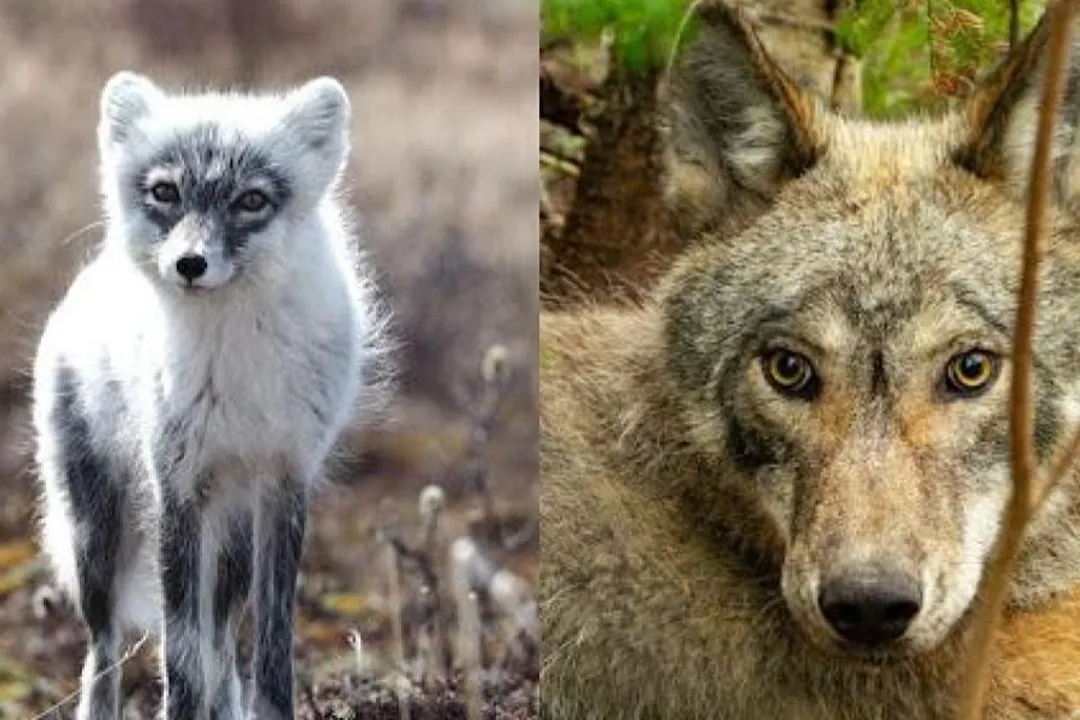
The presence of a predator in an ecosystem is not merely a matter of watching a dramatic chase; it is a fundamental interaction that shapes the entire living community. Predators serve as crucial mechanisms for managing the numbers of the animals they hunt, preventing any single prey species from dominating resources and causing widespread ecological collapse. [2][5] This regulation is far more complex than simple subtraction; it involves a dynamic interplay of direct killing, behavioral modification, and evolutionary sorting that keeps populations in a state of precarious, yet relatively stable, balance. [3][4]
# Consumption Effect
The most obvious way predators regulate prey is through direct predation—the act of consumption. [3] When a coyote hunts a rabbit or a shark feeds on a seal, the immediate effect is a reduction in the prey population size. This direct removal acts as a top-down control, placing a measurable pressure on the number of individuals available to reproduce. [2][4]
In a simplified model, an increase in the predator population leads directly to a decrease in the prey population, as more individuals are removed from the breeding pool. [3] Conversely, if predators are removed—perhaps due to human intervention or disease—the prey population can experience a temporary explosion, often called a "release." This is seen when large carnivores disappear, allowing herbivore numbers to surge, which then leads to overgrazing and subsequent habitat degradation. [2][4] This highlights that the potential for predation is as important as the act itself.
# Population Cycles
The relationship between predator and prey rarely settles into a static equilibrium. Instead, many systems exhibit cyclical dynamics, often described as a dance where one population's numbers lag behind the other's. [3] Imagine a scenario where the prey population (say, snowshoe hares) is abundant. This abundance provides plentiful food, allowing the predator population (like the Canadian lynx) to thrive and reproduce successfully. [3] As the lynx numbers climb due to the ample food supply, the hunting pressure on the hares intensifies, causing the hare population to crash. With the primary food source severely diminished, the lynx population soon follows, starving or failing to reproduce as successfully. Once the lynx numbers drop low enough, the pressure on the hares lessens, allowing their numbers to recover, starting the cycle anew. [3]
While this classic boom-and-bust pattern is illustrative, real-world systems are rarely as neat as textbook examples. [3] Several factors modulate the severity and timing of these cycles. For instance, the presence of alternative prey for the predator can dampen the crash of the primary prey species, as the predator switches diets when the preferred food becomes scarce. [3] Furthermore, environmental factors—such as weather patterns affecting plant growth or insect outbreaks—introduce noise into the simple two-species model, making the cycles less predictable and often less extreme than the mathematical models suggest. [3]

# Behavioral Change
Perhaps more subtle, yet often more widespread, is the role of predators in shaping prey behavior rather than just reducing their numbers through direct killing. [1] Prey species dedicate significant energy and time to vigilance and avoidance. When predators are present, even if they do not make a kill, they force prey animals to alter where, when, and how they feed. [1][4]
For example, herbivores might avoid the most nutrient-rich patches of vegetation if those areas offer poor visibility, forcing them to subsist on lower-quality forage elsewhere. [1] This is the "ecology of fear," where the risk of mortality dictates the use of the landscape. [4] The non-consumptive effects of predation—the stress and behavioral modification—can impose a significant energetic cost on the prey population. [1]
It is fascinating to consider the energetic trade-off here. An individual animal constantly on high alert sacrifices foraging time to look for danger. If the predator density is high, the prey might eat so little that it starves or becomes too weak to reproduce successfully, even if it successfully evades every chase. Thus, the predator regulates the population by imposing a behavioral limit on resource acquisition, which is a distinct regulatory mechanism from simply eating the animal. [1] This forces the prey population to maintain a lower effective density than they might sustain in a predator-free environment.
# Prey Fitness
Predators are also highly effective agents of natural selection, influencing the quality and fitness of the remaining prey population. [2] Predators, often seeking the easiest meal, tend to target the weakest members of the prey group—the old, the very young, the sick, or the injured. [2]
By systematically removing less-fit individuals, predators ensure that the survivors who successfully reproduce are those possessing superior traits, such as better camouflage, greater speed, or a stronger immune response. [2] This process ensures the overall health and vigor of the prey gene pool remains high, a concept sometimes referred to as "pruning" the population. This selective removal maintains evolutionary momentum within the prey species, keeping them sharp and adaptable. [2] In contrast, a population lacking this consistent selective pressure might see its overall fitness decline over generations.
# Ecosystem Structure
The regulatory influence of predators extends upward through the food web, often affecting multiple trophic levels below them—a phenomenon known as a trophic cascade. [2][4] This occurs because the predator controls the herbivore population, and the herbivore population, in turn, controls the vegetation structure. [2]
Consider a scenario involving wolves, elk, and willow trees. If wolves are abundant, elk numbers are kept in check. With fewer elk browsing, willow and aspen stands can recover and flourish. These recovering plants then support songbirds, beavers, and other species that rely on that specific vegetation structure. [4] If the wolves vanish, the elk population balloons, leading to excessive browsing that stunts tree growth, thereby eliminating habitat for songbirds and changing the very physical structure of the riparian zones. [2][4] This illustrates that the predator’s role isn't just managing the number of elk, but managing the impact of the elk on the entire physical environment. [5] They are irreplaceable in maintaining the overall biodiversity and structure of the habitat. [4]
A local example can demonstrate the sensitivity of this control. If a particular region historically supported a certain density of, say, mountain lions, their primary prey (like deer) would naturally stabilize around a level that these top predators could sustain, leading to moderate grazing pressure across the landscape. If, however, management actions or disease reduce the mountain lion population to only 30% of that historical level, the deer population may continue to grow until it runs out of forage or succumbs to starvation or disease, having been regulated only by the bottom-up resource limits, rather than the top-down predator control. [4] This shows the delay between predator removal and prey population failure.
# Prey Limits
While the focus is often on what the predator does to the prey, the relationship is reciprocal. Prey populations ultimately set the carrying capacity for the predators that consume them. [5] A predator population cannot infinitely grow; it is strictly limited by the availability of its prey base. [5] When prey numbers fall too low, the predators face starvation, reduced reproductive success, or are forced to disperse to find other food sources. [5]
This creates a regulatory feedback loop. If a predator population grows too large relative to the prey base, the high consumption rate will inevitably lead to a sharp decline in the prey. This decline, in turn, will cause the predator population to decline shortly thereafter, effectively self-regulating based on the resource base it heavily influences. [5] In certain structured environments, like island ecosystems or isolated forest patches, this feedback can be very tight and rapid. [5]
The density of the prey population directly affects the foraging success and energy intake of the predator. [5] If the prey is too sparsely distributed—perhaps because behavioral pressures have forced them into small, separated refuges—the energy a predator must expend to find the next meal may outweigh the caloric gain from the kill, leading to a localized decline in predator numbers regardless of overall ecosystem health. [5]
In essence, predators regulate prey populations through a suite of powerful, interacting forces: they remove individuals directly, they force behavioral adaptations that limit resource intake, they cull the weak to strengthen the herd, and by managing herbivore impact, they dictate the physical structure of the habitat that supports all life within it. [2][4] This complex, multi-layered control is what maintains the intricate and dynamic balance necessary for a healthy ecosystem. [2]
Related Questions
#Citations
Why are predators valued for keeping prey populations in check ...
The Predator-Prey Relationship: An Intricate Balance
Dynamics of Predation | Learn Science at Scitable - Nature
Predators play irreplaceable role in ecosystems
In an ecosystem, how can prey control a predator population? - Quora
Experimental and observational evidence reveals that predators in ...
Population Ecology Lecture 22
Predators | Nature's Technicians by the WWF
[PDF] Managing Predator-Prey Systems: Summary Discussion