How do hormones regulate behavior?
Hormones act as the body's slower, more enduring chemical messengers, fundamentally shaping how we think, feel, and react to the world around us. [9][5] While the nervous system provides rapid electrical signals for immediate reactions—like pulling your hand from a hot stove—hormones carry instructions through the bloodstream, influencing behaviors over minutes, hours, or even years. [2] They originate in specialized glands, travel systemically, and only affect cells that possess the correct docking points, or receptors, ensuring that their impact is precisely targeted, whether that target is muscle contraction, mood regulation, or the drive to seek nourishment. [1][9] Understanding this chemical communication is central to behavioral endocrinology, the scientific field dedicated to studying these interactions. [5]
# Chemical Messengers

Hormones are synthesized and secreted by various glands throughout the body, collectively forming the endocrine system. [9] This system works in tandem with the nervous system, often coordinating through a key interface in the brain. [2] When a gland releases a hormone, it enters the general circulation. Unlike neurotransmitters, which are released into the narrow gap between two nerve cells (the synapse), hormones disperse widely, necessitating receptor specificity to exert their effect. [1] This fundamental difference in delivery mechanism accounts for why hormonal regulation often appears as a slow-burning fuse compared to the lightning strike of a nerve impulse. [2]
Some hormones, like those from the adrenal glands, can trigger near-immediate behavioral shifts, mimicking the speed of certain neural pathways, but most exert influence by changing gene expression or modulating cellular machinery over a longer timescale. [1] For general readers, recognizing this distinction is key: the rush you feel when you see a surprising event is likely neural activity, but the lingering anxiety or persistent feeling of contentment afterward is often hormonal. [4]
# Gland Command

The process of hormonal regulation is hierarchical, designed to maintain a stable internal environment, a concept known as homeostasis. [2] The master controller in this system is arguably the brain itself, specifically the hypothalamus, which signals the pituitary gland—often called the "master gland". [1][10]
The hypothalamus communicates with the pituitary, which then releases its own hormones that travel to other major endocrine organs, such as the thyroid, the adrenals, or the gonads (ovaries and testes). [2][9] For instance, the pituitary might release Thyroid Stimulating Hormone (TSH), which prompts the thyroid gland to produce thyroid hormones that then adjust metabolic rate and energy levels, directly impacting activity and alertness behaviors. [10] Disruption at any point in this chain—from a faulty receptor on a target cell to an overactive pituitary—can lead to noticeable shifts in an individual's mood, motivation, or social conduct. [9]

# Stress Response

One of the most universally recognized ways hormones dictate behavior is through the acute stress response. [2] When perceived danger arises, the sympathetic nervous system initiates the release of adrenaline (epinephrine) from the adrenal medulla, causing immediate physiological arousal: increased heart rate, sharpened senses, and mobilization of energy stores. [2] Simultaneously, the HPA (Hypothalamic-Pituitary-Adrenal) axis activates, leading to the release of cortisol from the adrenal cortex. [2]
Cortisol’s primary behavioral role is to sustain the arousal initiated by adrenaline, ensuring energy remains available for the "fight or flight" response. [2] It temporarily prioritizes immediate survival behaviors over non-essential functions like digestion or long-term planning. The challenge arises when this system stays switched on. When stress becomes chronic, sustained high levels of cortisol can actually begin to impair the hippocampus, affecting memory formation and decision-making capacities, subtly steering behavior toward caution, anxiety, or even learned helplessness, rather than effective problem-solving. [2] An individual chronically exposed to high perceived threat due to persistent cortisol circulation might exhibit reduced exploratory behavior simply because their brain chemistry is optimized for immediate threat avoidance rather than future planning. [1]
# Mood Chemicals
Beyond survival mechanisms, a cluster of hormones and neurotransmitters profoundly shapes our moment-to-moment emotional landscape and social interactions. [8][10] These are often casually labeled "feel-good" chemicals, though their functions are far more nuanced:
- Dopamine: Heavily involved in the brain's reward pathways, dopamine drives goal-directed behavior. Its release following an achievement or the anticipation of pleasure reinforces the behaviors that led to that outcome, explaining patterns of motivation, addiction, and learning. [8]
- Serotonin: While complex, this chemical is frequently associated with feelings of well-being, satiety, and emotional stability. Low levels are often correlated with increased irritability, obsessive thinking, and heightened anxiety. [8]
- Endorphins: These are the body's natural opiates, released in response to pain or intense exertion (like a "runner's high"). Their behavioral effect is to dampen discomfort and create a temporary state of calm or euphoria. [8]
- Oxytocin: This "bonding hormone," often associated with childbirth and lactation, also plays a significant part in social trust, attachment, and reducing fear in social settings. [10] It encourages affiliative behaviors, making us more likely to seek comfort or form alliances. [8]

# Reproductive Drives
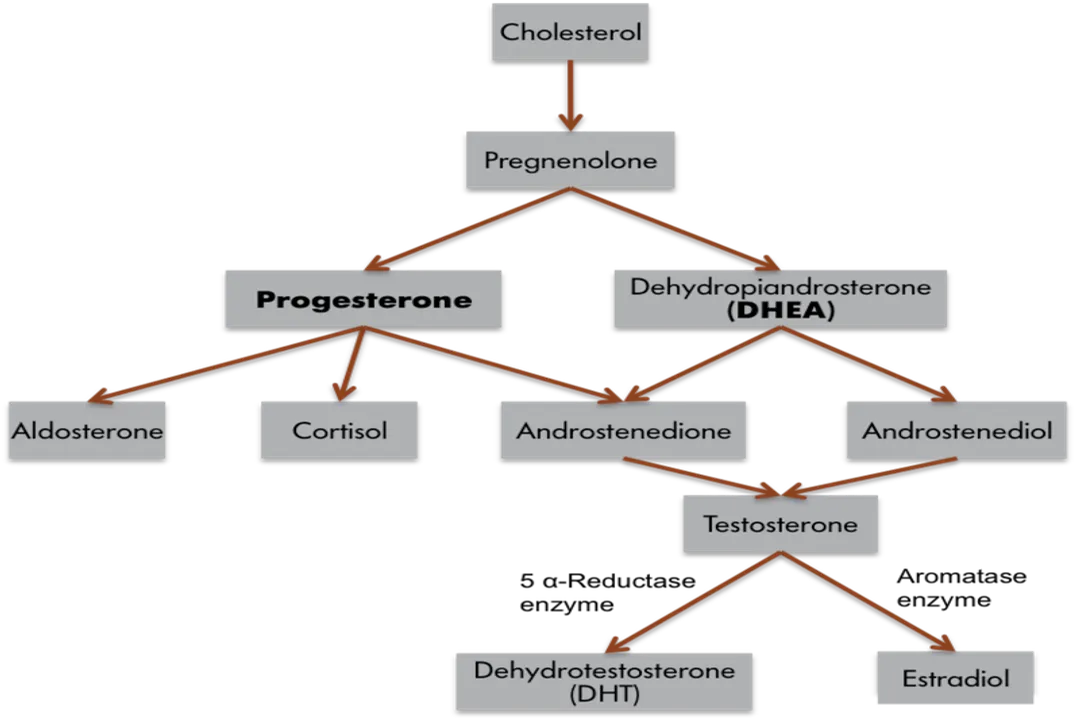
Hormones secreted by the gonads—primarily testosterone and estrogens—are famous for regulating sexual maturation, but their influence on behavior extends throughout life. [4][1] These steroids cross the blood-brain barrier readily, directly influencing brain structures related to aggression, mating rituals, and parental investment. [5]
Testosterone levels, for example, have been statistically linked to increased aggression, competition, and dominance-seeking behaviors in many species, though the relationship is not always direct and is heavily influenced by social context. [4] In human behavior, this drive might manifest as increased risk-taking during periods of high testosterone or changes in mate selection preferences. [1] Conversely, estrogens influence cyclical behavioral patterns, particularly in females, often impacting mood and energy levels in relation to the menstrual cycle. [4] The timing of these hormonal fluctuations dictates when certain behaviors—mating displays, territorial defense, or nurturing instincts—are most likely to be expressed. [5]
# Feedback Mechanisms
A critical concept for regulating behavior is the hormonal feedback loop, which prevents any single hormonal signal from running unchecked. [1] Most systems rely on negative feedback. For example, when the thyroid produces sufficient thyroid hormone to raise metabolism, this high level of thyroid hormone then travels back to the pituitary and hypothalamus, signaling them to reduce the production of the stimulating hormones (like TSH). [10]
This is an elegant method of behavioral self-correction. If a surge in testosterone leads to overly aggressive behavior, the resulting cascade may eventually trigger a dampening signal in the central control centers, naturally dialing back the intensity of that drive until a more balanced set point is reached. [1] When an individual finds themselves oscillating between extreme emotional highs and lows, it often points to a breakdown in this delicate regulatory feedback, forcing behaviors into erratic patterns because the system lacks its natural braking mechanism. [2]

# Personal Variations
While the general mechanisms are universal, the precise way hormones translate into observable behavior is rarely one-size-fits-all. An often-overlooked factor involves the density and sensitivity of cellular receptors in target tissues, including neurons. [1] Two individuals might be exposed to the exact same concentration of cortisol during a crisis, yet one may experience debilitating paralysis, while the other experiences focused alertness. This variability can stem from genetic differences affecting receptor shape or the sheer number of receptors present in key brain areas. [2]
Furthermore, the history of hormonal exposure shapes future behavior. Early life experiences, especially during developmental windows when certain hormones are peaking, can permanently "program" the sensitivity of the endocrine system. An environment that demanded high stress hormone output in childhood may result in an adult whose stress response is hyper-reactive, meaning a minor annoyance triggers a disproportionately large cortisol spike—a pattern reflected in chronic irritability or easy frustration in social settings. [1][2] This inherent biological plasticity means that while hormones provide the chemical vocabulary for behavior, experience writes the actual sentences we speak. [5] The study of behavioral endocrinology must therefore always account for this bidirectional relationship: hormones affect action, and action, through stress or reward, affects hormone levels. [5]
Related Questions
#Citations
Hormones & Behavior - Noba Project
Hormones Affect Our Physiology and Behavior - BrainFacts
Hormonal Mediation of Physiological and Behavioral Processes ...
Hormones - Psychology Today
Behavioral Endocrinology - an overview | ScienceDirect Topics
Hormones and behavior | Research Starters - EBSCO
Hormones' Role on Our Health, and Wellness | Patient Care
Feel-good hormones: How they affect your mind, mood, and body
Hormones: What They Are, Function & Types - Cleveland Clinic
Brain Hormones | Endocrine Society