How do antennas transmit electromagnetic waves?
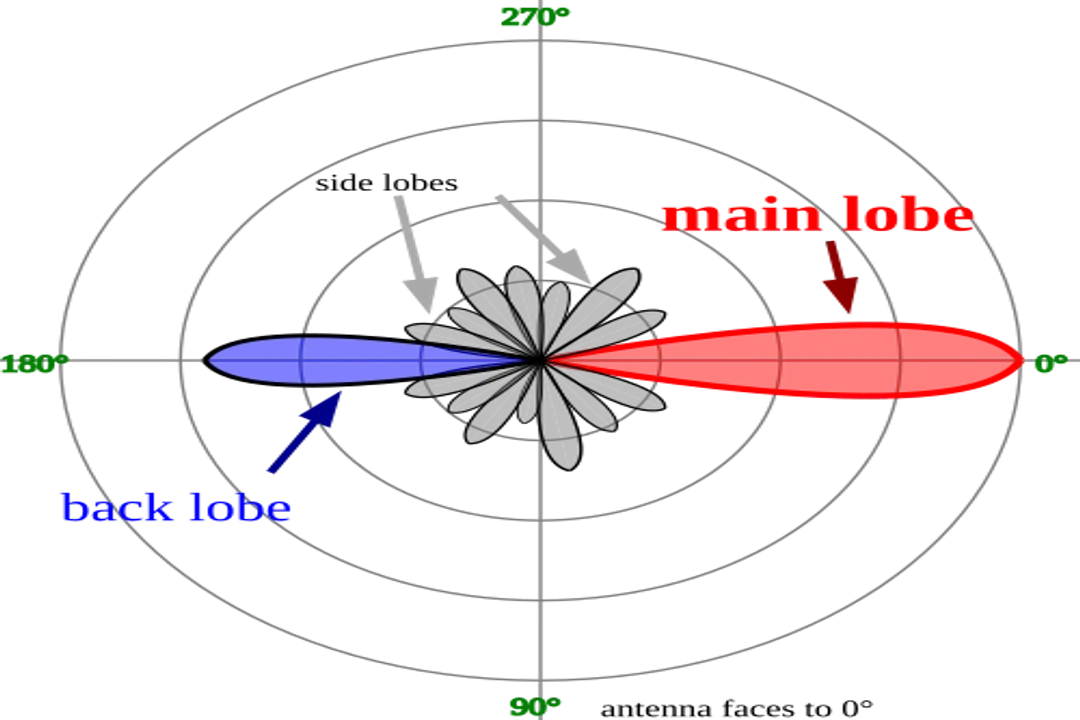
The process by which an antenna successfully translates a guided electrical signal into a wave propagating freely through space is one of the most elegant applications of electromagnetism. At its simplest, an antenna acts as a specialized transducer, a bridge connecting the controlled electrical environment of a transmitter or receiver to the vast, unbounded expanse of the atmosphere or vacuum. It manages the delicate transformation where energy, previously confined to wires, becomes radiant energy that travels at the speed of light. [2][7] This conversion is not instantaneous; it requires careful manipulation of electric and magnetic fields through the physical structure of the antenna itself. [6]
# Electrical Input
Before any wave transmission can occur, the antenna needs an input. This input is not a steady direct current (DC) but rather a high-frequency, rapidly changing electrical signal, typically referred to as an alternating current (AC) or radio frequency (RF) current. [6] This signal originates from the radio transmitter stage, which generates a voltage that reverses its polarity many times per second, often millions or billions of times, depending on the desired communication frequency. [2]
Consider the relationship between voltage and current in this input signal. When the transmitter pushes current through the antenna element—which is essentially a carefully shaped conductor—the current flow generates a time-varying magnetic field ( field) surrounding the conductor. [3][8] Simultaneously, the voltage present across the antenna terminals or between two elements creates an electric field ( field). [3][8] For an antenna to function, these two fields must be in a dynamic, oscillating balance. [6]
# Conductor Geometry

The physical shape and size of the antenna are not arbitrary; they are fundamentally tied to the wavelength of the signal being transmitted. The most basic type of radiating structure, often used as a conceptual starting point, is the dipole antenna, which consists of two conductive elements. [2] The length of these elements is typically designed to be a specific fraction of the signal's wavelength, such as a half-wavelength (). [2]
If the antenna elements are much shorter than the wavelength, the energy transfer into radiation becomes highly inefficient, as the fields created do not have enough physical space to properly develop the propagating wave structure. [2][6] Conversely, when the length is resonantly matched to the signal wavelength, the antenna exhibits maximum efficiency for that frequency. [1] This relationship between physical size and electrical frequency dictates antenna design across the spectrum, from massive, kilometer-long AM broadcast towers to microscopic, embedded structures in smartphones. For instance, a mobile phone antenna designed for a Wi-Fi signal must be physically minuscule relative to a low-frequency AM radio antenna broadcasting at , because the wavelength for is about , whereas the wavelength for is . [1]

# Field Generation
The transmission mechanism relies entirely on the fact that accelerating charges produce electromagnetic waves, while steady charges only produce static electric fields, and charges moving at a constant velocity only produce magnetic fields. [6] Since the input signal is an oscillating AC current, the charges in the antenna conductor are constantly accelerating, decelerating, and reversing direction. [6]
This back-and-forth motion is what forces the creation and subsequent radiation of electromagnetic waves. As the RF current peaks in one direction, it establishes a maximum magnetic field strength around the conductor, and the voltage creates a corresponding electric field maximum. [3] When the current reverses direction, these fields collapse and then rebuild in the opposite polarity. [3] This continuous process of building, collapsing, and reversing the and fields is the engine of radio wave propagation. [6]
If the antenna were simply a piece of wire connected to a DC battery, the small charge separation would create an electric field that remains largely static and bound to the wire, unable to radiate energy away. [2][6] The key is the time variation inherent in the RF signal that causes the fields to become self-sustaining. [6]
# Field Decoupling
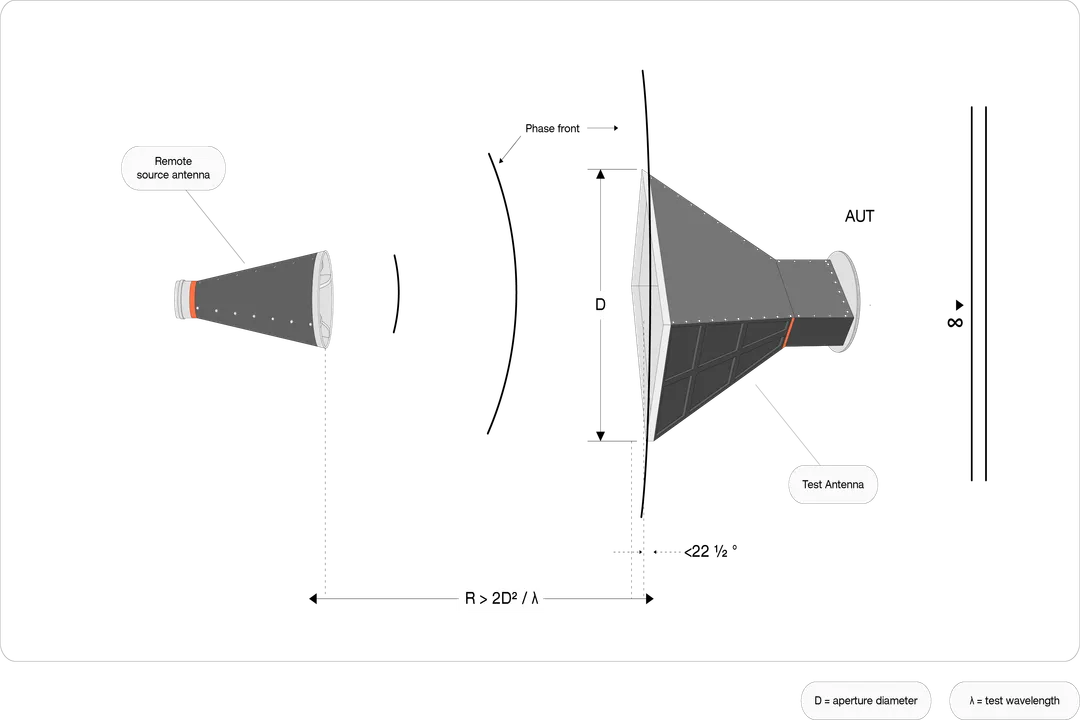
In the immediate vicinity of the antenna, the electric and magnetic fields are closely coupled; this area is known as the near field. [8] In this region, the fields are primarily reactive, meaning they store and return energy to the antenna structure on each cycle without radiating it significantly into space. [8][6] The electric field dominates near the voltage points, and the magnetic field dominates near the current peaks. [8]
For a wave to transmit—to become a true electromagnetic wave propagating away from the source—the electric and magnetic fields must become decoupled and mutually perpendicular, existing as two components of a single propagating wave. [8][6] This transition occurs as the distance from the antenna increases, moving into the far field region. [8]
Think of the antenna as an energetic pump. In the near field, the pump is working hard, sloshing energy back and forth between the energy stored in the electric field (like stretching a spring) and the energy stored in the magnetic field (like winding a coil). [8] When the structure is correctly sized and the frequency is right, the energy "sloshes" so effectively that a portion of the energy is pushed out into space as a transverse electromagnetic wave that is no longer dependent on the antenna to sustain itself. [3][6] The wave travels outward, characterized by its electric and magnetic components oscillating perpendicularly to each other and to the direction of travel. [2]
This decoupling process is why an antenna needs to be resonant. A non-resonant structure might still produce fields, but those fields remain largely trapped in the near field, resulting in poor efficiency, where most of the transmitter's power is reflected back or dissipated as heat rather than radiated. [7]

# Radiation Pattern Shaping
The energy that successfully decouples from the antenna structure doesn't spread out uniformly in all directions unless the antenna is perfectly isotropic, which is physically impossible. [1] Instead, the physical shape and orientation of the antenna determine its radiation pattern. [1] This pattern describes the relative strength of the radiated power in different directions. [1]
Antennas are often designed to concentrate power in specific directions to increase signal strength where it is needed. This concentration is described by concepts like directivity and gain. [1] Directivity is the ratio of the radiation intensity in a specific direction to the average radiation intensity over all directions. [1] Gain incorporates the directivity while also accounting for the antenna's own inherent losses—any energy absorbed by the antenna material rather than radiated. [1] An antenna with high gain focuses its power like a mirror focusing light, even though the total power input remains the same.
For example, a simple vertical whip antenna might radiate equally well in the horizontal plane but poorly upwards or downwards, creating a donut-shaped pattern. [1] Conversely, a highly directional satellite dish antenna focuses nearly all its power into a very narrow beam, achieving very high gain in that specific direction while having very little signal strength elsewhere. [1] The ability to tailor this pattern is fundamental to wireless engineering, allowing engineers to choose between broad area coverage or long-distance point-to-point communication.
# Efficiency and Matching
Even if an antenna is perfectly shaped for a given frequency, poor connection to the transmitter will cripple performance. A critical concept here is impedance matching. [7] Every electronic component, including the transmitter output stage and the antenna itself, has an impedance, which is a measure of opposition to alternating current flow, including resistance and reactance. [7]
If the impedance of the transmitter does not closely match the impedance of the antenna, a significant portion of the power sent from the transmitter will be reflected backward toward the source instead of being accepted and radiated by the antenna. [7] This reflected power is wasted energy, which can even damage the transmitter circuitry over time. Radio engineers spend considerable effort ensuring that transmission lines (coaxial cables or waveguides) and the antenna present the correct impedance (often or in standard systems) to the final amplifier stage. [7] This careful electrical interfacing ensures that the maximum possible power available from the source is successfully launched into the air as an electromagnetic wave. [7]
This concept of matching extends even to the antenna's relationship with the surrounding medium. For the wave to propagate most effectively into free space (or air, which is a close approximation), the antenna's impedance must align not just with the cable, but also with the impedance of the surrounding space, known as the intrinsic impedance of free space (). [8] A poorly matched antenna in a dense medium, for instance, would radiate very poorly because the sudden change in impedance forces reflection at the interface.
# The Transmitted Wave Characteristics
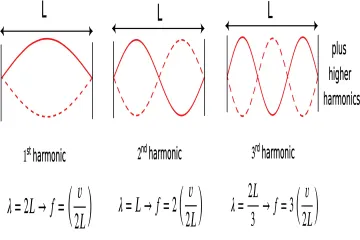
Once the electromagnetic wave is propagating in the far field, it carries energy away from the source. This propagation is characterized by three interdependent factors: frequency, wavelength, and velocity. Since all free-space electromagnetic waves travel at the speed of light (), the frequency () and wavelength () are inversely proportional, linked by the fundamental equation: . [2]
This means that antennas transmitting low-frequency radio waves (like those used for long-distance navigation) must be physically massive to support their long wavelengths, whereas antennas transmitting high-frequency microwaves (like those in satellite communications) can be very small. [1][2] This physical constraint on wavelength dictates the entire landscape of wireless communication technologies.
Furthermore, the signal encoding—the information being sent—is carried by the modulation of the wave. The antenna's job is purely mechanical in the electromagnetic sense: to convert the oscillating electrical energy into the oscillating fields that constitute the wave. Whether the wave carries voice, data, or just a carrier tone is determined by the variation imposed on the input signal before it reaches the antenna element. [7] The antenna simply broadcasts whatever time-varying electrical characteristic it is fed, translating it faithfully into an electromagnetic signature that travels outward, ready to be intercepted and converted back into an electrical signal by a receiving antenna. [7]
# Reception Analogy
To truly appreciate the transmission process, it helps to consider reception in reverse. A receiving antenna works by having the passing electromagnetic wave interact with its conductor. [2] As the wave's electric field passes the metal element, it exerts a force on the free electrons within the conductor, causing them to oscillate back and forth. [2][3] This induced oscillation creates a minute alternating current in the receiver circuitry, mirroring the original signal that generated the wave. [2] If the receiving antenna is oriented correctly to the wave's electric field direction and is cut to the appropriate length, it maximizes this induced current, effectively closing the loop on the entire communication process. [1] The transmission method is simply the necessary energetic inverse of this recapture mechanism.
The physical mechanism boils down to accelerating charges creating time-varying fields that decouple and self-propagate as a transverse wave, a process governed entirely by the geometry of the conductor relative to the wavelength of the signal being applied. [6]
#Videos
How does an Antenna work? | ICT #4 - YouTube
Related Questions
#Citations
How Antennas Work: From Electric Fields to Radio Waves
Antenna (radio) - Wikipedia
How do antennas work? - Physics Stack Exchange
How does an Antenna work? | ICT #4 - YouTube
How do antennas work? : r/amateurradio - Reddit
22.2: Production of Electromagnetic Waves - The Antenna
How Antennas Convert Signals to Keep Us Connected - Taoglas
How do Electromagnetic Fields Relate to Antenna Operation?
How does an antenna convert electrical energy into electromagnetic ...