When observing a very bright fireball, when is the sonic boom typically perceived relative to the light flash?
Answer
After the visual event, as light travels faster than sound
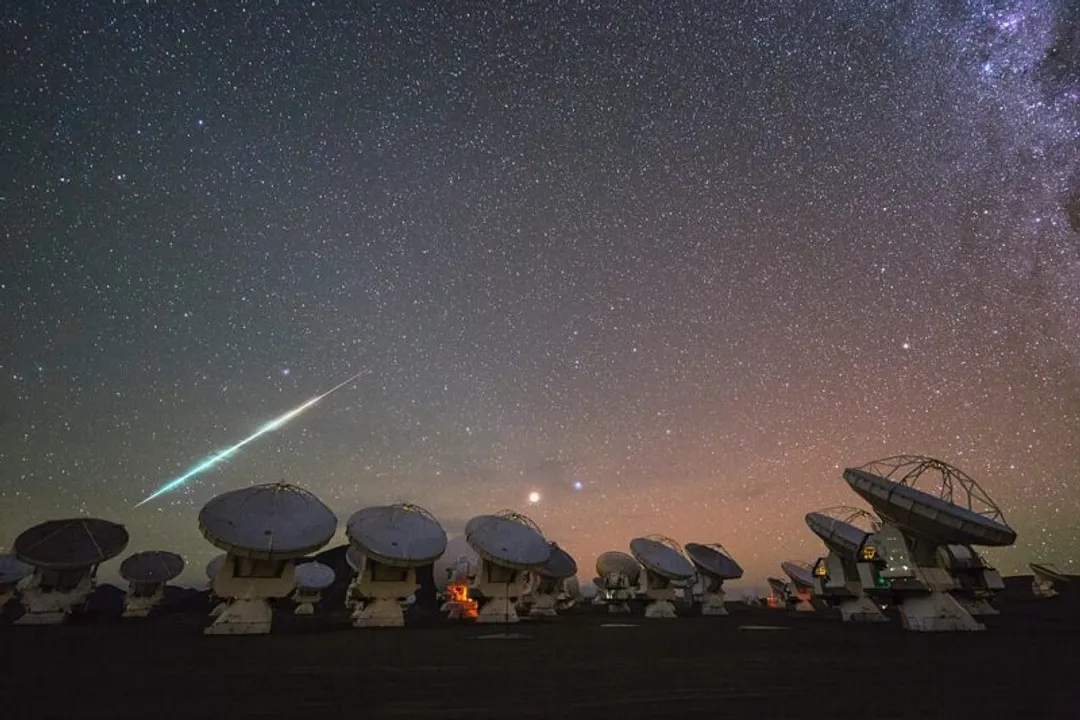
The sonic boom is created by the shockwave generated as the object travels faster than sound, and this sound arrives on the ground after the visual light event because light travels much faster than sound.
Related Questions
What minimum brightness level qualifies a meteor as a fireball?How does the astronomical apparent magnitude scale relate to brightness?Which statement accurately describes the relationship between a bolide and a fireball?What process creates the visible streak of light known as a meteor or fireball?What term is used for space debris that survives atmospheric passage and lands on the ground?When observing a very bright fireball, when is the sonic boom typically perceived relative to the light flash?Why might a very bright fireball appear much larger than the actual meteoroid causing it?If an observer notes a yellow-orange light during a fireball event, what element might be indicated about the object's composition?What object sets the benchmark magnitude for defining a meteor as a fireball?What type of event might cause a sonic boom associated with a fireball?