What is the fundamental purpose of the peer review assessment process?
Answer
Fundamentally to improve the quality of the research being presented.
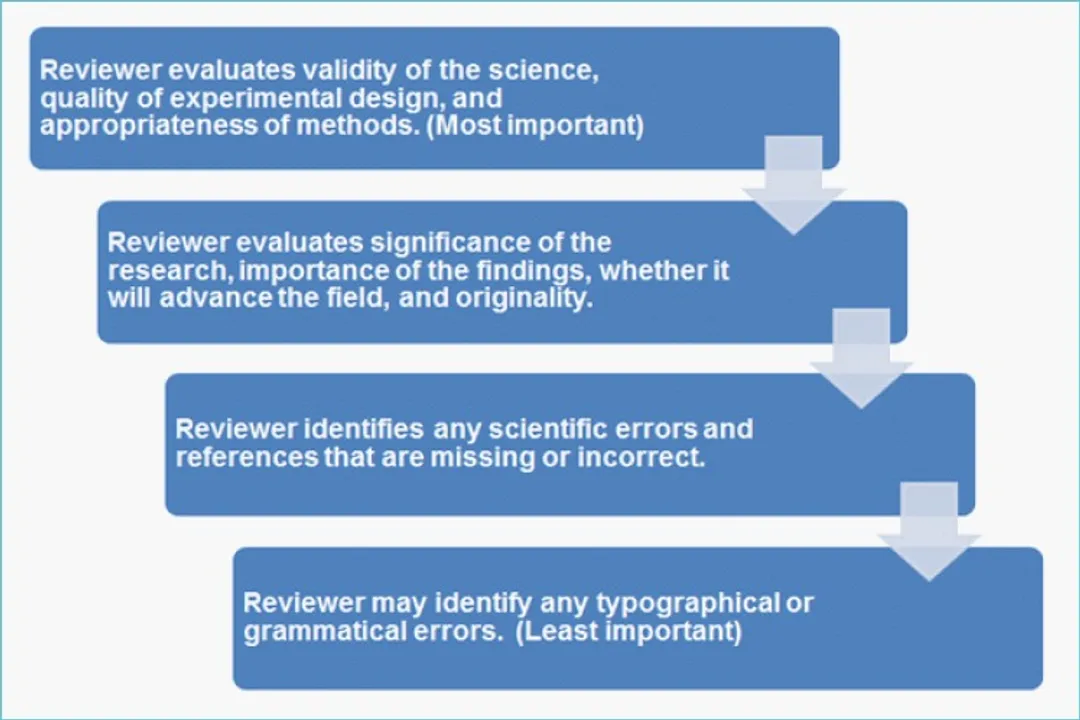
The core purpose of peer review is not just approval or rejection, but specifically to act as a mechanism to enhance the quality of the research manuscript before it reaches the scientific community.
Related Questions
What is the fundamental purpose of the peer review assessment process?What primary function does scrutiny by peer reviewers serve for scientific journals?Which specific issue might a reviewer flag related to study execution or design?When a paper moves to a 'Major Revision' decision, what does this typically imply about the manuscript?How is a reviewer functionally described in terms of the expertise they provide during the feedback stage?Beyond confirming technical correctness, what crucial element must peer review assess regarding the research contribution?What often constitutes the majority of required changes before a paper's acceptance, according to observational data?When structuring a point-by-point response letter, what specific information should authors systematically detail for every reviewer comment?What characteristic of a rejected paper, according to the feedback type table, leads to its rejection even if technically sound?How does peer review ultimately support the collective body of scientific knowledge?