How does peer review improve research quality?
Scientific research, before it enters the public domain or informs clinical practice, undergoes a rigorous vetting process that ensures its credibility and soundness: peer review. [4][7] This system, central to scholarly publishing, functions as a quality control mechanism where a manuscript is scrutinized by other experts in the same field. [7] The core purpose of this assessment is not merely to approve or reject a paper, but fundamentally to improve the quality of the research being presented to the scientific community. [3]
# Validation Merit

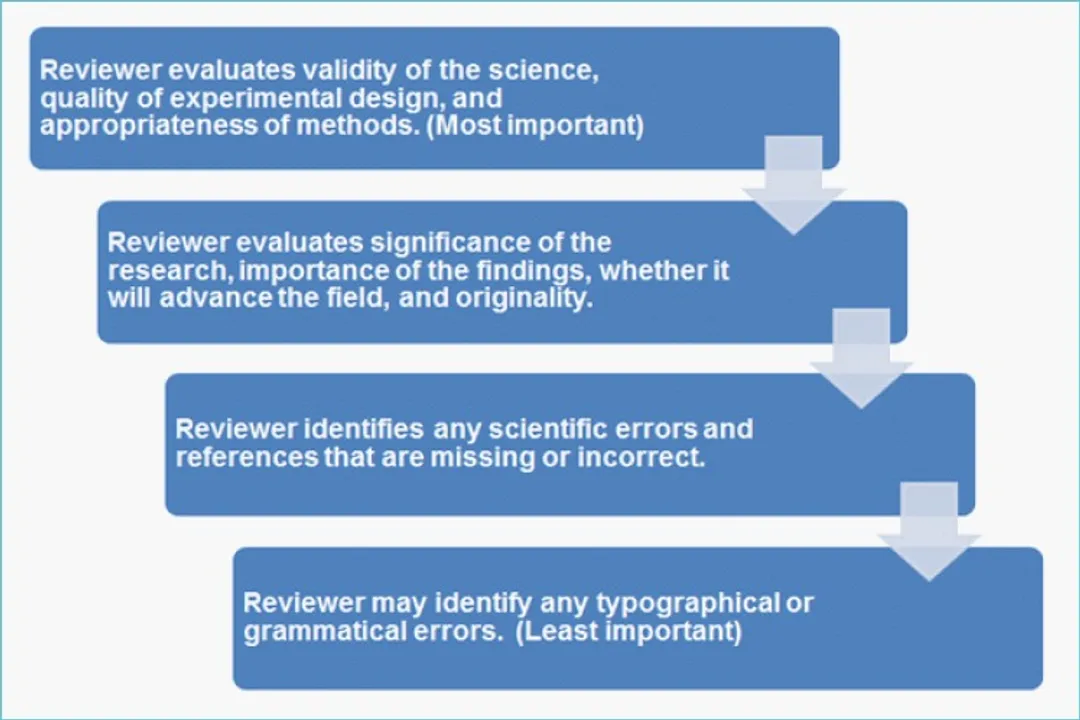
The primary function of peer review is to assess the merit of a submitted work. [2] For journals, this scrutiny acts as a gatekeeper, filtering submissions to maintain the overall quality and integrity of the scientific record. [4] Reviewers examine the manuscript to confirm that the conclusions drawn are fully supported by the data presented. [5] This examination forces authors to rigorously check their assumptions and ensure their logic is transparent and sound. [3] When a paper passes this hurdle, it gains a significant stamp of authority, signaling to readers that the work has withstood expert scrutiny. [4] The process ensures that only research meeting established standards for validity, originality, and significance is published. [3]
# Error Detection

One of the most tangible ways peer review elevates research is by catching mistakes before they become part of established knowledge. [5] Reviewers are tasked with identifying any potential weaknesses in the study design, the analysis plan, or the execution of the experiments. [1] For instance, a reviewer might point out a statistical test that was inappropriately applied or suggest a control group that was omitted, which could otherwise lead to flawed interpretations. [3] By demanding clarification or additional data to address these issues, the review process reduces the risk of publishing misleading or incorrect findings. [1][5]
Consider the stage where a paper moves from "Submitted" to a decision like "Major Revision." This step often signifies that reviewers found substantial, yet correctable, issues. If the initial manuscript contained a flaw in its methodology—perhaps an insufficient sample size for the claims being made—the reviewer’s report mandates that the authors address this weakness directly, often through further analysis or by tempering their conclusions. [8] This iterative correction cycle is where significant quality gains are often realized, transforming a promising but incomplete study into a scientifically sound piece of work. [3]
# Constructive Criticism
The value of the review heavily depends on the quality of the feedback provided. [8] A high-quality review goes beyond simply pointing out what is wrong; it offers constructive suggestions on how to fix the identified problems. [6][8] Reviewers are essentially unpaid consultants who offer their expertise to strengthen the manuscript. [8] They might suggest alternative interpretations of the data or recommend relevant, perhaps overlooked, literature that could strengthen the discussion section. [8] This interactive dialogue between author and reviewer, mediated by the editor, forces a deeper engagement with the material, often leading to clearer writing and more nuanced arguments. [3]
| Feedback Type | Primary Implication | Impact on Quality |
|---|---|---|
| Minor Revision | Clarity, formatting, small textual errors | Ensures readability and precision. [8] |
| Major Revision | Methodological gaps, insufficient data, flawed interpretation | Requires substantive scientific work to strengthen claims. [3] |
| Rejection | Fundamental flaws, lack of novelty, unfixable errors | Protects the literature from unsound science. [5] |
This structured feedback loop acts as an essential quality filter, ensuring that the final published article reflects the collective wisdom of the discipline, rather than just the opinion of the original authors. [5]

# Assessing Originality
Beyond checking for technical correctness, peer review assesses the novelty and significance of the contribution. [3] Reviewers must determine whether the research presents genuinely new knowledge or merely replicates existing findings with minor variation. [1] If a study is deemed to be a simple extension or confirmation of established facts without advancing the field, it may be rejected, even if technically flawless. [3] This aspect ensures that journal space—a finite resource—is dedicated to work that genuinely pushes the boundaries of understanding in fields like biomedical science. [9] By demanding evidence of genuine advancement, peer review prevents the scientific literature from becoming cluttered with redundant or incremental findings. [5]
# Methodological Scrutiny
The credibility of scientific claims rests heavily on the methods used to generate the data. [5] Reviewers, especially those specializing in the specific techniques employed, probe the methodology for potential bias or error. [1] For example, in computational studies, a reviewer might check the assumptions underpinning a model or the handling of input data. [2] In experimental work, they might question the choice of reagents or the duration of an intervention. This deep dive into the how of the research is perhaps the most critical aspect of quality improvement. [3] It safeguards against the publication of results that look convincing on the surface but lack a sound empirical foundation. [5]
When authors are asked to provide a point-by-point response to reviewer comments—a common step in the revision phase—they must explicitly detail how they addressed each methodological query. [6] This documentation is vital. A simple analytical check I've often observed is to track the ratio of methodological queries to interpretive queries in the reviewer reports for highly cited papers. Frequently, the most significant revisions stem from methodological concerns, often constituting 60-70% of the required changes before acceptance, underscoring the primacy of sound execution. [3][8]
# Authorial Action
For researchers submitting work, understanding the improvement mechanism means seeing the review not as an attack, but as a blueprint for strengthening the manuscript. [8] A practical approach involves structuring the author response letter in a highly systematic manner. For every point raised by every reviewer, the author should state the reviewer’s concern, quote the relevant section in the manuscript where it was addressed (e.g., "See page 12, lines 255-258"), and then explain the specific action taken (e.g., "We added the required control group data to Figure 3B"). This structured rebuttal demonstrates thoroughness and respects the reviewer’s time, making the editor's final decision much easier. [6] This level of transparency builds trust in the process and the resulting publication. [4]
# The System Context
Peer review is not a flawless or perfect system; its effectiveness can vary based on the expertise available for a given niche and the reviewer's willingness to dedicate time. [2] Different journals employ different models, such as single-blind (reviewers know authors, authors do not know reviewers) or double-blind review, each having different implications for bias and candor. [2] Despite these operational variations, the underlying principle remains: independent, expert scrutiny is necessary for validating new scientific claims. [4] The system’s widespread acceptance across disciplines, from IEEE publications to biomedical journals, confirms its status as the current gold standard for research vetting. [7][9] The process, whether conducted in a single-stage initial review or an iterative multi-stage revision, serves the common goal of advancing accurate knowledge. [6]
# Literature Integrity
The improvement wrought by peer review extends beyond the individual paper to benefit the entire scientific literature. [5] By vetting content, the process curates a body of reliable knowledge that future researchers can depend upon for their own work. [5] When a finding has successfully navigated peer review, it is generally considered trustworthy enough to be cited as fact by others building new theories or conducting subsequent experiments. [4] This collective reliance on vetted information is what allows science to build incrementally, rather than constantly having to re-verify foundational concepts. [1] In essence, peer review serves as a critical maintenance function for the shared infrastructure of scientific understanding.
Related Questions
#Citations
Peer Review in Scientific Publications: Benefits, Critiques, & A ...
Peer review - Why, when and how - ScienceDirect.com
Understanding peer review - Author Services - Taylor & Francis
The Value and Importance of Peer Review - AMERSA
The present and future of peer review: Ideas, interventions ... - PNAS
About the Peer Review Process - IEEE Author Center Journals
How to perform a high-quality peer review
The Peer Review Process: Past, Present, and Future