What is an imaginary path?
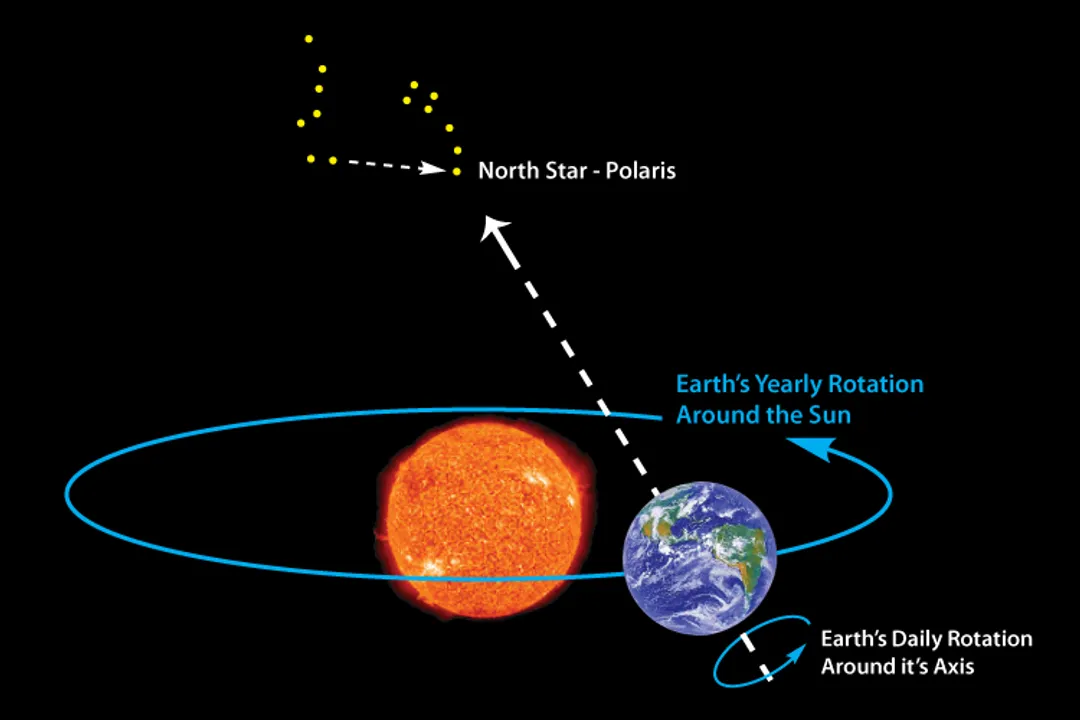
The concept of an imaginary path describes a line or trajectory that exists purely in theory, as a tool for description, measurement, or calculation, rather than as a physical object you could touch or see in the real world. [1] These constructs are essential across many disciplines, especially when trying to map or understand complex movements in space or geometry. [1] They allow us to simplify multidimensional reality into understandable two-dimensional diagrams or precise mathematical equations. [1]
# Lines Conceptual
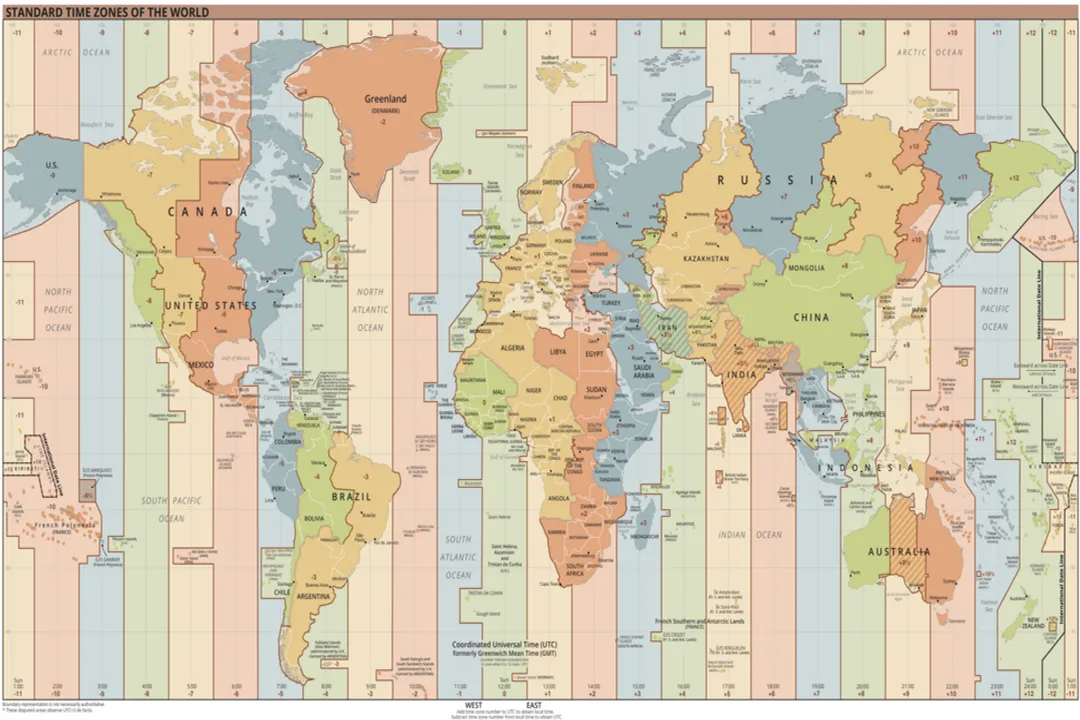
When discussing paths that are not physically present, the term imaginary line serves as the fundamental building block. [1] In geometry, an imaginary line is simply a concept used to define relative positions or boundaries. [1] It has no physical dimension or substance but is crucial for developing spatial relationships. [1] Think of the lines drawn on a map to denote latitude and longitude; those lines do not exist on the physical Earth’s surface, but they are indispensable for navigation and reference. [1]
In the context of the cosmos, these theoretical lines become celestial paths—the way we chart the movement of stars, planets, and other bodies across the backdrop of the sky. [4][6] Since we cannot place a measuring tape between Earth and Mars, we rely on these imagined trajectories to make sense of their dance around a central star. [2]
# Sun's Track

One of the most significant imaginary paths in observational astronomy is the ecliptic. [4][6] This is not a physical track carved into space, but rather the apparent path the Sun traces across the celestial sphere over the course of one year. [4][5] If you were to track the Sun's position against the background stars day by day, you would find it moves along this specific, imaginary great circle. [4]
The ecliptic defines the plane of Earth’s orbit around the Sun. [6] Because the Earth orbits the Sun, and we observe from Earth, the Sun appears to move along this path. [4][6] This imaginary line is an invaluable reference because all the major planets in our solar system, with only minor deviations, orbit the Sun within the same general plane as Earth. [4] This alignment is why solar and lunar eclipses happen—they occur when the Moon crosses this established imaginary plane. [4][6]
The ecliptic plane is fundamental to celestial navigation and understanding seasons. [4] It is defined by the angle of tilt between Earth’s equator and the plane of its orbit, which causes the Sun to appear higher in the sky during summer and lower during winter. [4][6] An imaginary line that sets the stage for nearly all major solar system events is a powerful conceptual tool. [4][5]

# Planetary Motion

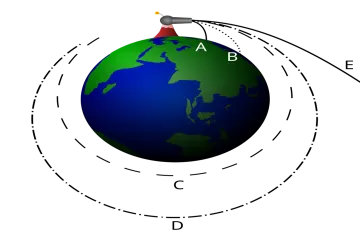
Moving beyond the Sun’s apparent path, we encounter the imaginary curved paths of the planets themselves: their orbits. [2] When we discuss what path a planet like Mars or Jupiter takes around the Sun, we are referring to its orbit, which is an imaginary curved path defined by the laws of gravity and motion. [2][6] While the physical force is gravity, the path that results from that interaction is best described mathematically as a trajectory—an imaginary line connecting successive positions of the planet over time. [2]
For instance, early models conceptualized the Earth’s path as a simple circle, a foundational imaginary construct that served as a working model for centuries. [9] Modern understanding refines this, recognizing that the path is actually an ellipse, as described by Kepler’s laws. [6] However, even the ellipse is an imaginary geometric shape imposed upon the reality of gravitational interactions to make those interactions predictable. [2][6] The path is imaginary because the planet is not physically tracing a line etched in space; it is constantly falling toward the Sun while simultaneously moving forward tangentially. [6]
In rocketry and spaceflight basics, trajectories are vital. A spacecraft follows a path dictated by the gravitational pulls of multiple massive bodies. [6] Calculating this path requires setting up coordinate systems and defining the intended route as a mathematical line, which is then followed by the vehicle. [6] This modeled path, even if the craft deviates due to course corrections, is the imaginary flight plan that mission control aims to execute. [6]
A way to visualize the power of this concept is to consider an eclipse prediction. The Ecliptic is merely an idea based on Earth's movement, yet by using this imaginary line to map the Moon's orbital nodes, scientists can predict when the three bodies—Sun, Earth, Moon—will align perfectly, sometimes centuries in advance. [4] The precision derived from abstract geometry applied to non-physical lines is astonishing.
# Geometric Tools
Imaginary lines are not limited to celestial mechanics; they serve as necessary scaffolding in various scientific and artistic representations of reality. For example, the ecliptic is sometimes represented visually in artistic projects, even when not strictly scientific, because it provides an immediate visual baseline for understanding the solar system's geometry. [10] It establishes a fundamental plane against which other orbital inclinations can be measured. [6]
In many educational contexts, drawing these lines onto star charts or diagrams of the solar system helps students grasp concepts that are otherwise invisible. [3][7] An imaginary line drawn through the center of a planet’s orbit provides the major axis for describing its elliptical path. [6] These diagrams use simple lines—real marks on paper—to represent these deeper, invisible, imaginary lines in space. [3][7]
It is worth noting that the term "Path" can extend into abstract conceptual systems outside of physics. For instance, in certain fictional or role-playing contexts, a "Path" refers to a specific discipline, philosophy, or set of abilities a character adheres to. [9] While this shares the naming convention, the underlying mathematical or physical meaning of an imaginary trajectory is absent; here, the path is a character class or archetype. [9] This contrast highlights how effective the term "path" is—it can mean a literal (though invisible) route through space or an abstract set of rules for action. [9]
# Analyzing Reference Frames
To truly appreciate the imaginary nature of these paths, one must consider the reference frame. The Sun’s path (the ecliptic) is imaginary relative to the distant fixed stars over the span of a year. [4] If an observer could instantly teleport light-years away from our solar system, the path would vanish, replaced by the actual, fixed locations of the stars and the continuous motion of the planets. [6]
Consider the difference between the Earth’s actual motion and its projected motion:
| Path Type | Definition | Physical Existence | Utility |
|---|---|---|---|
| Orbit | The actual, curved trajectory of a planet in 3D space, governed by gravity. [6] | Physical (a result of mass interaction) | Precise trajectory calculation for probes. |
| Ecliptic | The 2D projection of Earth’s orbit onto the celestial sphere. [4] | Imaginary (a viewing perspective) | Establishing a solar system reference plane. |
| Idealized Path | A simplified geometric model (e.g., a perfect circle) of the orbit. [9] | Purely Conceptual/Mathematical | Basic teaching tool and historical approximation. |
The imaginary line, in this sense, is a projection or a simplification. [1][3] It is a way of collapsing complex, three-dimensional, constantly changing data into a single, fixed geometric feature that aids in understanding and prediction. [1]
An interesting implication of using imaginary paths for prediction relates to long-term stability. While we use the near-perfect ellipse of the orbit as our imaginary path, gravitational perturbations from Jupiter and other large bodies cause tiny, real deviations from that perfect line every year. The imaginary path provides the baseline, but the actual path wobbles around it, necessitating constant recalculation using more complex, non-idealized imaginary paths (like a series of interconnected conic sections) for deep space missions. [6]
# Reference Points
In space science, establishing a zero point is as important as defining the line itself. [3] Imaginary lines help define these zero points. For instance, the ecliptic plane serves as the zero latitude for the celestial sphere, allowing astronomers to measure how far north or south (declination) another object is from that solar system baseline. [6] This is analogous to how the Earth’s equator provides the zero line for latitude on Earth. [3]
Without this agreed-upon, imaginary reference plane derived from Earth’s orbit, every measurement of a planet’s position would need to be stated relative to an arbitrary point, making celestial charting chaotic. [3] The imaginary path of the ecliptic imposes order on the apparent chaos of the night sky, functioning as an unmoving background for all dynamic motion. [4]
In essence, an imaginary path is a powerful intellectual construct, transforming the messy, continuous reality of motion into discrete, understandable lines and planes. [1] Whether we are charting the Sun's yearly passage, modeling a planet’s elliptical orbit, or simply drawing a reference grid on a map, these non-existent lines are what make the physical universe legible. [1][2][4]
#Citations
Imaginary line - Wikipedia
What is an imaginary curved path where planets revolve around the ...
[PDF] 3. Axis an imaginary line that passes through the North and South ...
The ecliptic is the path of the sun - EarthSky
Do you know what the ecliptic is? It's the sun's path in our sky ...
Chapter 2: Reference Systems - NASA Science
Earth & Space Patterns - 5th Grade Science
What is imaginary path that lies around our earth through the middle ...
Path - Honkai: Star Rail Wiki - Fandom
Ecliptic - PhMuseum