What does "au" stand for?
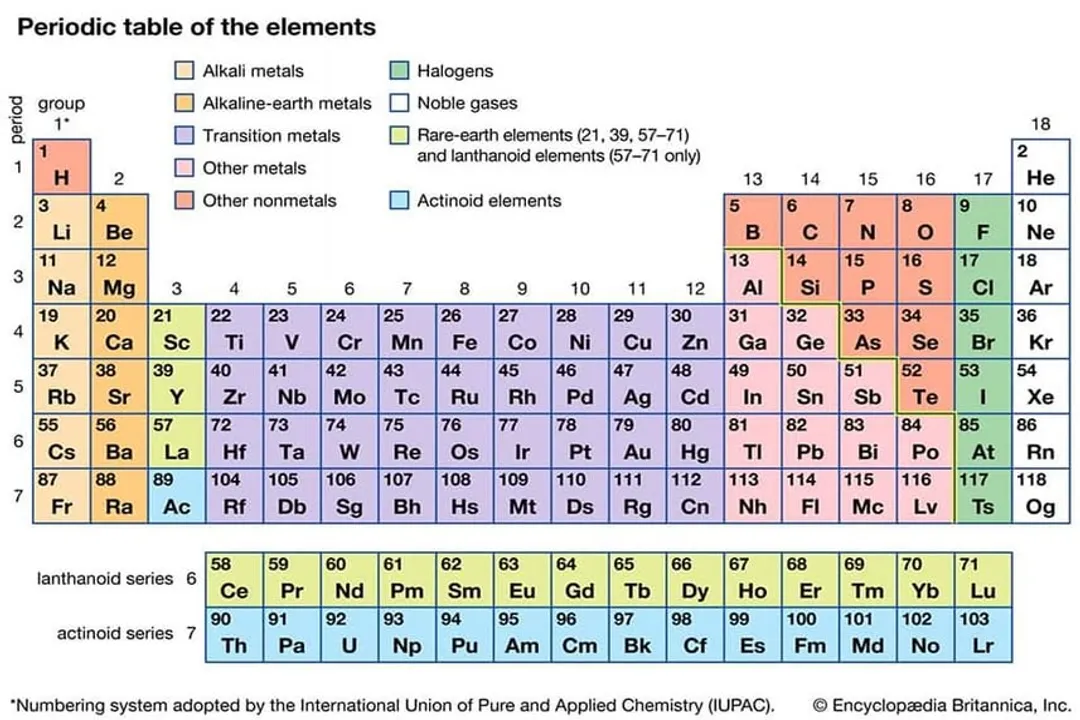
The letters "AU" appearing together can cause a moment of pause, as this seemingly simple pair of characters holds significance across vastly different fields, most notably in the realm of astronomy and in the world of chemistry and precious metals. Depending on where you encounter it—perhaps in a textbook describing the solar system or on the back of a gold coin—the meaning shifts dramatically, representing something unimaginably vast or something tangibly valuable. Understanding what "AU" stands for requires paying close attention to the surrounding discussion, which can separate a measurement of distance spanning millions of kilometers from a chemical symbol denoting elemental purity.
# Astronomical Length
When discussing distances within our solar system and beyond, the Astronomical Unit, abbreviated as AU, serves as the foundational yardstick. This unit was developed out of necessity because using standard metrics like kilometers or miles to describe the distances between planets results in staggeringly large numbers that are difficult to comprehend or work with efficiently. The AU provides a more manageable scale for mapping the cosmos relative to Earth’s orbit.
Historically, the AU was defined as the average distance from the Earth to the Sun, a measurement that required painstaking observation and calculation over centuries. Early astronomers used geometric techniques and parallax measurements to estimate this fundamental value. For example, an early 19th-century value placed it near 149.67 million kilometers.
The definition of the AU has been refined over time with technological advancement, culminating in a standardized value adopted by the International Astronomical Union (IAU). As of the 2012 redefinition, the AU is defined exactly as 149,597,870,700 meters. This fixed definition means that the AU is now a defined length, independent of the Earth's actual orbital position at any given moment, which is crucial for modern high-precision calculations.
To put this distance into perspective, consider the solar system's major bodies relative to this unit. Earth orbits at precisely $1$ AU from the Sun. Mars orbits at about $1.52$ AU, while Jupiter is roughly $5.2$ AU out. Traveling to the edge of the classical solar system, Pluto orbits at an average distance of about $39.5$ AU.
This unit is not just for our local neighborhood. When astronomers discuss exoplanets orbiting other stars, they often start by stating the planet's distance from its host star in AUs, which immediately gives context to the potential environment of that alien world relative to what we know. For instance, if an exoplanet is discovered orbiting its star at $0.8$ AU, a scientist can immediately infer that it likely orbits closer than Earth orbits our Sun, perhaps receiving more intense stellar radiation.
It is important to note that while the term is "Astronomical Unit," its abbreviation is always capitalized as AU, distinguishing it clearly from other abbreviations. This fixed standard provides astronomers with a universally accepted baseline for measuring interstellar and interplanetary scales, allowing for clear communication across research groups worldwide.
# Gold Element
Shifting gears entirely from the vastness of space, "AU" or, more correctly, Au, is the internationally recognized chemical symbol for the element Gold. This symbol originates from Gold's Latin name, aurum. This connection between the chemical symbol and the classical name highlights the element's deep historical significance, dating back long before modern chemistry formalized the periodic table.
Gold is a highly valued precious metal known for its distinct bright, slightly orange-yellow color, its density, and its remarkable resistance to corrosion and tarnishing. These properties—chemical inertness and visual appeal—are precisely why its name, aurum, meaning "shining dawn" or "glow of sunrise," was adopted into its symbol. Unlike many other elements, gold's utility and value have been intertwined with human civilization for millennia, appearing in coinage, jewelry, and religious artifacts.
In modern chemistry, the symbol Au is critical for writing chemical formulas and denoting the composition of alloys or compounds. For instance, when discussing pure gold, the elemental symbol is used. In the context of coinage or investment bars, the purity of the gold is often expressed using parts per thousand, such as $999.9$ fine gold, where the chemical symbol Au confirms the substance being traded. A common standard is $24$-karat gold, which represents the highest degree of purity, nearly $100%$ Au.
One fascinating aspect of gold's chemistry, often overlooked outside specialized fields, is its tendency to form stable complexes, such as chloroauric acid (), which is vital in techniques like gold refining or electroplating. This behavior, while rare for such an unreactive element, demonstrates the nuanced chemistry behind the metal we often associate only with its inert, solid form.
# Context Matters
The juxtaposition of these two primary meanings—a measurement unit based on light-seconds and an element name derived from ancient Latin—underscores a fundamental principle of technical communication: context is king. A reader encountering "AU" in a geological survey concerning mineral deposits is almost certainly referring to gold, measured perhaps in troy ounces or metric tonnes, whereas a reading in a NASA press release about the Voyager probes is dealing with astronomical distances.
The difference in scale between these two concepts is staggering, which is a key area where confusion might arise if context is ignored. An AU represents roughly $150$ million kilometers. If we were to try and describe the mass of a gold atom in AU, the resulting number would be so small as to be meaningless, involving negative powers of ten that represent femtometers or smaller, nowhere near the scale of the astronomical unit. Conversely, trying to measure the distance to Jupiter in grams (the unit of mass often associated with gold) makes no logical sense.
Here is a quick mental check to help distinguish the two primary meanings:
| Context Clue | Likely Meaning of AU/Au | Primary Field |
|---|---|---|
| Planetary orbits, light travel time, solar system scale | Astronomical Unit | Astronomy/Astrophysics |
| Bullion, jewelry, purity stamps (karats), periodic table | Gold (Au) | Chemistry/Metallurgy/Finance |
When evaluating technical information, recognizing the field of study instantly resolves the ambiguity. If you are reading about orbital mechanics, assume $1$ AU; if you see $999.9$ or mention of troy weights, assume Au for gold. A practical consideration for anyone analyzing data spanning multiple scientific disciplines is realizing that the IAU standardized the AU to an exact value in meters, while the value of gold fluctuates daily on global markets, meaning one is a fixed constant and the other a volatile commodity.
# Varied Uses
While the Astronomical Unit and the chemical symbol for gold are the most authoritative and common uses for "AU" or "Au" in scientific and commodity contexts, the abbreviation appears in many other specialized, regional, or informal settings. This multiplicity adds to the initial confusion when the context is not immediately clear.
For instance, in certain database or documentation contexts, "AU" can simply stand for Abbreviated Unit or Augmented Unit. These are often context-specific placeholders within software or reporting systems, not universally recognized constants. In medical settings, depending on the region or institution, it might refer to an Admissions Unit.
Furthermore, in popular culture and online communities, abbreviations can take on entirely new meanings. In the context of the rhythm game Friday Night Funkin' (FNF), for example, "AU" has been used to mean Augmented Reality or sometimes Alternate Universe, referring to fan-created variations of the game's content. These informal uses are entirely dependent on the specific online forum or group discussing them and carry no scientific or chemical weight.
When encountering "AU" outside of the established domains of physics/astronomy or chemistry/metallurgy, it is wise to adopt a cautious approach. A simple, unstated abbreviation like this in a specialized document should prompt a search within that document's glossary or a quick check against a reputable, broad abbreviations dictionary. This diligence prevents misinterpreting a simple placeholder for a fundamental constant. For example, if a document mentions "AU usage rate" without defining it, an experienced reader will usually cross-reference the document's subject matter—if it's about stellar spectra, it's distance; if it's about assaying ore samples, it's gold. The flexibility of the abbreviation highlights how much the structure of surrounding language dictates meaning in technical communication.
Related Questions
#Citations
Astronomical unit
can someone please explain to me what is an AU ...
What does AU stand for?
au (Astronomical Unit)
AU Definition & Meaning
Can you explain what AU stands for and how it is used ...
Why Is Gold Au: Did You Know?
What does the chemical symbol Au stand for?
Astronomical unit (AU, or au) | Definition, Conversion, & Facts
What Does “Au” Mean in Coins?