What are supergiants composed of?

The composition of a supergiant star is not a static chemical formula printed on a label; rather, it is a dynamic, ever-changing portrait of nuclear activity. These stellar behemoths, defined by having masses exceeding about eight times that of our Sun, burn through their fuel at a truly alarming rate. [1][7] Therefore, describing what they are "composed of" requires us to specify when we are asking—are we talking about their birth state, their current core, or the shells surrounding that core?
# Initial Makeup
Like nearly every star in the universe, when a supergiant is born from the gravitational collapse of a massive molecular cloud, its bulk composition is overwhelmingly simple. [3] The vast majority of its mass—typically around 70 to 75 percent—is composed of hydrogen, with helium making up most of the remainder, around 24 to 28 percent. [1] Trace amounts of heavier elements, which astronomers generally lump together under the term metals (anything heavier than helium), are present but account for less than two percent of the star's total mass. [1]
This initial chemical signature is the standard starting point for star formation across the cosmos. [6] What separates a supergiant from its smaller stellar cousins, like a main-sequence star or even a Red Giant, is the speed and intensity with which it consumes this initial fuel supply. [5] Because of their immense gravity, the internal pressures and temperatures inside a supergiant are far greater, driving nuclear fusion reactions much faster and forcing the star into accelerated evolutionary phases. [2]
# Core Conversion
The primary process defining a star's current state is nuclear fusion occurring in its core, where hydrogen atoms are smashed together to form helium atoms. [6] A supergiant spends a relatively brief time on the main sequence compared to a Sun-like star. Once the hydrogen fuel in the very center of the core is exhausted, the star leaves its initial phase and begins burning helium. [2][8]
This transition marks the point where the star's bulk composition begins to show significant internal stratification. The outer layers might still be rich in unprocessed hydrogen, but the core is now an entirely different environment. [7] The sheer mass of the supergiant dictates that the gravitational crush is sufficient to heat the core past the threshold needed to ignite helium fusion, a stage smaller stars may never reach in the same manner. [8]

# Layered Cores
As evolution progresses, the internal structure of a massive supergiant develops an onion-skin-like arrangement of burning shells, a distinctive feature that sets it apart from lower-mass stars. [9] This layered system is a consequence of gravity continuously compressing the interior until the next element in the periodic table can ignite as fuel in the central region. [4]
If you could somehow slice a massive star near the end of its life, you would find composition zones stacked concentrically:
- The Outermost Shells: Still largely composed of unburnt Hydrogen. [1]
- The First Interior Shell: Fusing Hydrogen into Helium.
- The Core: Where the heaviest fusion is currently taking place.
This layering continues inward, creating zones of successively heavier elements. The existence of these distinct burning shells means that a supergiant's composition is highly varied depending on its radial position; it is far from chemically uniform. [7]
# Element Progression
The journey through successive fusion stages in the core of a supergiant involves the creation of progressively heavier elements. [4][6] This chain reaction is what builds up the internal chemical diversity:
- Hydrogen fuses into Helium.
- When core Hydrogen is gone, Helium fuses into heavier elements, primarily Carbon and Oxygen. [4]
- As the Carbon/Oxygen core contracts and heats up, further fusion ignites, producing elements like Neon and Magnesium.
- This process continues, cycling through the lighter end of the spectrum: Neon fuses into Silicon, which eventually fuses into Iron. [4][9]
The ability of a star to achieve these higher fusion stages is directly tied to its initial mass. For instance, while a star with about 8 to 11 solar masses will fuse carbon and oxygen, it might stop short of achieving the core temperatures required to proceed efficiently to silicon fusion, perhaps leaving behind a large oxygen/neon core after a supernova. [8] The most massive supergiants, however, push all the way to Iron. [4]
# Iron Limit
The production of elements stops abruptly at Iron () because iron nuclei are the most stable in the universe. [4][9] Fusing elements lighter than iron releases energy, which supports the star against its own gravity. However, fusing iron consumes energy rather than releasing it.
When the core of the supergiant becomes predominantly iron, the energy source that has held the star up against its crushing weight suddenly vanishes. [9] The core can no longer support itself against the tremendous gravitational pressure. This collapse is catastrophic and almost instantaneous, leading to a Type II supernova explosion. [8] The star's internal composition—the layered structure of hydrogen, helium, carbon, neon, silicon, and the final iron core—is violently ejected into space. [7]
It is an interesting observation that while the elements heavier than iron (like gold, uranium, or platinum) are not made during the stable fusion phases within the star, they are synthesized in the immense energy spike during the supernova explosion itself, or via neutron capture processes in the surrounding environment before or during the collapse. [6] Therefore, the composition we observe after the star has died is chemically richer than what it was just before its demise.
To put this into perspective regarding nucleosynthesis yield, consider that a star like our Sun, which will never become a supergiant, will eventually shed its outer layers as a planetary nebula, enriching the galaxy primarily with Carbon and Oxygen synthesized during its Red Giant phase. [6] The supergiant, conversely, seeds the galaxy with a much broader spectrum, including Neon, Silicon, Sulfur, and Calcium, alongside large amounts of Oxygen, all blown out in a single, explosive event. [4] This means that the death of a single supergiant is responsible for seeding the cosmos with a far greater variety of complex building blocks than the gentle demise of a low-mass star. The resulting clouds of gas and dust, now enriched with these heavier elements, eventually form the next generation of stars, planets, and, ultimately, life. [3]
# Stellar Classification
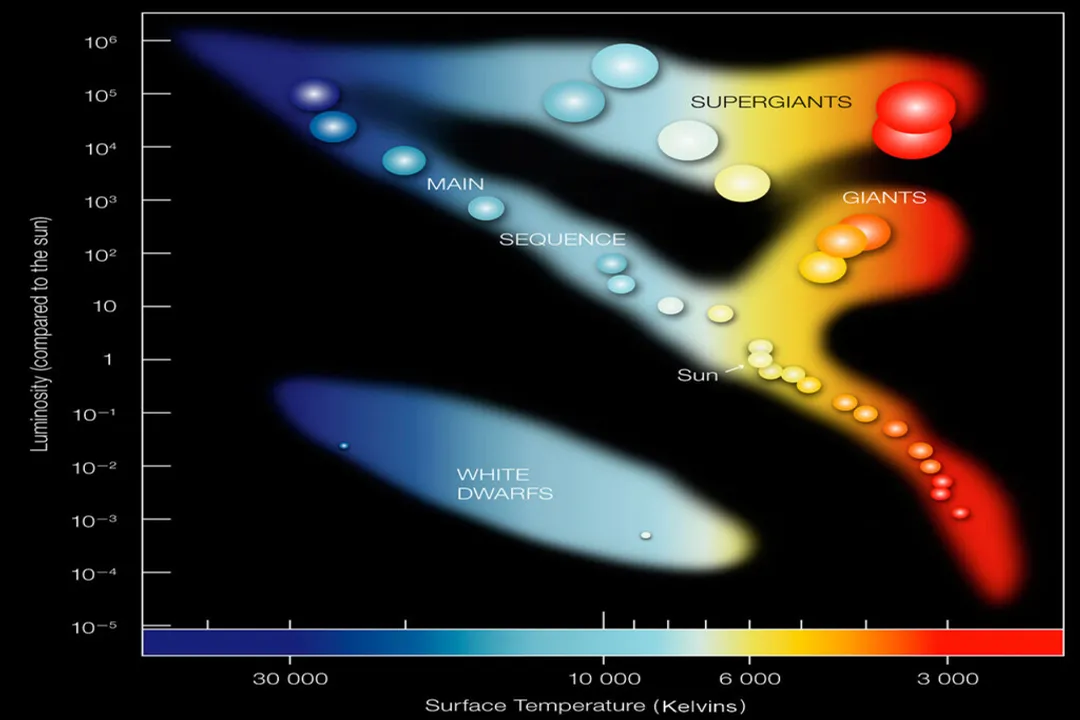
The term "supergiant" itself is less about a precise chemical recipe and more about a state of evolution driven by mass, which dictates the composition pathway. [7] Supergiants are classified based on their luminosity and temperature, often using the Yerkes Luminosity Class I. [1]
The composition changes cause distinct visible classifications:
| Spectral Class | Temperature/Color | Dominant Composition Feature | Example |
|---|---|---|---|
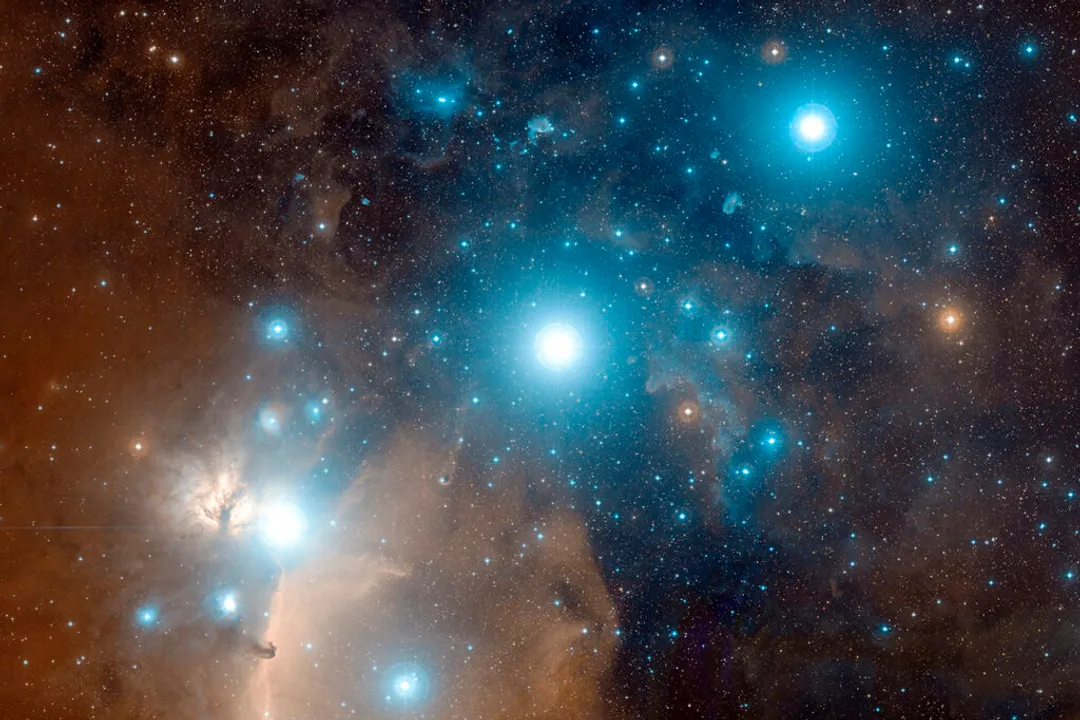
| Blue Supergiant (O or B) | Hottest, Blue-White | Core actively fusing lighter elements; possibly still burning Hydrogen in the core or just beginning Helium burn. | Rigel |
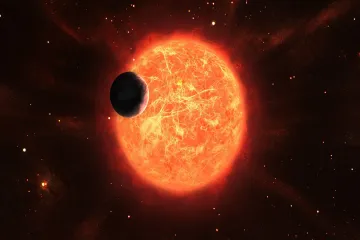
| Red Supergiant (K or M) | Cooler, Red-Orange | Star has expanded significantly; core is fusing heavier elements (like Carbon or Neon), creating deep internal stratification. | Betelgeuse |
This difference in color, despite both being "supergiants," directly reflects their current internal processing. The hotter blue supergiants are often younger and hotter on the surface because they are still rapidly burning through their massive hydrogen supply, whereas the cool red supergiants are older, have expanded dramatically, and are processing heavier elements deep inside. [2][5] Their surfaces, puffed far out, reflect the deeper, more evolved chemical products or show evidence of dredge-up from the burning layers beneath.
Related Questions
#Citations
Supergiant - Wikipedia
Supergiant Stars | Definition, Characteristics & Names - Lesson
Supergiant - eSky - Glyph Web
What's the elemental composition of supergiant stars? - Quora
Stellar Astronomy: Part 4 – Of Dwarfs and Supergiants
Large Stars - What is Your Cosmic Connection to the Elements?
Supergiant Star | Encyclopedia MDPI
Supergiants and Supernovas | CK-12 Foundation
Stellar Evolution - Chandra X-ray Observatory