What is a potential biosignature?
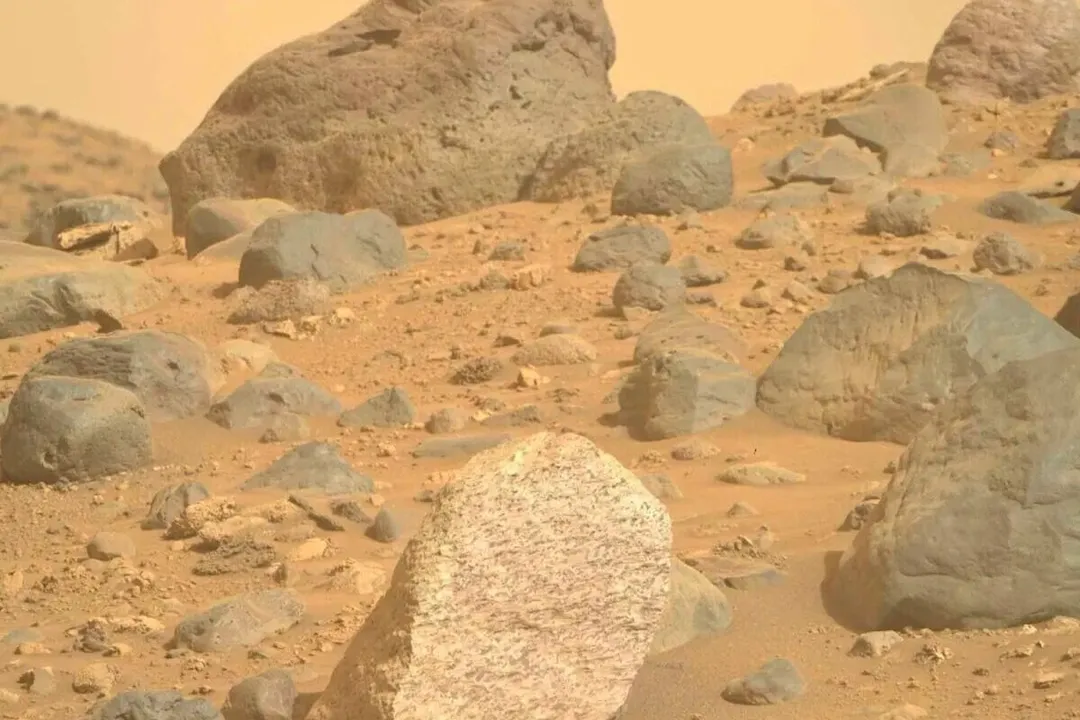
The discovery of a definitive sign of life beyond Earth would arguably be the most significant scientific finding in human history. When scientists hunt for such proof, they aren't looking for little green men or even active microbes; they are searching for biosignatures. A biosignature is any element, molecule, substance, or feature that scientists can measure that provides evidence of past or present life on a world. [4]
However, the word potential is just as important as biosignature right now. A potential biosignature is something that looks suspiciously like a product of biology, but which requires intensive follow-up study to definitively rule out non-living, or abiotic, causes. [2][3] The astrobiological goal is to find a signature so complex or specific that it could not be generated through natural geological or chemical processes alone—but getting there requires weeding out every other possibility first. [4]
# Types of Evidence
To search effectively, researchers classify potential signs of life into distinct categories. The variety reflects the many ways life interacts with its environment, from the microscopic to the planetary scale. [4]
The broad categories scientists look for include:
- Chemistry and Organic Matter: This involves detecting specific molecules, like complex organic carbon compounds, that have a unique chemical structure suggestive of biological origins. On Earth, for example, life almost exclusively uses left-handed amino acids, so finding a strong bias in handedness (chirality) could be telling. [4]
- Mineral Signatures: These are minerals or mineral patterns whose composition or texture strongly implies biological activity. On Earth, this includes things like biogenic magnetite. [4]
- Microscopic Structures and Textures: This covers physical evidence, such as microfossils, biofilms, or layered structures like stromatolites, which form through microbial ecosystems. [4]
- Isotope Patterns: Living systems often prefer lighter isotopes of certain elements (like carbon or sulfur) when performing metabolic chemistry. Finding an unusual ratio of these isotopes in organic matter or minerals can be a strong clue. [4]
- Atmospheric Gases: For distant exoplanets, the atmosphere is the primary target. Life creates chemical imbalances—for instance, Earth’s abundance of oxygen and methane together, which would normally destroy each other quickly if not constantly replenished by biology. [4]
A true biosignature must meet rigorous criteria. It must be reliable, meaning it must dominate over all other processes that could produce the same feature. [4] It must also exhibit survivability—lasting long enough in the environment to be detectable by our current or near-future technology. [4] Furthermore, it must satisfy detectability, meaning our instruments must be sensitive enough to measure it accurately. [4]
# Geochemical Mimicry
The biggest complication in declaring a finding is the very real issue of false positives. Every potential biosignature has its own set of non-biological processes that can mimic it. [4] This challenge is amplified when searching beyond Earth, as we must account for entirely different planetary chemistries and geological histories. [3]
Consider oxygen in an atmosphere; on Earth, it screams life due to photosynthesis. Yet, oxygen can build up abiotically, for instance, if a planet loses most of its water via photochemical processes. [4] For a geochemist or astrobiologist, the task shifts from simply finding a molecule to proving that the geology could not have made it. This is where the search becomes an exercise in exhausting the non-biological explanations. Many Earth-based life forms evolved specifically to exploit energy released by common geochemical reactions, meaning that life can become very adept at mimicking simple geochemistry, often by speeding up slow natural processes. [4] It is a persistent danger that we might mistake a particularly complex set of geological outcomes for the work of a microbe.
The key to breaking this degeneracy—the confusion between biological and geological—often lies in the context and the combination of evidence. It is not the single compound that proves life, but rather the distinctive patterns present in a suite of related chemical or structural features. [4]
# Martian Mudstone
This scientific rigor is currently being applied to data streaming back from NASA’s Perseverance rover in Jezero Crater on Mars. The team there has focused on sedimentary rocks, specifically fine-grained mudstones, which are excellent candidates for preserving ancient signs of life, as they were formed in an environment with standing water billions of years ago. [1][5]
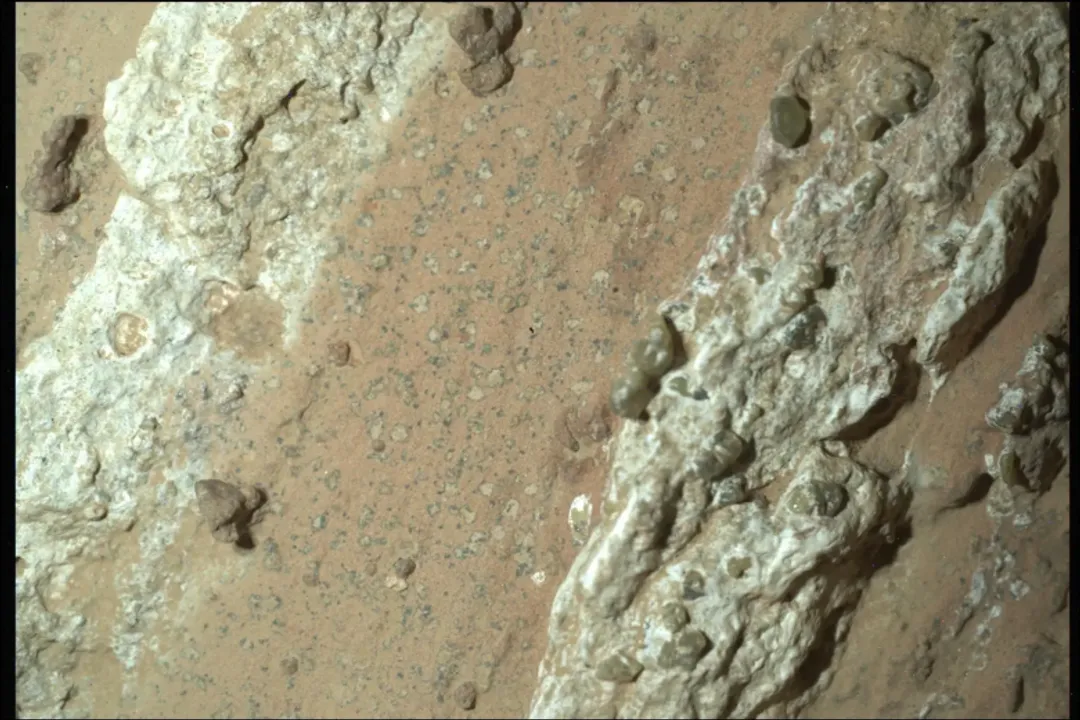
In a region dubbed the Bright Angel formation, researchers, including geobiologists from Texas A&M University, detected a combination of features in a rock called Cheyava Falls that qualify as a potential biosignature. [1][5] These rocks contain not only organic carbon—molecules with carbon-carbon bonds—but also specific minerals that appear linked to that carbon. [1][5]
The most compelling aspects are tiny nodules and ring-like structures nicknamed "poppy seeds" and "leopard spots". [1][2] These features are enriched in two specific minerals: ferrous iron phosphate (likely the mineral vivianite) and iron sulfide (likely greigite). [1][2] On Earth, these minerals often form in low-temperature, water-rich settings, frequently associated with redox reactions driven by microbial metabolism, such as when microbes break down organic matter and "breathe" rust or sulfate. [1][2]
The finding is so compelling because these minerals appear to have formed through post-depositional redox reactions involving the organic material, and this all occurred in a low-temperature sedimentary environment. [5] Dr. Michael Tice noted that, based on current understanding, some of the chemistry shaping these Martian rocks seems to require either high heat or life. [1] Crucially, the rocks themselves show no evidence of having been heated significantly since their formation, suggesting that a purely geological explanation involving high temperatures is unlikely. [1][5] The co-location of organic matter with these redox-sensitive minerals is what makes the signature potential rather than confirmed evidence. [1]
This research highlights a fascinating irony of planetary preservation. While Earth’s dynamic geology, driven by plate tectonics, has heated and recycled most of our planet's oldest rocks, effectively erasing these delicate, low-temperature chemical relationships, Mars’ relative geological stillness means these billion-year-old chemical fingerprints might be preserved more clearly than they are here at home. [1] This difference in planetary evolution provides a unique geological context, making the Martian rocks an almost unintentionally perfect natural laboratory for studying ancient habitability. [1]
# Viability and The Earth Return
The detection of the "leopard spots" is an exciting development that widens the window of time Mars may have been habitable, as these particular sedimentary rocks are younger than some older formations scientists expected to investigate first. [2] However, as the astrobiologists emphasize, the next crucial step is distinguishing between the two possible scenarios: that geothermal processes created the features, or that microbial life did. [1][5]
The scientific community is cautiously optimistic, recognizing that these features meet NASA's criteria for a potential biosignature—they warrant deeper investigation. [1] To move from "potential" to "proof," the sample must be brought back to Earth. [2][5] On Mars, the instruments are constrained by size and power. Back on Earth, scientists can employ far more sensitive techniques to analyze the isotopic composition of the organic matter and perform detailed mineralogy studies to confirm the precise thermal history of the rocks. [1][5] Only by comparing the Martian data against a vast library of known terrestrial biotic and abiotic reactions can researchers confidently isolate the unique fingerprint of life, if one exists. [4]
# Searching Elsewhere
While Mars currently commands the most direct attention for finding past life, the concept of a biosignature extends across the Solar System and to distant worlds. For example, scientists are very interested in Saturn’s moon Enceladus and Jupiter’s moon Europa, both believed to harbor large subsurface liquid water oceans. Mission concepts are being developed specifically to analyze the plumes erupting from these icy shells for organic compounds or chemical imbalances. [4]
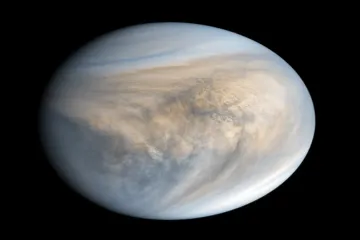
On Venus, the recent discussion around the potential detection of phosphine in the clouds—a gas considered to be overwhelmingly biological in origin on Earth—shows how atmospheric chemistry is scrutinized, even though abiotic explanations for other Venusian molecules like ammonia or ozone have also been proposed. [4] Even for exoplanets too distant to visit, observing the reflectance spectrum of their atmospheres for pigments or chemical disequilibrium, like the combination of methane and carbon dioxide, serves as the basis for remote biosignature hunting. [4]
In every location, the guiding principle remains the same: life uses available energy, driving its environment away from chemical equilibrium. [4] Whether we are examining mudstone grains in Jezero Crater or the gases in a far-off atmosphere, the search for a potential biosignature is fundamentally a search for that undeniable deviation from the expected, quiet chemistry of a dead world.
#Citations
What is a Potential Biosignature? - NASA Science
Biosignature - Wikipedia
Scientists detected a potential biosignature on Mars - The Current GA
Researchers uncover potential biosignatures on Mars
Evidence from Perseverance Rover Is a Potential Biosignature