What does SI indicate?

The abbreviation "SI" surfaces in several distinct professional and technical fields, leading to confusion if context isn't established first. While many associate it immediately with science and measurement, it also holds significance in the world of gemstones and even financial transactions. Understanding what SI indicates requires parsing these different domains to find the correct definition for the situation at hand.
# Metric System
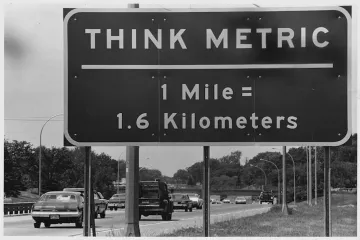
The most common and internationally recognized meaning for SI is the Système International d'Unités. This is the modern, internationally accepted form of the metric system, used across nearly all scientific endeavors and increasingly in global commerce and everyday life. It provides a standardized foundation for measurement, ensuring that an experiment conducted in one country can be perfectly replicated or understood in another without ambiguity introduced by differing local units.
# Base Units
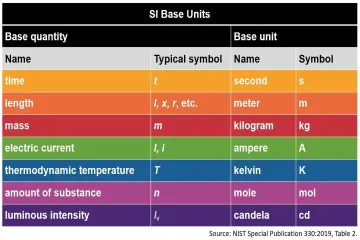
The International System of Units is built upon seven distinct base units, from which all other derived units are calculated. These base units are the bedrock of measurement across physics and engineering. For instance, the base unit for length is the meter, for mass is the kilogram, and for time is the second.
When looking at derived units, the system maintains its coherence. A perfect example of this relationship is found in the unit of force. The SI unit for force is the newton (symbol N), which is defined precisely in terms of the base units: one newton is the force required to accelerate a mass of one kilogram by one meter per second squared (). This definition clearly shows the interconnectedness that defines the expertise of the SI system.
# Unit Symbols
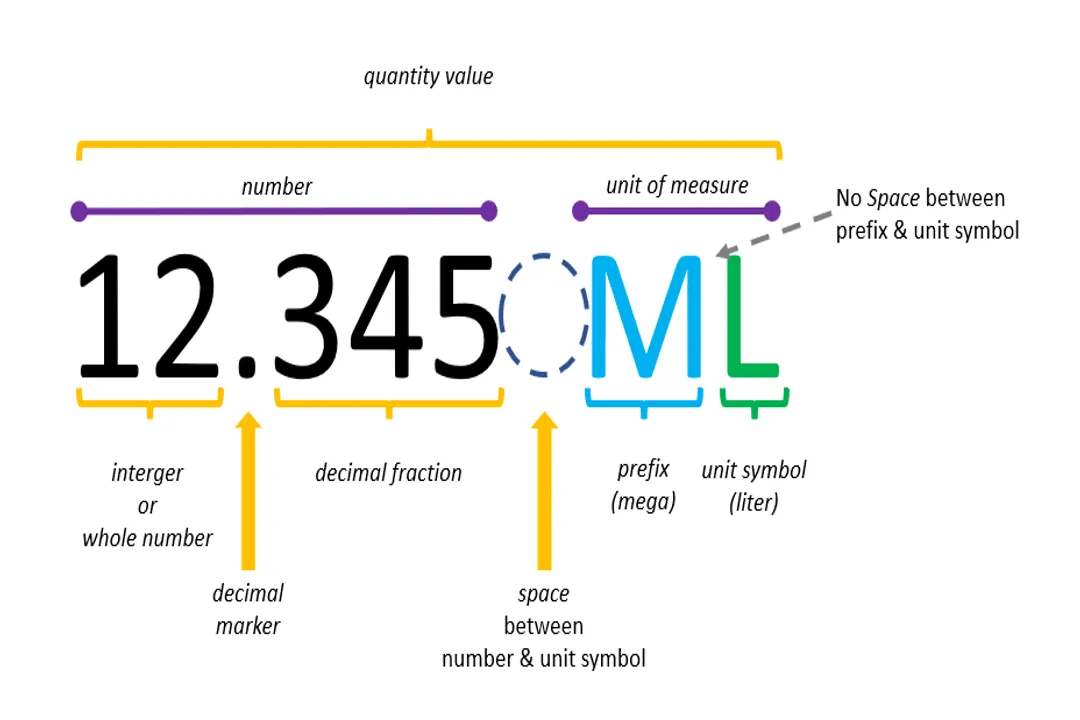
The clarity of the SI system extends to its naming conventions. Symbols for SI units are standardized and should always be written with a Roman (upright) typeface, regardless of the typeface used for the surrounding text. For example, the symbol for the second is simply s, and for the meter, it is m. When discussing time units, for instance, the symbols remain consistent whether you are dealing with seconds (s), minutes (min), or hours (h), although the minute and hour symbols are not officially part of the core SI base unit set but are accepted for use within the system. It’s important to note that plurals are not formed for unit symbols; one thousand seconds is written as , not .
# Scaling Units
A critical feature of the SI is its system of prefixes, which allows for expressing very large or very small quantities cleanly without writing out long strings of zeros or using scientific notation in all contexts. These prefixes are uniform across all base units, creating an easy-to-learn and easy-to-apply scaling mechanism.
The prefixes are based on powers of ten. For example, the prefix kilo- means $10^3$ (one thousand), so a kilogram is $1000$ grams, and a kilometer is $1000$ meters. On the other end of the spectrum, micro- represents (one millionth), leading to units like the micrometer (). The National Institute of Standards and Technology (NIST) maintains the official lists of these prefixes, which range from yocto- () up to yotta- ().
One key takeaway when dealing with SI measurements, especially in engineering contexts, is recognizing the difference between prefixes that use upper-case versus lower-case letters. Capital letters are generally reserved for larger multiples like Mega (M, $10^6$) or Giga (G, $10^9$), while lower-case letters denote smaller fractions like milli (m, ) or nano (n, ). Understanding which prefix scale you are operating on—say, switching from to —is vital. If an analyst incorrectly applies a factor of $1000$ instead of $1,000,000$ when converting between micro- and milli-scale data points, the resulting calculation error can lead to significant material waste or structural failure in a physical application. This small notational difference carries immense practical weight.
# Diamond Clarity
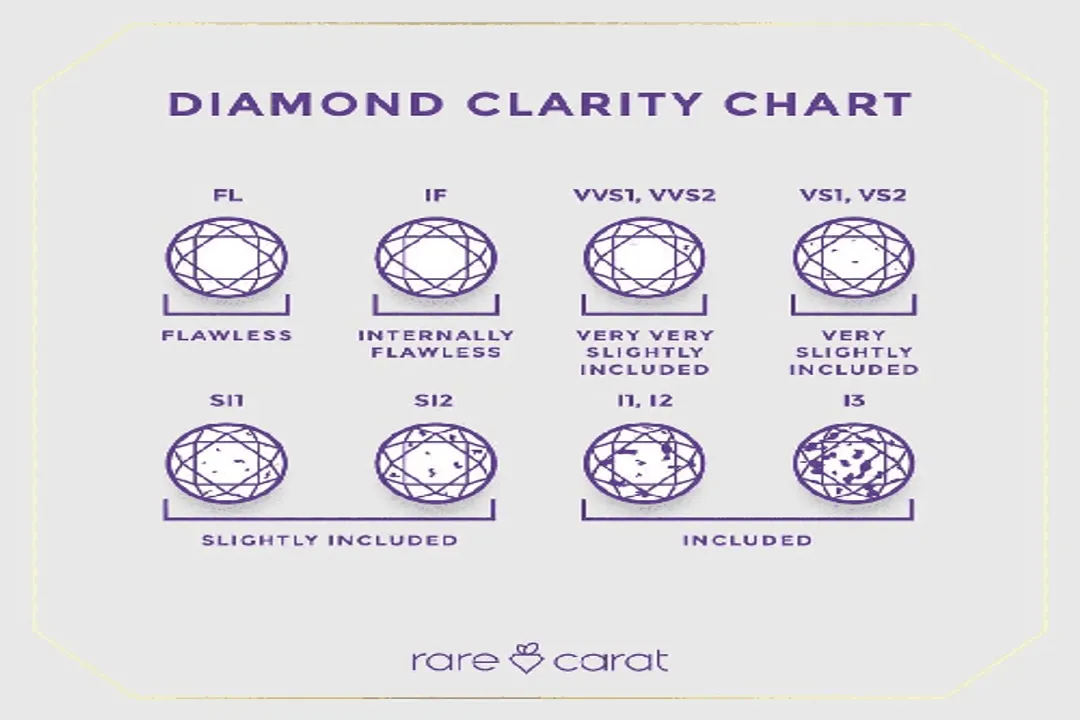
Stepping away from physics, SI also serves as an official classification in the gemological world, specifically concerning the clarity of diamonds. In this context, SI stands for Slightly Included.
# Grading Inclusions
Diamond clarity is graded based on the size, number, position, nature, and relief of internal characteristics, known as inclusions, and external characteristics, known as blemishes. The GIA (Gemological Institute of America) scale places SI diamonds into two primary categories: and .
A diamond graded as SI means that, when examined under magnification by a trained grader, it contains inclusions that are noticeable but typically not visible to the naked eye when viewed in a well-lit environment. This creates an interesting dichotomy in value: the SI grade often represents a sweet spot for consumers looking for good visual appeal without paying the premium associated with Flawless (F) or Very, Very Slightly Included () stones. The subjective nature of grading inclusions, even with standardized magnification, contrasts sharply with the absolute, mathematically derived nature of SI units in physics. While a newton is a newton everywhere, whether an inclusion qualifies as versus can sometimes rely on the specific grader's experience and interpretation of the grading standards.
# Payment Indicator
A third, entirely separate context where SI appears is in the realm of financial transactions and processing, where SI often functions as a Payment Status Indicator.
# Transaction Status
In specific electronic data interchange systems or payment gateways, SI might be used as a code to signal the status of a payment request or transaction record. While the exact definition can be proprietary or specific to a certain payment network or internal banking software, its general function is to quickly inform a system about the state of a financial record—whether it's settled, pending, returned, or otherwise processed. For instance, in one specific glossary context, SI is defined as indicating a status related to a payment being successfully processed or cleared. This operational use prioritizes speed and machine readability over descriptive text, which is a common characteristic of technical abbreviations across various industries.
# General Definition
Beyond these specific technical uses, a general dictionary definition of SI exists. For example, in the Cambridge Dictionary, SI can be an abbreviation that simply stands for Secretary of the Interior in American English contexts. This highlights the necessity of context even further; if one were reading a document about U.S. governmental appointments, SI would refer to the head of the Department of the Interior, an office entirely unrelated to either metric measurements or diamonds.
# Contextual Comparison
The meanings of SI offer a fascinating look into how abbreviations acquire specialized meaning. The scientific SI (Système International d'Unités) aims for universal, verifiable exactness through defined physical constants and relationships. Its success lies in its mathematical purity and the absence of ambiguity once the base units are accepted. Conversely, the gemological SI (Slightly Included) embraces quantified subjectivity, balancing objective magnification criteria with aesthetic assessment. The financial SI (Status Indicator) prioritizes binary clarity in data exchange—a record is either in status SI or it is not.
If you are working with laboratory equipment, engineering schematics, or international scientific papers, SI refers to the metric system and demands adherence to precise numerical conventions. If you are purchasing fine jewelry, SI dictates internal aesthetic quality. If you are an auditor reviewing transaction logs, SI describes the stage of a financial record. The single, unifying factor across these disparate fields is the reliance on a shared, shorthand term to communicate a complex set of standards or conditions quickly. The core lesson here is that while the metric system provides a standardized language for the physical world, the English lexicon requires an accompanying glossary for technical abbreviations like SI to maintain clarity in specialized subcultures.
#Videos
What Does SI Stand for in Math? : Math for Everyone - YouTube
What are SI units ? - YouTube
Related Questions
#Citations
What Does SI Stand for in Math? : Math for Everyone - YouTube
What are the SI symbols for units of time? : r/Metric - Reddit
Metric (SI) Prefixes | NIST
What does SI mean in metric SI units for measuring? - Quora
What is the SI unit of force? - NPL - National Physical Laboratory
SI | definition in the Cambridge English Dictionary
What is an SI Diamond? - Rare Carat
Payment status indictor (SI) - RCM Glossary - MD Clarity