density articles
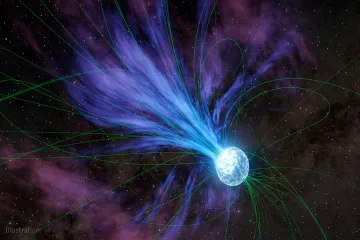
Which celestial body is defined as the densest known object that is still technically classified as a star?
What catastrophic stellar event often marks the birth of a neutron star?
What physical force is responsible for halting the gravitational collapse once protons and electrons merge into neutrons?
If a teaspoon of material from a neutron star's interior could be weighed, what approximate mass would it have?
What is the typical radius range for a neutron star, compressing solar mass into a tiny volume?
What causes the characteristic periodic pulses detected from objects designated as pulsars?
Why do neutron stars possess extremely rapid rotation rates after their formation?
The outer crust of a neutron star is composed of which primary structural elements suspended in electrons?
What is the main unresolved uncertainty regarding the internal structure of a neutron star?
What celestial object is considered denser than a neutron star?
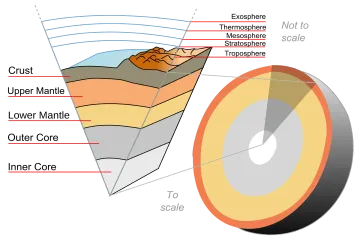
What is the term for the process that sculpts planets into distinct, concentric layers?
What physical property is the primary driver behind the gravitational sorting of materials during differentiation?
What condition must a planet's interior meet to allow for effective density sorting?
Which initial heat source for differentiation comes from the kinetic energy of impacts during planetary assembly?
What were the three main initial sources of heat that kickstarted planetary differentiation?
Why is the Earth's inner core solid, despite being hotter than the outer core?
What critical feature of Earth is generated by convection currents occurring in the liquid outer core?
Which layer of a terrestrial planet is formed from the lightest silicate materials that rise to the surface?
Compared to Earth, why does Mars have a proportionally smaller core?