How do gyroscopes maintain orientation?
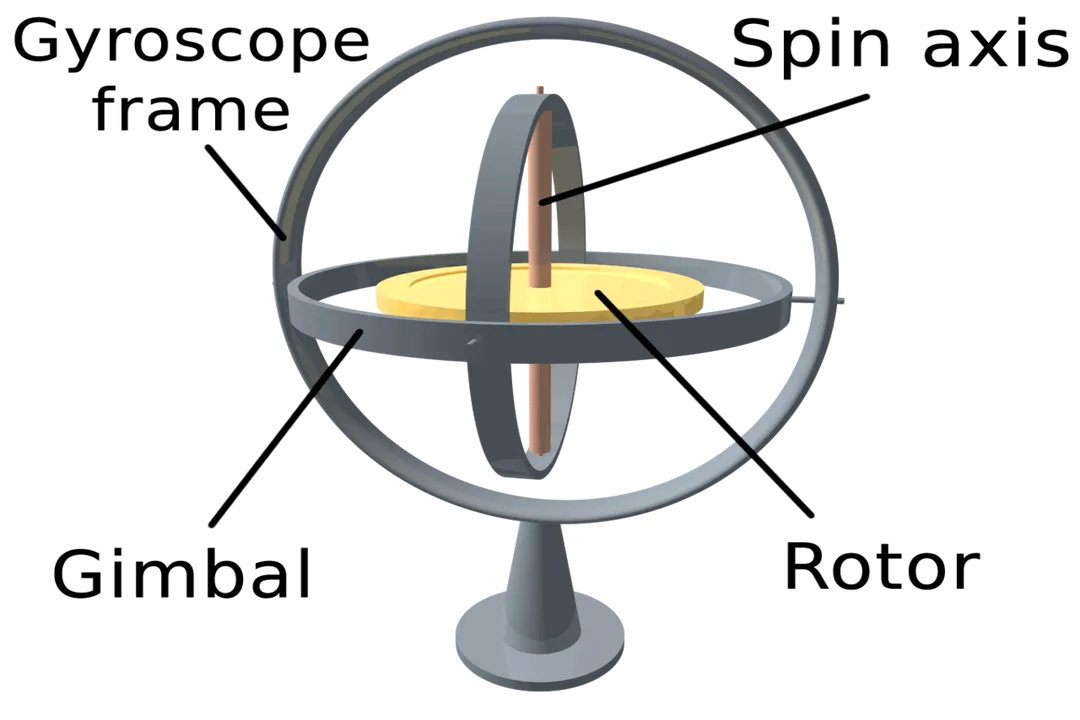
This seemingly simple spinning toy or precision instrument possesses an almost magical ability to resist changes in its tilt—a characteristic that has baffled and intrigued observers for centuries. At its heart, a gyroscope is any spinning wheel or disc whose axis of rotation is free to assume any orientation. The core explanation for how it maintains this orientation lies not in magic, but in the fundamental laws governing rotation in physics, specifically the conservation of angular momentum.
# What Gyroscope

A gyroscope, in its traditional form, consists of a massive wheel or rotor, often called a rotor or flywheel, mounted on an axle. This wheel is mounted within a system of rings called gimbals. The gimbals are essential because they allow the spinning rotor's axle to point in any direction without imposing torque (twisting force) on the rotor itself. If the rotor is spinning quickly, the entire assembly resists any attempt to change the direction of that spin axis. This resistance to changes in the direction of the spin axis is what we commonly perceive as maintaining its orientation. Even in small, modern electronic versions, like those found in smartphones, the underlying principle governing orientation stability remains rooted in measuring and reacting to changes in angular velocity.
# Momentum Core

To grasp the gyroscope’s trick, one must first understand angular momentum. In linear motion, momentum is simply mass times velocity (). For a spinning object, angular momentum is analogous, but it also depends on how the mass is distributed relative to the axis of rotation. Specifically, it is the product of the object’s moment of inertia and its angular velocity. The key here is that angular momentum is a vector quantity; it has both magnitude (how fast it’s spinning and how heavy it is) and direction (the line pointing along the spin axis).
The crucial physical law at play is the conservation of angular momentum. This law states that the total angular momentum of a system remains constant unless an external torque acts upon it. Imagine the spinning wheel as having a powerful, invisible arrow pointing along its axis of rotation, representing its angular momentum vector. If no outside twisting force (torque) is applied, that arrow must continue pointing in the exact same direction in space, regardless of how the mounting structure beneath it moves.

# Rigid Motion

This concept of fixed direction in space is often termed gyroscopic inertia or rigidity in space. When the rotor spins fast enough, the mechanical system exhibits a strong tendency to keep the spin axis pointed in the same direction in the universe. This effect is more pronounced when the rotor has a large moment of inertia and is spinning very fast.
For example, if you spin a bicycle wheel quickly and try to tilt it while holding only the axle, you will feel a resistance that pushes back against your hand, trying to keep the wheel plane level relative to the ground. The faster the spin, the harder it is to change that axis orientation. This rigidity is what allows a gyroscope to act as an excellent, stable reference point. While mechanical gyroscopes achieve this via a massive, fast-spinning wheel, modern micro-electromechanical systems (MEMS) gyroscopes achieve the same effect using vibrating structures, leveraging the inertia of moving mass in a different, but mathematically equivalent, way to detect rotational changes.
# Direction Reference
A common point of confusion is establishing what the gyroscope is maintaining its orientation with respect to. If you spin up a gyroscope in your lab and let it sit, its spin axis will remain fixed relative to inertial space (or the fixed stars), not necessarily relative to the local Earth frame. This means if the Earth rotates beneath it, the gyroscope's axis will not rotate with the Earth unless an external torque forces it to do so.
This is precisely why gyroscopes are invaluable for navigation. If you mount a gyroscope on a ship or aircraft, and its axis is initially aligned north, it will continue pointing in that inertial north direction, even as the vessel turns east or west. The system is measuring its own rotation relative to a fixed, external frame of reference, which is the foundation of stable navigation systems. If a device did rotate perfectly with the Earth, it would be useless for navigation because it would always appear to maintain its orientation relative to the ground, offering no information about the vehicle's actual turning motion.

# Force Reaction
What happens when an external twisting force, or torque, is applied to the spinning gyroscope? If angular momentum were conserved perfectly, the axis should not move. However, in any real-world setup, a torque will cause a change in the direction of the angular momentum vector. The counterintuitive result is precession.
Instead of tilting in the direction the force is applied, the gyroscope's axis moves at a right angle to the direction of the applied torque. For instance, if you push down on one side of the axle of a spinning wheel, the axle will not drop; instead, it will move horizontally, causing the entire wheel assembly to slowly turn sideways. This occurs because the applied torque changes the direction of the angular momentum vector, and the resulting vector change is perpendicular to both the original angular momentum and the applied torque. The rate of this precession is inversely proportional to the spin rate; a slower spin rate leads to faster precession when the same torque is applied. This phenomenon is critical when considering applications like the Hubble Space Telescope, where reaction wheels (which function on gyroscopic principles) use small, controlled torques to precisely steer the massive instrument without expending propellant, relying on this predictable precession effect.
# Practical Stability
Considering the engineering required, the effectiveness of a mechanical gyroscope depends heavily on minimizing unwanted torques. Friction in the bearings and air resistance act as external torques, causing the maintained orientation to slowly drift away from its initial inertial setting. This drift is often called drift rate or drift error. A high-quality gyroscope designed for navigation, like those used in Inertial Measurement Units (IMUs), must employ extremely low-friction bearings, often magnetic levitation or frictionless environments (like those in space applications), to keep this drift minimal over long periods.
An Insight on Material Quality: While speed is important, the mass distribution relative to the axis is arguably more critical for intrinsic stability. A gyroscope with a heavier rim and lighter hub (higher moment of inertia for a given mass) will exhibit greater rigidity in space for the same rotational speed compared to a solid, uniform disk of the same total mass. This is why high-performance mechanical gyros often use rotors designed with a large radius and minimal central mass, prioritizing moment of inertia over sheer rotational speed when designing for long-term orientation holding without external correction.
# Modern Sensing
While mechanical gyroscopes based on spinning rotors were the standard for decades, modern technology relies heavily on solid-state sensors that detect angular velocity without any moving parts that spin in the classic sense. These are often MEMS gyroscopes. These devices work by using the Coriolis effect on vibrating elements. When the sensor assembly rotates, the vibrating mass experiences a lateral force (the Coriolis force) perpendicular to both the vibration direction and the axis of rotation. This force is measurable and proportional to the rate of rotation. These small electronic gyros are what allow your phone to know which way you are tilting it, relying on the same fundamental physics that govern the spinning wheel, but implemented in silicon.
Actionable Context for Calibration: Because both mechanical and MEMS gyroscopes are sensitive to external torques (or, in the case of MEMS, temperature and vibration), they are rarely used in isolation for long-term navigation. A good system will often integrate gyroscope readings with other sensors, such as accelerometers and magnetometers, in a process called sensor fusion. The gyroscope provides excellent high-frequency data on rate of turn, but drift accumulates quickly. Accelerometers and magnetometers provide corrected, long-term reference points relative to gravity and the Earth's magnetic field, allowing the navigation computer to continuously "nudge" the gyroscope's calculated orientation back to reality, minimizing the cumulative orientation error over time.
# Comparison Summary
To contrast the methods of achieving orientation stability:
| Feature | Traditional Mechanical Gyro | MEMS Gyroscope |
|---|---|---|
| Stability Basis | Conservation of Angular Momentum of a massive flywheel | Coriolis effect on vibrating silicon structures |
| Key Performance Factor | Rotor Mass and Spin Speed | Quality of the vibrating element and electronics |
| Physical Movement | Large, visible rotation of a physical wheel | Microscopic oscillation of microscopic elements |
| Error Source | Bearing friction and air resistance (external torque) | Thermal noise and manufacturing inconsistencies |
In essence, whether we are discussing a device used to stabilize an antenna dish on a satellite orbiting millions of miles away or the tiny sensor making your video game character react when you tilt your phone, the secret remains the same: a spinning or vibrating mass resists any twisting force attempting to alter the line defined by its axis of motion, holding true to its initial direction in the vast, unmoving backdrop of inertial space.
#Videos
How Gyroscopes Balance and Keep Our World Oriented - YouTube
Related Questions
#Citations
Gyroscope - Wikipedia
How Gyroscopes Balance and Keep Our World Oriented - YouTube
How Does a Gyroscope Maintain Its Orientation? : r/AskPhysics
With respect to what does a Gyroscope maintain its orientation?
What is a Gyroscope? - Honeywell Aerospace
Gyroscopes: What They Are and How They Work - The Science Wizard
What is a Gyroscope? - Get the answer here - AutoPi.io
How the Gyroscope Works - Science | HowStuffWorks
Gyroscopes - ESA/Hubble