How accurate is astrometry?
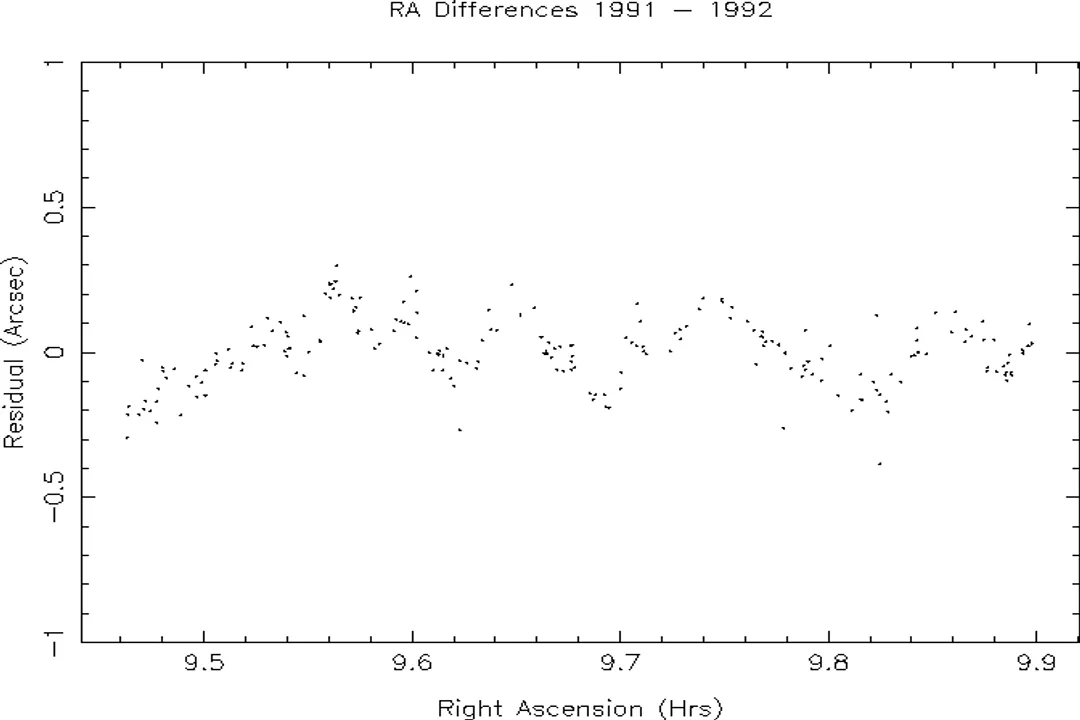
Astrometry, at its heart, is the astronomical discipline dedicated to precisely measuring the relative positions and distances of celestial objects. [7] It is the bedrock of positional astronomy, seeking to map the cosmos by quantifying where things are, how far away they are, and how they are moving across the sky—quantifying their parallax and proper motion. [7] The story of astrometry is largely a story of rapidly improving accuracy, transitioning from measuring angles on the scale of arcseconds to pushing into the realm of micro-arcseconds. The current precision levels achieved by modern space observatories have fundamentally reshaped our understanding of the Milky Way's structure and dynamics.
# Ground Limits
Historically, ground-based astrometry faced inherent limitations that kept precision relatively low. Atmospheric turbulence, which causes stars to appear to shimmer, significantly degrades the angular resolution achievable from Earth's surface. [7] For decades, ground-based parallax measurements were often limited to an accuracy of about $0.01$ arcseconds, or $10$ milliarcseconds (mas). [7] While this was sufficient for creating foundational star catalogs and deriving basic distances for nearby stars, it was far too coarse for subtle astrophysical investigations, such as reliably detecting Earth-mass planets orbiting Sun-like stars, which requires precision orders of magnitude better. [1] Even using more specialized techniques, such as photoelectric methods for measuring stellar positions, older literature suggests errors often hovered around the arcsecond mark, which is still $1$ mas. [8] This level of precision means that for a star $100$ parsecs away, the uncertainty in its distance measurement would be significant.
# Space Leap
The transition from ground-based telescopes to dedicated space missions marked the first major breakthrough in overcoming atmospheric distortion. The European Space Agency's Hipparcos satellite, operational in the early 1990s, dramatically improved on ground-based accuracy. [7] Hipparcos was able to achieve typical position errors in the to $1.0$ milliarcsecond (mas) range. [3][7] This represented an order of magnitude improvement over the best previous efforts. This leap allowed astronomers to establish a far more accurate reference frame for the local stellar neighborhood and refine fundamental constants of astronomy.
However, even the precision of Hipparcos, while groundbreaking, was not sufficient for the most demanding goals of modern astrophysics, particularly in the search for potentially habitable exoplanets via the subtle stellar reflex motion they induce.
# Gaia Precision
Today, the undisputed champion of astrometric accuracy is the Gaia mission. [9] This space observatory is systematically measuring the positions, motions, and brightness of billions of stars in our galaxy with unprecedented precision. [9] The figures quoted for Gaia’s performance demonstrate a precision measured in micro-arcseconds (), a unit that is one thousandth of a milliarcsecond. [3]
The achieved accuracy depends heavily on the apparent brightness (magnitude) of the star being measured. For relatively bright stars, say around magnitude , Gaia aims for positional errors around $20$ micro-arcseconds (). [3] For dimmer stars at magnitude , the target precision is tighter, around $7$ . [3] Even for the faintest measurable objects, perhaps around magnitude , the precision remains astonishingly high, hovering near $100$ . [3]
To appreciate the scale of a micro-arcsecond, consider this: one arcsecond is roughly the angular size of a US dime seen from two miles away. [6] One micro-arcsecond is a million times smaller than that. The goal for detecting Earth-like planets around nearby Sun-like stars requires precision close to $1$ . [6] Thinking about this advancement from a different angle, achieving a $1$ measurement is equivalent, in angular terms, to measuring the thickness of a human hair while standing $1000$ kilometers away. [6] The ability to measure stellar positions with such minute uncertainty allows astronomers to map out the three-dimensional structure of the Milky Way with a clarity that was science fiction just a few decades ago. [9]
# Measuring Motion
Astrometry isn't just about static position; it’s about measuring change over time. The accuracy of the measurement dictates how reliably we can quantify a star's proper motion—its speed across the celestial sphere—and its parallax—the slight shift in apparent position as the Earth orbits the Sun, which directly yields the star's distance. [7]
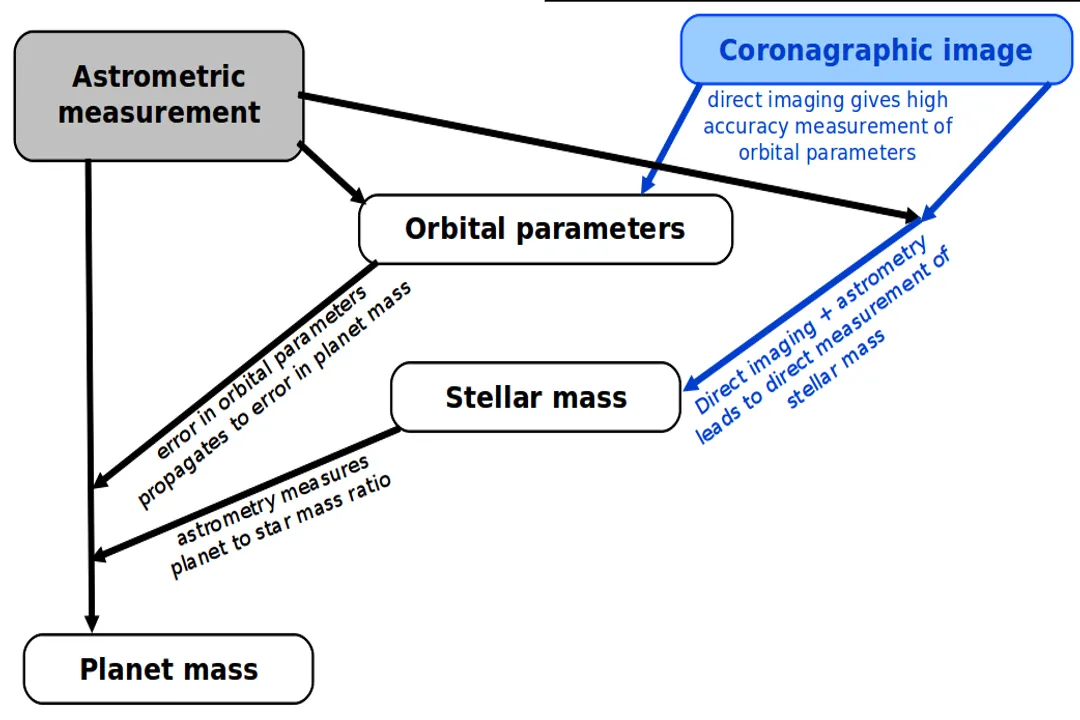
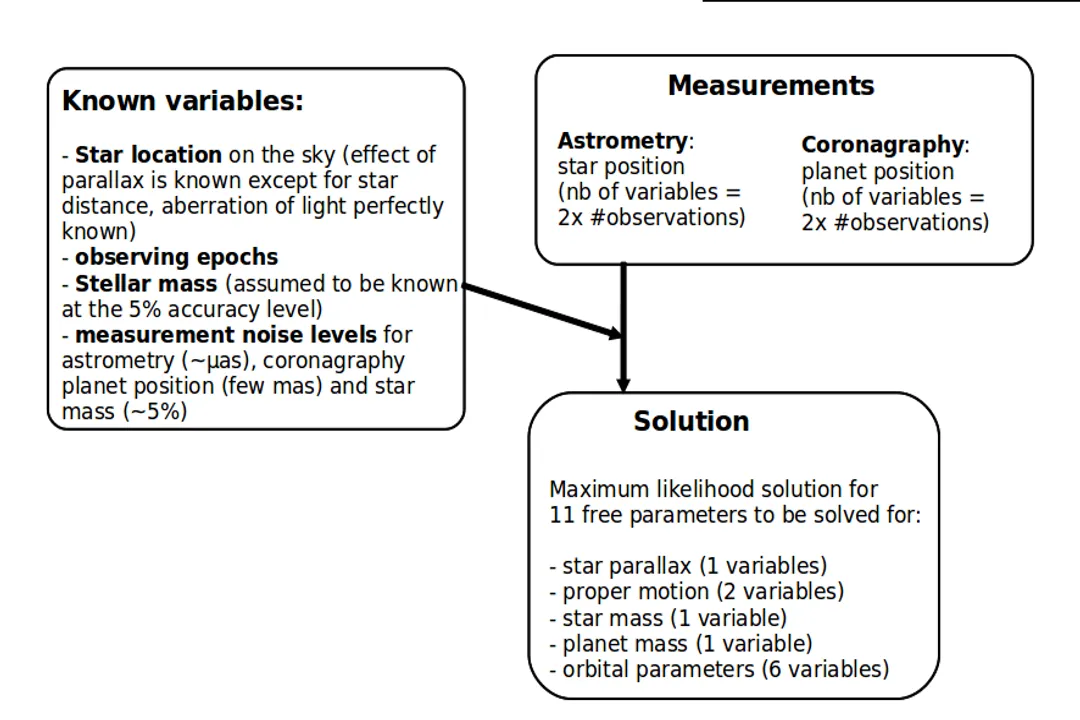
When we consider the long-term goals for finding small exoplanets, the required accuracy becomes an even more stringent hurdle. For a Sun-like star, detecting an Earth-mass planet using the parallax method demands that $0.0001$ arcseconds of accuracy—or $100$ —be achieved just to see the effect reliably. [1] This highlights that while Gaia’s best performance () exceeds this requirement for brighter stars, successfully detecting the very smallest planets around the faintest target stars remains an extremely difficult observational feat that pushes the current technological limits. [1][3]
# Methodological Nuances
While space missions eliminate atmospheric blurring, they introduce different constraints. The absolute accuracy of an astrometric measurement can be limited by various physical effects. For instance, even in space, the interaction of light with gravitational fields means that tidal forces can subtly influence the precise measurement of stellar positions, setting a fundamental limit on accuracy that is actively studied. [3]
Furthermore, the concept of positional accuracy varies significantly between different branches of astronomy that use astrometric principles. In radio astronomy, for example, the Very Large Array (VLA) achieves positional accuracy based on its beam size. Typically, the positional accuracy in radio observations might be around $5%$ of the beamwidth. [2] If the VLA is operating with a beamwidth of $1.3$ arcseconds, the resulting positional uncertainty might be around $0.065$ arcseconds. [2] While this is much coarser than Gaia’s optical micro-arcsecond performance, it is essential for pinpointing the source location of transient radio events or mapping extended structures in other wavelengths. Similarly, instruments designed for X-ray astronomy, like those requiring high pointing stability, often demand accuracies around $0.1$ arcseconds to ensure that specific features in the X-ray sky are correctly localized. [4] This illustrates that "astrometry accuracy" is context-dependent; the required precision depends entirely on the scientific question being asked, whether it's mapping a galaxy or tracking a distant pulsar.
The software used to process the raw observational data also plays a role in the final attainable accuracy. Tools like Astrometry.net are widely used by amateur and professional astronomers alike to solve for the coordinate systems in digital images, effectively acting as automated digital plate solvers. [5] However, users sometimes report difficulties getting results, suggesting that image quality, plate scale, or the presence of saturated stars can affect the software’s ability to converge on a precise astrometric solution, even if the telescope itself is capable of high precision. [5]
In considering the overall precision achieved by missions like Gaia, we must contemplate the implications of volume versus error. An instrument that measures billions of stars to $20$ accuracy is producing an incredibly rich dataset. However, one interesting consideration arises when we compare the random error performance (which Gaia excels at reducing) against potential systematic errors. If a slight, consistent bias—perhaps due to unmodeled long-term instrument drift or subtle geometric distortions in the focal plane—were present across all readings, accumulating errors of even $1$ across billions of sources over time could introduce a subtle but significant distortion into the derived global reference frame of the Milky Way. This systematic error, when integrated across the entire observable volume mapped by Gaia, could potentially bias our models of galactic rotation or stellar drift in ways that a purely statistical analysis of random errors would miss. This inherent challenge shifts the focus from simply achieving smaller numbers to ensuring the stability and calibration of the instrument over the mission’s entire operational lifetime.
# Astrometry's Modern Relevance
The assertion that astrometry is a relic of the past, perhaps confined to catalog creation, is demonstrably false in the 21st century. [9] The field is not just active; it is driving major discovery. The data from Gaia is rewriting fundamental parameters of astrophysics, providing unparalleled insight into galactic kinematics, structure, and stellar evolution. [9] The accuracy achieved is so high that it allows researchers to map the subtle streams of stars torn from dwarf galaxies as they are absorbed by the Milky Way.
To put the level of accuracy into another relatable context: Imagine trying to measure the diameter of a single human hair using a laser pointer from the distance between New York City and Los Angeles—that is the level of angular discrimination required to meet the cutting edge of planet-finding astrometry. [6] While $1$ is the ideal for the most ambitious goals, the current $10-20$ performance of Gaia is already opening up the ability to characterize the motion of many more stars with the precision needed to identify stellar wobble induced by medium-sized exoplanets, if their orbits are favorably aligned. [1]
This high-precision measurement capability is also essential for testing fundamental physics. Astrometry provides one of the most stringent tests for General Relativity, as the measured positions of stars must account for the bending of light around massive objects, such as the Sun. [7] Any deviation from the predicted positions based on GR and known stellar positions can point toward new physics or require an adjustment to our understanding of stellar masses.
Ultimately, the accuracy of astrometry has progressed from a measurement that could be determined with a ruler on a photographic plate (with errors in the $10$ mas range) to a measurement limited by the fundamental physics of light and instrument stability, now residing firmly in the micro-arcsecond regime. [3][7] The current generation of surveys is not just making better catalogs; they are providing the kinematic structure of our galaxy in a dynamic four-dimensional view, turning what was once a static map into a living, moving model. [9]
#Citations
Wobbly Stars: The Astrometry Method | The Planetary Society
Positional Accuracy & Astrometry — NRAO Science Site
[PDF] Accuracy of Space Astrometry - NExScI
Chandra absolute astrometric accuracy
Using astrometry.net and never getting results : r/askastronomy
3. Science Goals & Performance - Olivier Guyon's webpage
Astrometry
Scientific requirements for very accurate astrometry - ScienceDirect
Does anybody actually do astrometry in the 21st century?