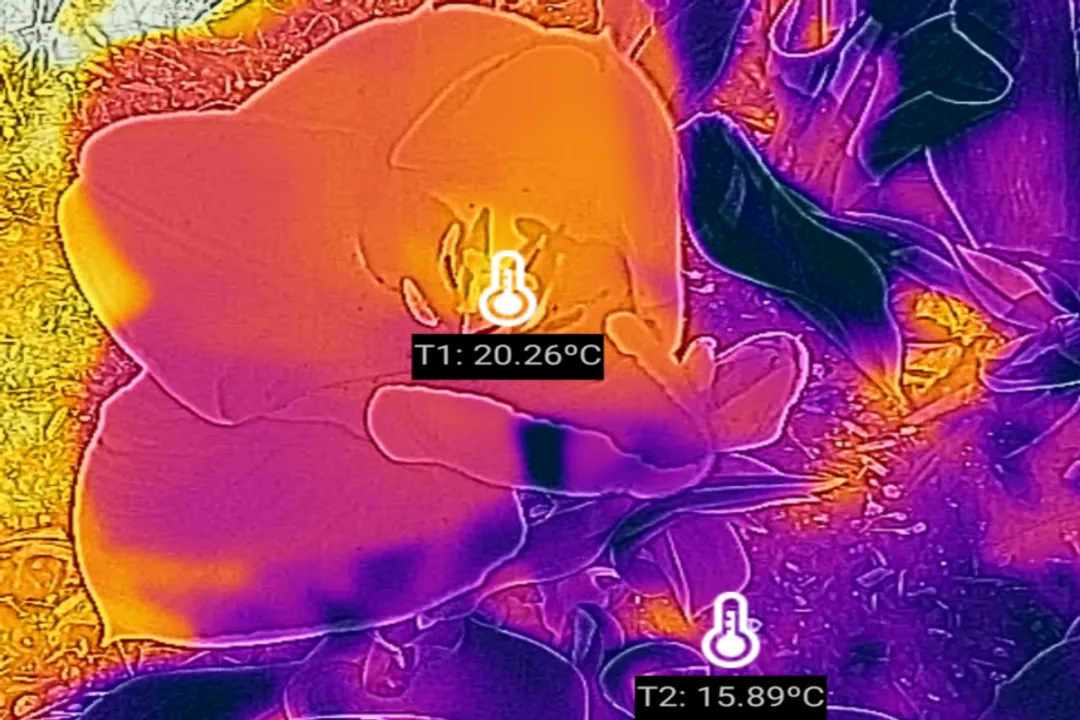
What structural part of the tulip was measured to be significantly warmer than the petals during solar exposure?
Answer
The gynoecium (the central seed-bearing part).
Scientific observation showed that the inner structure of the tulip, specifically the gynoecium, absorbs solar radiation and warms up considerably, sometimes being more than $2^ ext{o} ext{C}$ warmer than the petals.
Related Questions
How does the nectar content of tulips generally compare for honeybees collecting stores?What characteristic of certain tulip shades makes them particularly effective targets for bees?What structural part of the tulip was measured to be significantly warmer than the petals during solar exposure?What benefit do insects provide to the tulip in exchange for shelter inside the closed blossom overnight?Which common garden mammal is frequently reported digging up newly planted tulip bulbs with enthusiasm?The presence of which flying insect is often correlated with damp soil conditions in the spring?What is the scientific name for the tree causing confusion when discussing tulip wildlife visitors?Which other early springtime bloomers are suggested as potentially better choices than tulips for attracting the maximum number of bees?Why might tulips remain closed on heavily overcast or rainy days?What dual function reinforces the value of having tulips bloom when evening temperatures still dip significantly?