Gases articles

What is the approximate percentage of Nitrogen in dry atmospheric air by volume?
What critical function does the high concentration of inert Nitrogen serve in the atmosphere?
Which gas is essential for respiration in complex life and makes up roughly one-fifth of the atmosphere?
What is the approximate volume percentage of Argon (Ar) in dry air?
What is the primary source responsible for the atmospheric abundance of Argon?
In humid, tropical regions, what is the maximum approximate percentage that water vapor can constitute of the atmosphere's total volume?
What process explains why lighter gases like Helium escape Earth's atmosphere over time?
What is the concentration of Carbon Dioxide (CO2) in dry air, expressed in parts per million (ppm)?
What distinguishes Oxygen's chemical properties from Nitrogen's in the atmosphere?
What is the approximate ratio between the second most abundant gas (O2) and the third most abundant gas (Ar) in dry air?
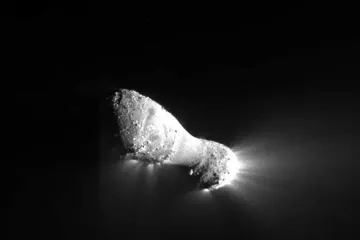
What evocative term is often used to describe comets, which are built from ice, dust, and frozen gases?
What part of a comet serves as the storage unit for frozen materials like rock, dust, and various ices?
What process initiates the creation of a comet's visible coma when it approaches the Sun?
Which characteristic describes the fainter, straighter tail of a comet?
What is the primary compositional difference that leads to the classification of Uranus and Neptune as 'Ice Giants'?
What compound gives Uranus and Neptune their characteristic blue-green hues?
What evidence suggests that comets played a role in supplying water to Earth?
How is the water ice in the mantle of Neptune vastly different from water ice in a comet's nucleus?
Where do comets primarily reside when they are considered inert and dark, far from the Sun's influence?