conductor articles

What is the mathematical relationship defining the dominant power loss in electrical conductors?
If the current flowing through a transmission line doubles while the resistance remains constant, what happens to the heat lost due to resistance?
What is the primary engineering justification for using high voltage during bulk power transport?
How does the 'skin effect' influence resistance in AC power lines?
What is the trade-off associated with transmitting power at extremely high voltages?
Which two reactive mechanisms cause energy wastage specifically in AC transmission systems?
What causes capacitive losses in a power line?
What are the two components classified as fixed (no-load) losses within transformers?
In the context of US figures, what percentage range is typically cited for total transmission and distribution losses?
How does a power factor less than one negatively impact the grid's efficiency?
What term describes energy losses resulting from electricity theft or administrative errors?
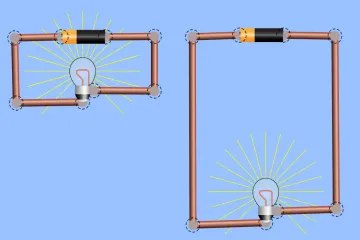
What is the typical speed of free electrons in a metal conductor when no net current is flowing?
What is the primary governor that initiates and sustains the directed flow of electrons in a conductor?
What scale characterizes the average drift velocity ($\mathbf{v}_d$) of electrons in a common household wire?
What characterizes the valence electrons in solid metals that enables them to be electrical conductors?
Relative to the direction of the electric field lines, in which direction is the net force exerted on an electron?
What is the speed associated with the propagation of the electrical signal or electromagnetic field along a wire?
What is the consequence when an electron accelerates under an electric field and subsequently collides with a positive ion core?
Why does turning on a light switch result in nearly instantaneous illumination?
What defines the mobility ($\mu$) of electrons in a conductor?