Should I stake my arrowhead plant?
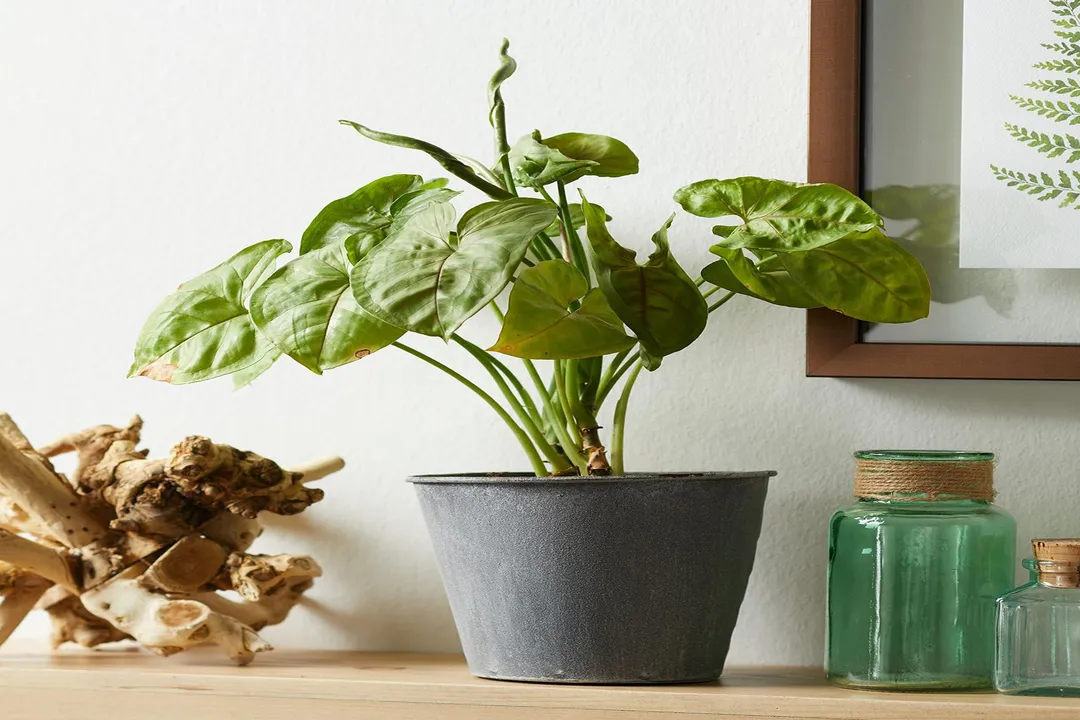
The decision to intervene with your arrowhead plant, Syngonium podophyllum, often comes down to observing its natural tendency to vine and how that interacts with your growing space. Arrowhead plants are inherently climbers, meaning in their natural habitat, they seek out surfaces to ascend. [8] When grown indoors, this desire for vertical growth doesn't disappear, but without a structure, the stems will naturally start to trail or sprawl across surfaces. [3] If you notice your plant developing long, reaching stems that are becoming unwieldy or simply starting to hang down rather than reach up, staking becomes a practical consideration. [1][7]
# Growth Habit
Understanding the plant's nature is key to deciding on support. The arrowhead vine is known for its lush, trailing habit when given the space, but it can also be encouraged to grow upward. [8][6] When stems become lengthy, they can sometimes lack the structural integrity to support themselves, leading to a sparse or "leggy" appearance. [3] Some growers find themselves needing to stake their plants simply because the growth has become unexpectedly long, sometimes amusingly so. [7]
# Need for Support
The primary driver for staking is managing the plant's shape and direction of growth. If your aesthetic goal is a compact, bushy plant or one that ascends a support structure, then providing a stake is necessary. [3] Without support, an arrowhead plant may look thin or sparse as the vines spread out or hang down. [3] Staking can help train the plant to grow vertically, which often results in a denser look at the base of the pot. [3] It is a common step taken during repotting when the plant has already achieved significant length and needs immediate structural help to regain a more upright posture. [1]
This intervention isn't just about aesthetics, however. For larger, mature specimens, the weight of numerous long vines can sometimes strain the main stem where it emerges from the soil, increasing the risk of breakage or leaning. [1] Providing support mitigates this physical stress.
# Structure Selection
When you decide staking is the right move, the type of support matters almost as much as the act itself. Simple wooden or plastic stakes, like those used for many houseplants, can offer temporary support to guide new growth upward. [1] These are straightforward to insert during a repotting session. [1]
However, because the arrowhead plant is a natural climber with aerial roots, a more beneficial structure is often a moss pole or a coir pole. These poles mimic a tree trunk, offering a surface that the aerial roots can grip as the plant matures. [8] When the aerial roots anchor into the damp substrate of the pole, the plant receives more stability and potentially encourages larger, more mature leaf development, as climbing vines often produce larger foliage than trailing vines in the wild. [8] A simple smooth stake will only offer mechanical support, while a textured pole offers a functional climbing surface.
If you are working with a very leggy plant, you might find that a single stake isn't enough to support the existing length; you might need several stakes strategically placed to hold the vines in the desired orientation until they adjust to their new upward trajectory. [1]
Here is a comparison of common support types for the arrowhead plant:
| Support Type | Primary Benefit | Ideal For | Consideration |
|---|---|---|---|
| Simple Wooden Stake | Mechanical support, ease of use | Young plants, brief training | No aid for aerial roots |
| Moss/Coir Pole | Climbing surface, humidity retention | Mature plants, encouraging large leaves | Requires occasional dampening |
| Small Trellis | Spreading vines horizontally | Terrariums, wider pots | Can sometimes look too busy |
# Staking Technique
Implementing support requires a gentle touch, especially near the root ball. If you are staking during a routine repotting, you have the advantage of loosened soil, making it easier to place the support firmly without damaging the roots. [1] The key is placement: aim to place the stake close to the main stem but without driving it directly through a major root mass. [1]
If you are staking an already established plant in its current pot, be extremely cautious. It is often recommended to use the least invasive method possible. You can gently tuck the trailing vines up against the existing foliage or use soft ties to loosely attach the vine to an existing, stable structure, like a neighboring, shorter stem, rather than forcing a large stake deep into the compacted soil.
When attaching the vine to the stake, avoid tight bindings. Use soft materials like strips of an old t-shirt, velvet ribbon, or specialized plant ties that allow for some stem expansion and movement. Tying too tightly can restrict water and nutrient flow, or even damage the delicate stem tissue over time. [8] The goal is guidance, not restriction.
It is an interesting point to consider how the aesthetic outcome of staking influences the overall room ambiance. A vertically staked arrowhead plant creates a strong focal point, drawing the eye upward and adding perceived height to a room, much like a small standard tree. Conversely, allowing the plant to trail from a shelf or hanging basket introduces softness and texture that drapes over edges, making a space feel more relaxed and layered. The choice of staking directly alters the plant's spatial occupation. [7]

# Beyond Staking
Staking addresses the symptom—a leggy vine—but it does not fix the underlying cause, which is usually related to light exposure or maturity. If you choose not to stake, or want to supplement the staking, adjusting care is necessary.
Arrowhead plants generally thrive in bright, indirect light. [6] Insufficient light is a major contributor to legginess. When light levels are low, the plant stretches its internodes (the space between leaves) desperately trying to reach a brighter source, resulting in long, weak stems with widely spaced, smaller leaves. [3] Moving the plant to a location where it receives brighter, yet still filtered, light can encourage new growth to be more compact and robust. [6]
Another technique, sometimes used in conjunction with staking or as a replacement, is pruning. If a vine has become too long and thin, cutting it back significantly can force the plant to put energy into producing new, shorter shoots from the base or lower nodes. These cuttings can often be propagated to create a fuller pot, effectively multiplying your plant and masking the original legginess. [3]
One approach that experienced growers sometimes take is rotational care. If you are using a moss pole, you can occasionally rotate the plant slightly during watering so that different sides of the vine get closer access to the pole's moisture. This encourages a more even, all-around upward growth habit rather than having one side cling tightly while the other side trails freely, which can sometimes lead to an unbalanced look even when staked. [8] This encourages the plant to utilize the entire surface area of the support, leading to a more symmetrical presentation over time.
# When to Hold Back
It is important to recognize that not every arrowhead plant needs to be staked or trained upward. If you enjoy the cascading effect, there is absolutely no horticultural reason to stake it. If your primary goal is a hanging or trailing display, allow the vines to drape naturally. [8] In this scenario, focusing on pruning straggly or unhealthy stems will keep the plant looking tidy, rather than trying to force an unnatural vertical posture onto a vine that prefers to spill over.
If the plant is simply young, temporary staking might be unnecessary. A young plant may have a few longer stems that will naturally balance out as the crown thickens with more leaves. Patience is sometimes the best tool; intervene only when the plant's structure truly compromises its health or when the desired look is clearly not being achieved naturally. [3] If you decide to stake, observe for signs of stress—yellowing leaves near the tie points or stems appearing constricted—and adjust your ties immediately if you see any issues arising from the support method.
#Videos
Let's Stake Up my Arrowhead plant and Philodendron Hastatum Silver
WHAT TO DO WITH A LEGGY SYNGONIUM/JoyUsgarden - YouTube
Related Questions
#Citations
Repotted and staked my arrowhead plant, curious if done properly ...
Should I stake my Arrowhead plant? - Facebook
Leggy Arrowhead Plant: Keeping a Syngonium Bushy (2025 Guide)
Let's Stake Up my Arrowhead plant and Philodendron Hastatum Silver
Arrowhead Plant Care Instructions for a Thriving Houseplant! - Plantify
That moment when you have to stake your syngonium because...
How to Care for Arrowhead Vine - Better Homes & Gardens
Help with Arrowhead in the Ask a Question forum - Garden.org