What enables wireless communication?
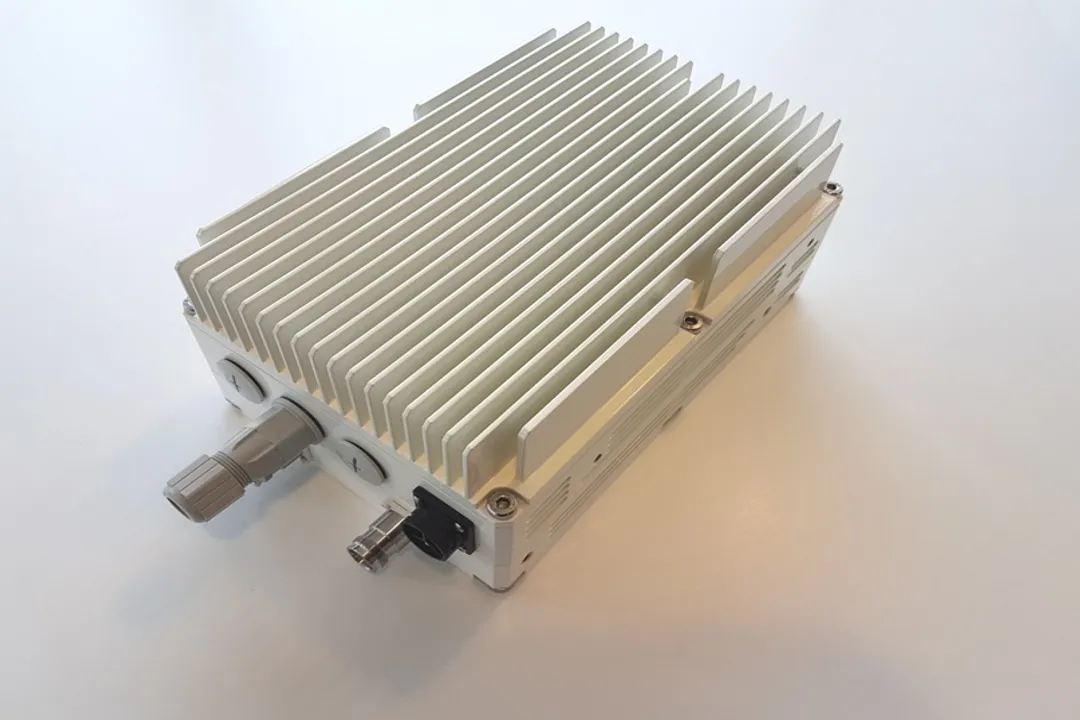
The ability to send information across space without needing physical wires, whether over a short distance across a room or spanning continents, rests on fundamental physics and sophisticated engineering processes. Wireless communication, at its simplest, involves transferring data using electromagnetic waves that travel through the atmosphere, vacuum, or another medium, rather than conductors like copper cables. [2][3] This freedom from physical tether is what defines the technology and dictates how it is engineered.
# Fundamental Carriers

The primary enabler for all modern wireless transmission is the electromagnetic spectrum. [7] Information is encoded onto specific sections of this spectrum—most commonly radio waves or microwaves—which act as the carrier for the data. [7][10] Unlike wired systems where signals travel as electrical currents through a physical path, wireless systems broadcast these electromagnetic waves from a source device, which contains a transmitter and an antenna, allowing the energy to propagate outward. [1]
The journey of a wireless signal requires two main endpoints: a transmitter and a receiver. [1] The transmitter takes the original data—like your voice on a phone call or a web page request—and prepares it to be sent. The receiver, which must be tuned to the correct frequency, captures the faint waves arriving from the transmitter and reconstructs the original data stream. [1] Antennas are the specialized physical structures that perform the critical conversion between electrical signals and propagating electromagnetic waves, and vice versa. [7][10]
# Data Conversion
Sending raw data directly is inefficient and prone to errors, so the information must be processed before it can be broadcast. This processing centers around two key steps: modulation and demodulation. [7]
Modulation is the act of imposing the information signal onto the high-frequency carrier wave. Think of the carrier wave as a steady stream of water; modulation is the process of altering the flow—perhaps by changing its height (amplitude modulation) or its timing (frequency modulation)—to represent the ones and zeros of digital data. [7] Different communication standards use different modulation techniques to maximize data throughput or ensure signal robustness against noise.
Once the modulated wave reaches its destination, the receiver performs the inverse operation: demodulation. This process extracts the original data from the carrier wave, filtering out the noise and interference encountered during the travel. [7] While the physical medium is the air or space, the successful enablement of communication relies entirely on the precision of these electronic encoding and decoding methods. [7]
# Frequency Management
Beyond the physics of the wave itself, the organization of the invisible pathways is a critical, often overlooked, enabler. The usable electromagnetic spectrum is finite, and allowing every device to broadcast randomly would result in unusable noise and constant signal collision. [7]
A crucial enabler, therefore, is the regulatory structure that assigns specific frequency bands for specific purposes. Governments and international bodies allocate portions of the spectrum for cellular networks, Wi-Fi, satellite communications, and public safety. [7] This managed scarcity ensures that a Bluetooth device in your home doesn't drown out a television broadcast, or that your cell phone isn't constantly attempting to talk to a distant satellite when it should be connecting locally. This assignment dictates the capabilities of the resulting technology; for instance, lower frequency bands travel further but carry less data, while higher frequencies (like those used for Wi-Fi) carry massive amounts of data but are easily blocked by walls. [2]
# Range Groupings
Wireless systems are frequently categorized based on the intended transmission distance, reflecting inherent trade-offs in power output and antenna design. [5] Understanding these general groupings helps illustrate how different underlying technologies achieve specific connectivity goals:
- Personal Area Networks (WPAN): These cover very short distances, typically less than 10 meters, and are used for connecting personal devices. Bluetooth is a prime example, allowing a headset to connect to a smartphone. [5] The required low power output is prioritized over long-distance transmission.
- Local Area Networks (WLAN): Most commonly known as Wi-Fi, these networks cover buildings or small campuses. [5] They operate in licensed or unlicensed frequency bands (like the 2.4 GHz or 5 GHz ranges) and offer high data rates for things like internet access. [5]
- Metropolitan Area Networks (WMAN): These span a city or a large campus area. Technologies like WiMAX were designed for this purpose, offering broader coverage than typical Wi-Fi. [5]
- Wide Area Networks (WWAN): This category encompasses cellular networks (like 4G or 5G) that cover vast geographical regions using a dense network of base stations. [5] These require substantial infrastructure and complex handover protocols to maintain connections as a user moves between cell towers.
The choice between these ranges directly impacts the enabling hardware. A battery-powered IoT sensor communicating over a WWAN will require far different power management and chip architecture than a desktop computer connecting via a high-power WLAN router. [8]
# Common Applications
The flexibility provided by electromagnetic wave transmission has driven adoption across nearly every sector, moving communication beyond simple point-to-point links into complex, ubiquitous connectivity. [1][3]
Consider mobile telecommunications, which is perhaps the most visible application. This relies on a constellation of terrestrial towers that manage connections with user devices across entire regions. [4] Similarly, broadcasting—television and radio—was one of the earliest wide-scale uses of this technology, sending signals outward to passive receivers. [1]
In the realm of computing and data access, wireless internet access has become standard in homes, offices, and public hotspots through standards like Wi-Fi. [5] Furthermore, specialized applications exist, such as telemetry, which involves gathering data remotely, perhaps from environmental sensors or monitoring equipment in hard-to-reach locations. [1][4] Even short-range, high-speed connections for peripherals like printers or keyboards rely on these principles. [3] The spread of the Internet of Things (IoT) further depends on wireless connectivity, utilizing everything from short-range protocols to low-power, long-range wide-area networks to keep remote sensors connected to central servers. [8]
# Signal Integrity
While the freedom of movement is the chief benefit, it introduces inherent vulnerabilities that must be engineered around. The atmosphere is not a perfect vacuum; it contains obstacles, moisture, and interference from other signals operating on similar frequencies. This leads to phenomena like attenuation (signal strength loss over distance) and multipath fading, where the signal reaches the receiver via multiple paths, causing destructive interference. [10]
When we compare a wired connection, where the signal is guided and shielded within a physical cable, to a wireless link, the key difference in enablement becomes signal processing overhead. [10] A wireless system must dedicate significant processing power to error correction, retransmission requests, and sophisticated filtering just to achieve the basic data reliability that a shielded wire provides almost automatically. For instance, a short-range, high-bandwidth Wi-Fi link must manage immediate signal reflection from nearby walls, whereas a low-power sensor using a long-range protocol might prioritize battery life over rapid data retransmission. Successfully implementing wireless communication, therefore, requires not just the wave itself, but an intelligent system that can constantly adapt to the unpredictable nature of the airwaves it travels through. [10]
Related Questions
#Citations
5 Applications of Wireless Communication Systems
Wireless
Wireless Communication: Definition, Explanation, and Use ...
What Is Wireless Communication?
The Different Types of Wireless Networks and Their Benefits
How does wireless communication work?
Wireless Technology Uncovered: The Future of Connectivity
What is Wireless Communication Technologies
Wireless Communication and Networks
Wireless Technology