Is Neil deGrasse Tyson qualified?
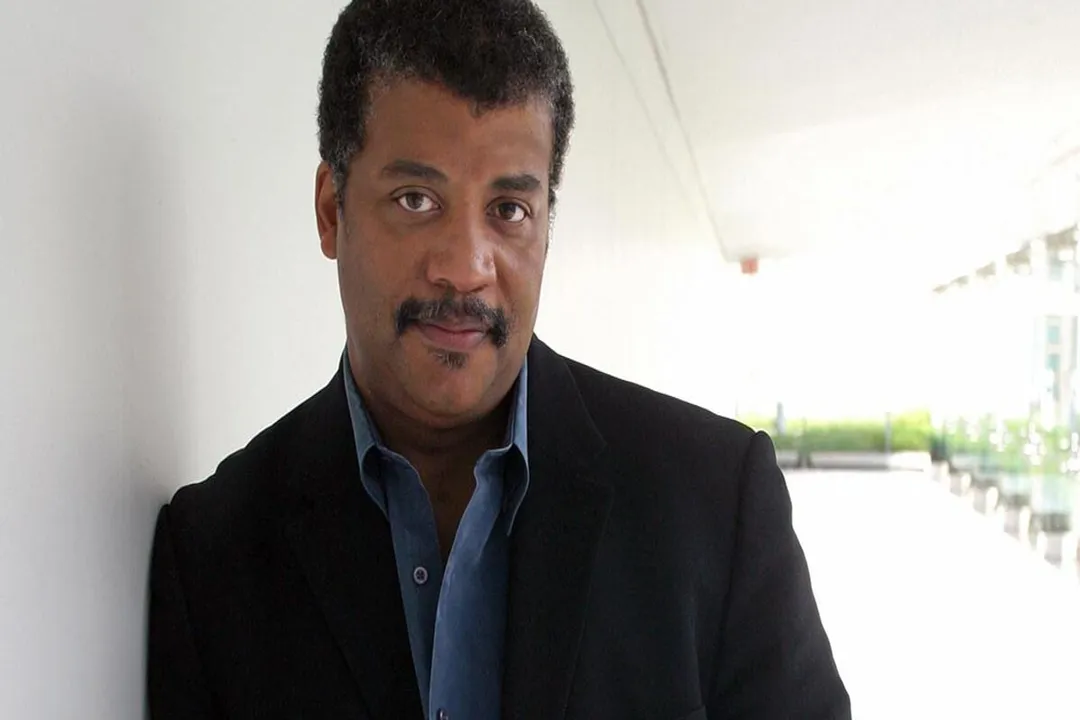
The widespread recognition of Neil deGrasse Tyson inevitably leads to questions about the depth of his scientific credentials versus his stature as a public figure. For many, he is the face of modern astronomy, the person who explains the cosmos on television and through social media, bringing concepts like black holes and dark matter into mainstream conversation. [1] However, assessing his qualification requires looking past the television screen and examining his formal training, institutional appointments, and the differing opinions held by his peers in active research science.
# Degrees Held
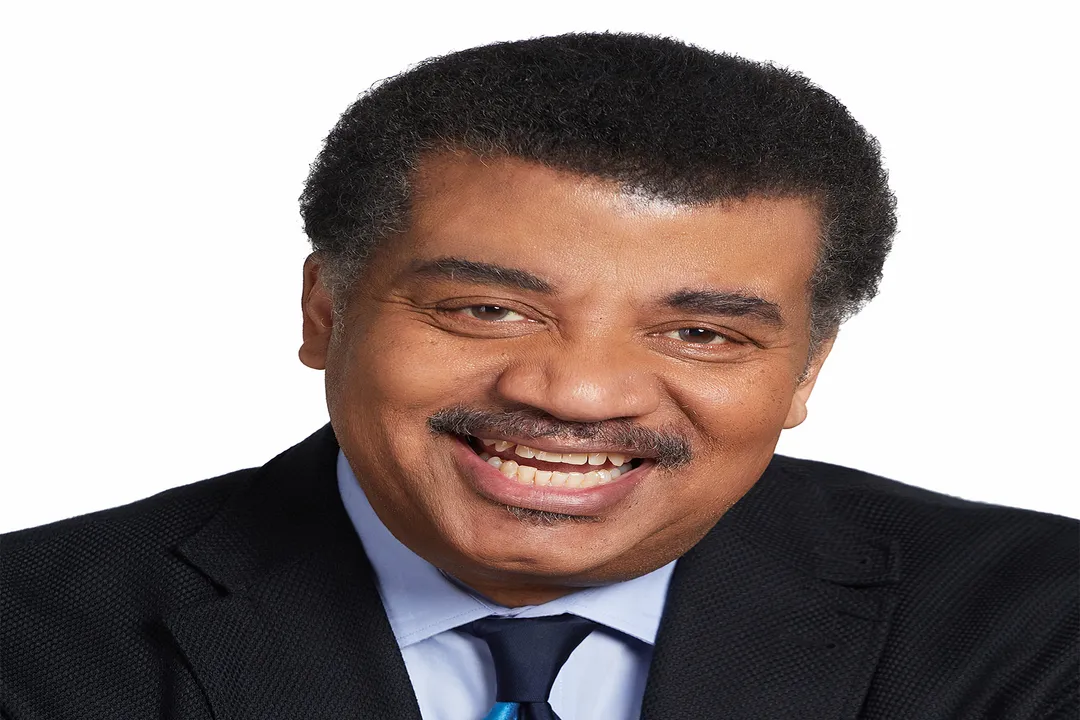
Tyson’s foundational qualifications are academically strong. He completed his undergraduate education at Harvard University, earning a Bachelor of Arts degree in physics. [3][10] Following that, he pursued advanced studies at the University of Texas at Austin, where he attained a Master of Arts in Astronomy. [3][10] The highest level of his formal training culminated at Columbia University, from which he received his Doctor of Philosophy (Ph.D.) in Astrophysics. [3][10]
These degrees firmly place him within the realm of trained astrophysicists, giving him the necessary background to speak authoritatively on the subject matter he frequently discusses. [2][3] He has been associated with academic institutions beyond his degrees, including teaching seminars on science at Columbia University’s Graduate School of Arts and Sciences. [7]
# Planetarium Director
Perhaps the most concrete measure of his current professional qualification within the scientific establishment is his directorship. Neil deGrasse Tyson serves as the director of the Hayden Planetarium at the American Museum of Natural History (AMNH) in New York City. [7][10] This is not merely a ceremonial title; the planetarium is a world-renowned center for astronomy education and exhibition. [7] Leading such an institution requires not only scientific acumen but also proven administrative and educational leadership skills. [7]
This dual status—as a research-trained Ph.D. and the head of a major public science institution—provides a strong argument for his qualification to interpret and communicate science to the public. He occupies a position that bridges the gap between active research and public outreach.
| Qualification Area | Specific Role/Degree | Institution/Context |
|---|---|---|
| Highest Degree | Ph.D. in Astrophysics | Columbia University [3][10] |
| Current Primary Role | Director | Hayden Planetarium, AMNH [7][10] |
| Educational Role | Faculty/Lecturer | Seminars on Science, Columbia [7] |
The table above summarizes the high-level positions that validate his standing. While his Ph.D. validates his expertise in the science, his directorship validates his expertise in science communication and institutional stewardship. [7]
# Media Figure
Tyson’s qualification in the public eye is largely cemented by his media presence. He is the creator and host of the television series StarTalk, which blends science discussion with popular culture, and he also hosted the revival of Carl Sagan’s Cosmos: A Spacetime Odyssey. [10] These platforms give him an authoritative voice that few other astrophysicists command. [1]
For a significant portion of the public, his qualifications are synonymous with his ability to clearly articulate complex ideas, often through analogy or humor. [1] When he speaks about, for instance, the classification of Pluto as a dwarf planet, his statement carries weight precisely because of the public trust built through decades of consistent, accessible communication. [2][4] This level of public authority is a qualification in itself for the role of popularizer, though it sometimes draws scrutiny from those who believe the focus should remain purely on academic output.
# Community Views
Discussions surrounding Tyson's qualifications often diverge based on the observer's background. Within the general public and among science enthusiasts, he is widely respected for his ability to make science compelling and relevant. [1][4] He successfully engages audiences who might otherwise be intimidated by astrophysics. [2]
Among practicing physicists and astronomers, the reception can be more nuanced. Some peers recognize his value as an ambassador for science, noting that his visibility inspires future scientists and secures public support for research. [1][2] However, commentary on forums and social media suggests that some active researchers feel he has transitioned too far into celebrity, sometimes prioritizing controversy or simplification over rigorous scientific detail. [2][4] The distinction frequently drawn is between being a research physicist and being a science communicator. [4] While he is undeniably qualified in the latter—arguably one of the best living practitioners—his current output is not dominated by original, peer-reviewed research papers in the way a tenured, research-focused professor's might be.
One way to frame this difference is by considering the required skillset. A theoretical physicist requires deep, sustained focus on narrow, complex problems, demanding years of isolation or small-group collaboration. Tyson, conversely, must master the entirety of contemporary astrophysics well enough to summarize its leading edges while simultaneously mastering television production, interviewing techniques, and managing public commentary on social and political issues related to science. [5] These are distinct, high-level competencies.
# Popularizer Tradeoff
The criticism that Tyson sometimes oversimplifies or engages in public debate touches upon a fundamental tradeoff in science communication. To reach millions, nuance often has to be sacrificed for clarity. The academic ideal is precision; the popularizer's ideal is comprehension by the masses. [2]
When Tyson shares an opinion on topics slightly outside the direct focus of his academic background, it can sometimes lead to friction within specialized scientific circles. For example, his involvement in public discussions about Pluto's planetary status might draw differing technical opinions, yet his platform ensures his perspective reaches millions instantly. [2] This demonstrates that his qualification has expanded from the laboratory bench to the public square, where communication effectiveness is weighted heavily.
It is an interesting reflection on modern scientific authority that an individual can hold a respected directorship at a major museum and be viewed by some insiders as overly focused on personality or media engagement. [4] The measure of success shifts. For an academic, success is often publication count and grant funding; for Tyson, success is measured by public engagement metrics, successful television production, and educational impact outside traditional university walls. The public grants him authority based on his clarity and charisma, while specialized peers judge him based on his recent research contributions, which are naturally curtailed by his public schedule. [2]
Ultimately, Neil deGrasse Tyson is unquestionably qualified by his formal education, his institutional leadership role at the AMNH, and his demonstrated ability to command an audience. [3][7][10] He holds the credentials of a scientist and occupies the role of a major science educator. The debate over his standing often reveals less about his inherent knowledge—which is substantial—and more about how an individual scientist’s career path diverges from the traditional, purely research-focused trajectory once they achieve massive public visibility. [4] His ability to maintain rigorous standards while simultaneously managing a demanding media presence across platforms like Twitter and his StarTalk programs speaks to a distinct, highly developed form of professional expertise, one that is perhaps more necessary for science advocacy in the 21st century than pure, isolated research. [10]
#Videos
Is Neil DeGrasse Tyson A Physicist? - Physics Frontier - YouTube
Related Questions
#Citations
Is Neil De Grasse Tyson respected in the profession? - Reddit
What do physicists think about Neil deGrasse Tyson? - Quora
Neil deGrasse Tyson - Wikipedia
Is Neil DeGrasse Tyson a genius? Or, just a very charismatic ...
Is Neil DeGrasse Tyson A Physicist? - Physics Frontier - YouTube
Criticism of Neil deGrasse Tyson's credibility as a scientist - Facebook
Neil deGrasse Tyson, Course Author | AMNH
About Dr. Neil deGrasse Tyson, PhD - StarTalk Radio
Neil deGrasse Tyson - Atheist or Agnostic?